
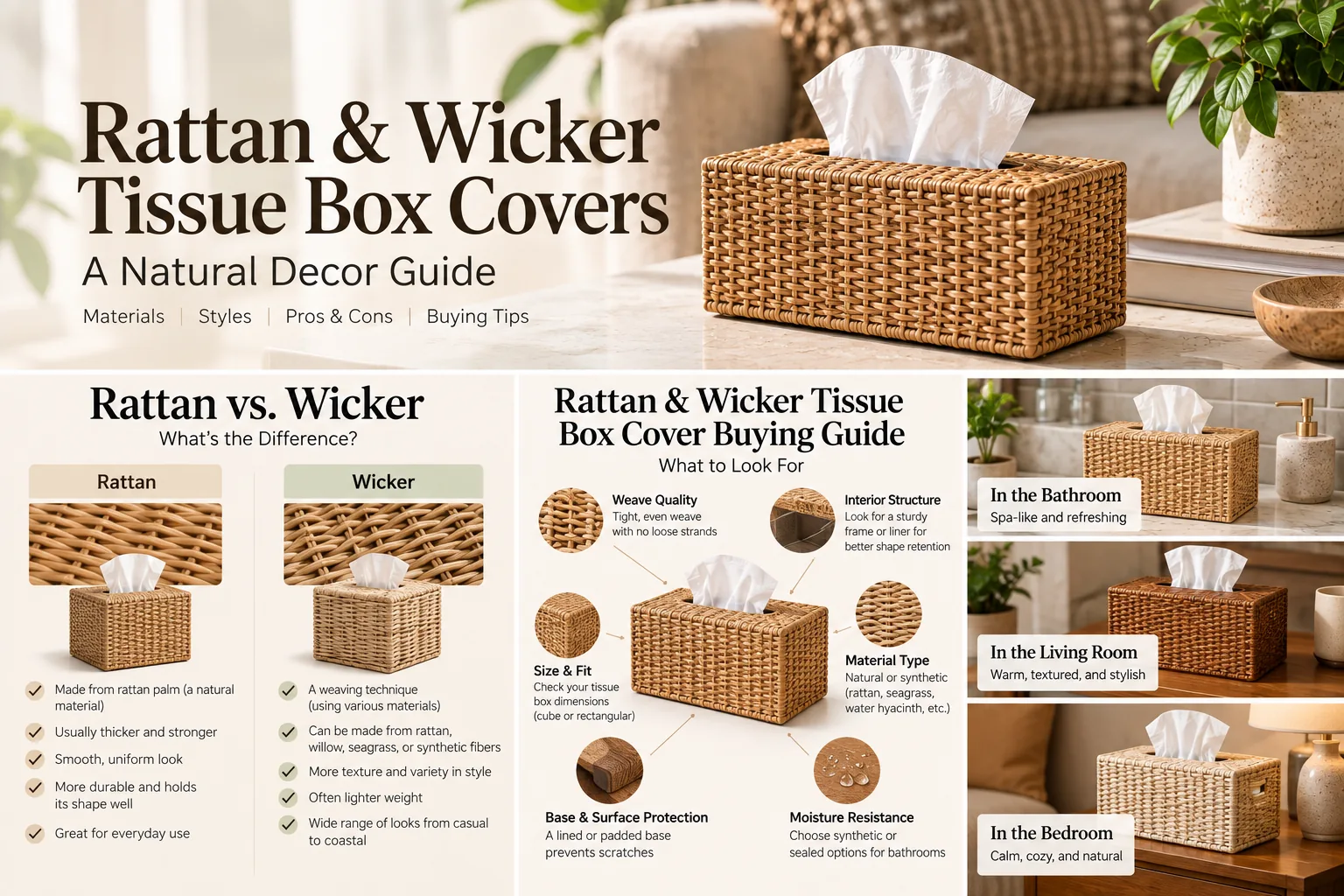

A rattan tissue box cover is one of the easiest ways to make an everyday tissue box feel warmer, softer, and more intentional. Unlike wood, ceramic, acrylic, or leather, woven covers bring texture and visual lightness, which makes them especially useful in coastal, boho, Japandi, cottage, tropical, and relaxed contemporary rooms.
This guide focuses specifically on woven tissue box covers. For a broader material overview, see our complete tissue box cover guide. If you are comparing other natural-looking materials, our wood tissue box cover guide explains solid wood, veneer, bamboo, and engineered options.
Rattan vs. Wicker: What Is the Difference?
Rattan and wicker are often used as if they mean the same thing, but they describe different things. Rattan is a material: a flexible climbing palm that can be split, peeled, bent, and woven. Wicker is a weaving method: a technique that can use rattan, reed, willow, bamboo, seagrass, paper fiber, or synthetic resin.
That means a tissue box cover can be wicker without being made from rattan. Product listings are not always precise, so it is worth reading the material description rather than relying on the title alone.
| Term | What it describes | Typical look | Main buying concern |
|---|---|---|---|
| Rattan | Natural plant material | Warm, smooth, organic | Can dry out, fade, or react to moisture |
| Wicker | Weaving technique | Textured and basket-like | Material quality varies widely |
| Synthetic wicker | Resin/plastic woven material | More uniform, sometimes glossy | May look less natural up close |
| Seagrass | Natural dried fiber | Rustic, tactile, slightly irregular | Can absorb moisture and collect dust |
| Paper fiber | Twisted or woven paper cord | Neat, lightweight, decorative | Poor choice for damp spaces |
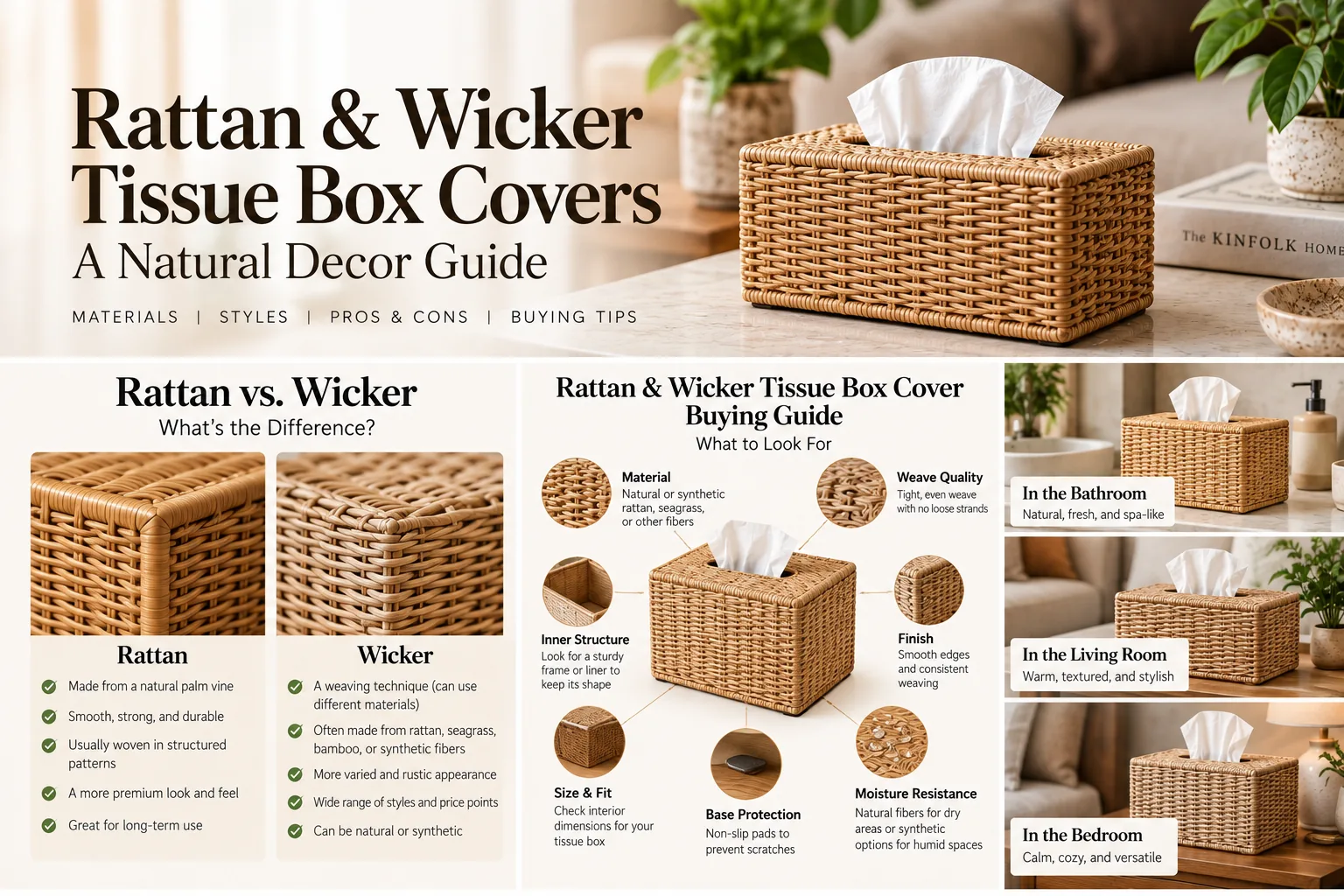
Natural Rattan vs. Synthetic Wicker
Natural rattan usually has the most character. The color varies slightly, individual strands may differ in thickness, and the weave often looks more handcrafted. That variation is part of the appeal, especially in rooms where you want the tissue box cover to feel like a small basket or decor object.
Synthetic wicker is more uniform and generally less sensitive to humidity or splashes. It can be a practical option for a bathroom vanity or frequently cleaned space, but quality matters: inexpensive resin strands can look shiny or plasticky, especially next to natural wood, linen, stone, or handmade ceramics.
Pros of Rattan and Wicker Tissue Box Covers
1. They add texture without feeling heavy
A woven surface breaks up smooth furniture, painted cabinetry, tile, glass, and stone. Because the material has small gaps and visible strands, it usually feels lighter than solid wood or ceramic.
2. They work well with natural interiors
Rattan pairs naturally with linen, cotton, jute, oak, bamboo, cane, stone, terracotta, and neutral paint colors. It fits especially well in coastal, boho, Japandi, tropical, cottage, and relaxed minimalist rooms.
3. Woven covers soften the look of a cardboard tissue box
The basket-like texture disguises branded packaging effectively and makes the tissue box feel more like part of the decor, especially on open shelves, bedside tables, and bathroom counters.
4. Many are lightweight
Compared with ceramic or thick solid wood, woven covers are often easier to move, refill, and reposition. That can be useful on small nightstands, narrow shelves, or vanity counters where a heavy accessory feels cumbersome.
5. Small imperfections can look intentional
Natural materials rarely look perfectly machine-made. Slight changes in color, strand thickness, or spacing can make a woven cover feel more handmade rather than defective, as long as the structure remains stable.
Cons to Consider Before Buying
Dust can settle inside the weave
The same texture that makes wicker attractive also creates small grooves that collect dust. Tight, smooth weaving is easier to maintain than rough, open basketry.
Natural fibers do not love repeated water exposure
Natural rattan, seagrass, and paper-based fibers can stain, swell, soften, mildew, or distort if they stay damp. A dry powder room is very different from a family bathroom where the counter is regularly splashed.
Loose strands can snag or break
Low-quality weave can develop lifted ends around corners, the tissue slot, or the bottom edge. Those strands can catch tissues, scratch hands, or make the cover look worn quickly.
Soft woven covers can lose their shape
Some basket-style tissue holders are woven around a rigid frame; others rely mostly on the weave itself. A rigid inner frame usually keeps corners straighter and makes the cover look neater over time.
What to Look For in a Rattan Tissue Box Cover
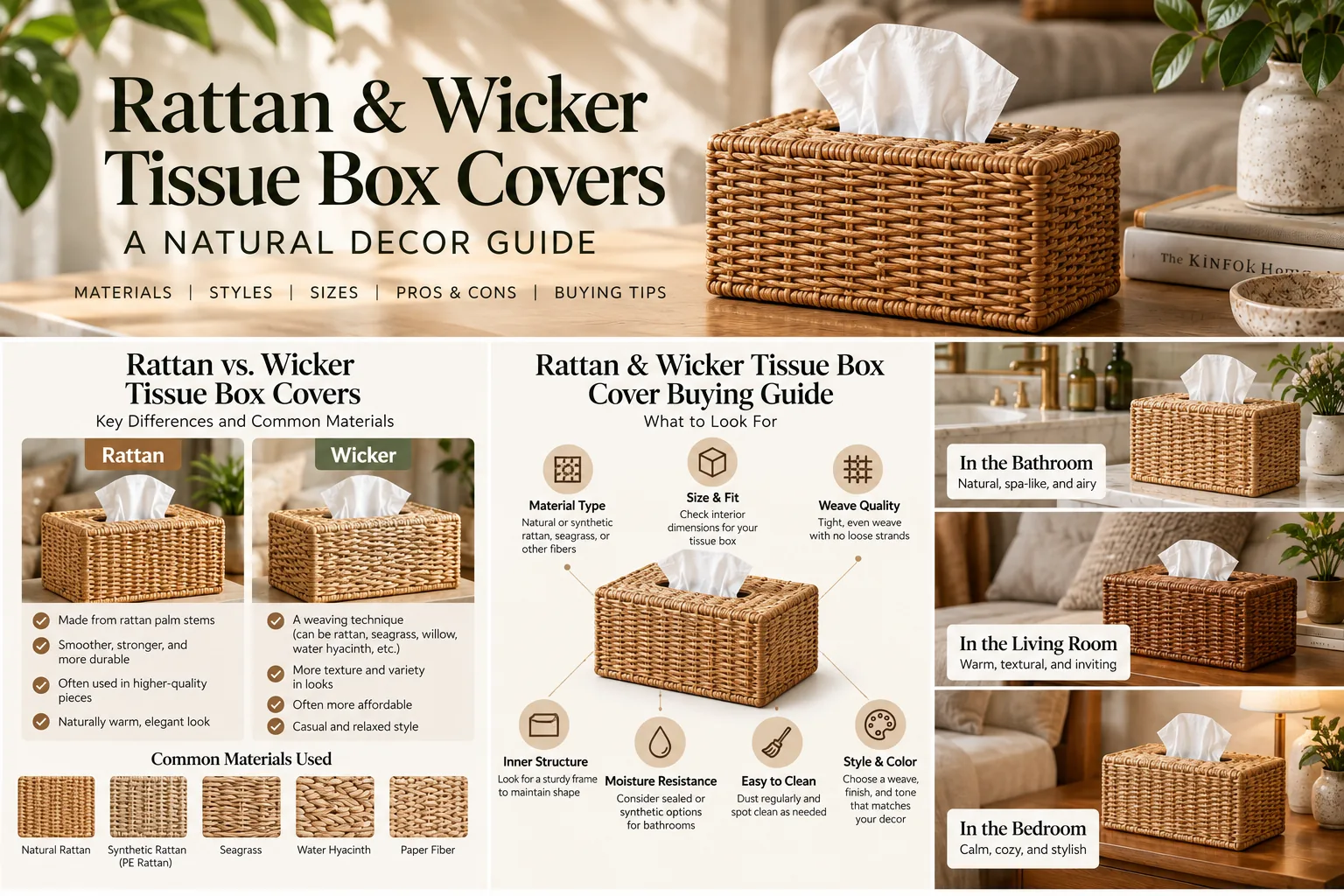
1. Measure the tissue box first
Measure the length, width, and height of the tissue box you buy most often. If the woven cover has a rigid interior frame, compare your measurements with the interior dimensions rather than the outside footprint.
2. Check the weave density
Tighter weaving usually looks cleaner and hides the cardboard box better. Very open weaving can expose packaging colors underneath, which defeats part of the purpose of using a decorative cover.
3. Inspect corners and cut ends
Look for tucked or smoothly finished strand ends, consistent corners, and no sharp protrusions. The tissue opening deserves special attention because rough fibers near the slot can snag thin tissues.
4. Look for an inner frame or liner
A wood, metal, plastic, or board frame can help a woven cover keep crisp edges. Some designs also include a fabric liner or smooth inner wall, which can stop rough fibers from catching the cardboard tissue box during refills.
5. Check the refill method
Common designs include open-bottom sleeves, removable bases, lift-off lids, and basket shells that sit over the cardboard box. Make sure the base stays secure when you lift the cover and that the box is easy to replace without bending the weave.
6. Match the material to the room
Natural rattan and seagrass are best in relatively dry rooms. Synthetic wicker is more forgiving around occasional splashes. Paper fiber should stay away from damp bathrooms entirely.
7. Check the bottom edge
Rough natural strands can scratch lacquer, painted furniture, or polished stone. A lined base, smooth frame, felt pads, or neatly tucked weave is safer on delicate surfaces.
Cube vs. Rectangular Woven Covers
| Shape | Strengths | Watch for | Best uses |
|---|---|---|---|
| Cube | Compact, decorative, basket-like | Can feel tall on shallow shelves | Bathrooms, nightstands, small side tables |
| Rectangular | Low profile, familiar format, more surface presence | Needs more horizontal space | Consoles, living rooms, larger vanities, offices |
If shape and footprint are your main concern, our square vs. rectangular tissue box cover guide goes deeper into sizing, placement, and proportions.
Popular Rattan and Wicker Styles
| Style | Look | Works well with |
|---|---|---|
| Natural honey rattan | Warm, relaxed, classic | Coastal, boho, tropical, neutral rooms |
| Light bleached rattan | Airy and pale | Japandi, Scandinavian, coastal |
| Dark-stained wicker | Grounded and traditional | Colonial, classic, dark wood interiors |
| Whitewashed wicker | Soft and casual | Cottage, beach house, guest rooms |
| Black woven finish | Graphic and modern | Contemporary, monochrome, modern boho |
| Seagrass weave | Rustic and tactile | Organic, farmhouse, relaxed natural decor |
Best Places to Use Rattan Tissue Box Covers
Living room side table or console
Rattan looks especially good beside books, ceramics, linen lampshades, wood trays, and plants. The woven texture makes the tissue box feel less utilitarian without competing with larger decor pieces. For more placement ideas, see our guide to styling tissue boxes in every room.
Bedroom nightstand
A small woven cube works well beside linen bedding, pale wood, cane furniture, or soft neutral colors. It adds texture without making a compact bedside surface feel visually crowded.
Guest room
Natural woven materials make a guest room feel relaxed and finished without requiring exact coordination with bedding or seasonal textiles. Honey rattan and light neutral wicker are particularly versatile.
Bathroom vanity
Use natural rattan only if the vanity stays reasonably dry. For frequent splashes, synthetic wicker or another moisture-tolerant hard material is safer. If easy wipe-down cleaning matters most, a ceramic or porcelain tissue box cover may be a better fit.
Home office
A rectangular woven cover can soften a desk setup with metal, glass, or electronics. It works especially well when the office already includes baskets, cane-front storage, or natural wood organizers.
Where Rattan Is Probably Not the Best Choice
- Frequently wet bathroom counters: natural fibers can stain, swell, or mildew.
- Very dusty areas: open weave needs more frequent cleaning than smooth ceramic or acrylic.
- Children’s rooms with rough handling: loose strands can break if the cover is dropped or crushed.
- Outdoor use: indoor natural rattan is not designed for repeated rain, sun, and temperature swings.
- Very minimalist spaces: a highly textured weave may feel busier than acrylic, ceramic, or smooth wood.
How to Clean a Rattan or Wicker Tissue Box Cover
- Remove the tissue box before cleaning.
- Use a soft brush, clean paintbrush, or vacuum brush attachment to loosen dust from the weave.
- Wipe natural rattan with a barely damp cloth rather than soaking it.
- Dry the cover thoroughly before replacing the cardboard box.
- Use a mild cleaner only if the manufacturer says the finish can handle it.
- Avoid saturating natural fibers, bleach, harsh solvents, and abrasive scrubbing.
For synthetic wicker, a damp cloth is usually less risky, but the inner frame may still contain wood, MDF, or cardboard. Check the construction before assuming the entire cover is water-resistant.
60-Second Rattan Tissue Box Cover Buying Checklist
- Measure your usual tissue box and compare it with the cover’s interior dimensions.
- Confirm the material — natural rattan, synthetic wicker, seagrass, paper fiber, or mixed material.
- Inspect the weave for tight spacing, even tension, and no lifted ends.
- Check the inner structure to see whether a rigid frame keeps the cover square.
- Inspect the tissue opening for smooth edges that will not snag paper.
- Check the refill method and make sure the base stays secure.
- Match moisture tolerance to the room, especially for bathrooms.
- Check the bottom edge for a smooth, furniture-safe finish.
Natural honey rattan + rectangular form + tight weave.
Light rattan + simple cube + minimal trim.
Synthetic wicker + rigid inner frame + protected base.
Common Buying Mistakes
Assuming all wicker is natural rattan
Wicker describes the weave, not the material. Read the specification carefully so you know whether you are buying natural rattan, synthetic resin, seagrass, paper cord, or a mixed-material product.
Choosing the loosest weave because it looks handmade
Open weave can be attractive, but it may expose the cardboard packaging underneath and lose shape more easily. Decorative irregularity is different from weak structure.
Ignoring the interior frame
A beautiful exterior can still sag if there is no support underneath. If you want crisp corners and a tailored appearance, check whether the weave is built around a rigid box frame.
Using natural fibers in a constantly wet bathroom
Natural woven fibers can work in a powder room or dry vanity area, but repeated splashing changes the equation. Room conditions matter more than the style photo.
Frequently Asked Questions
Is rattan the same as wicker?
No. Rattan is a natural plant material, while wicker is a weaving technique. A wicker tissue box cover can be made from rattan, seagrass, willow, paper fiber, or synthetic resin.
Can I use a rattan tissue box cover in a bathroom?
Yes, if the vanity stays relatively dry and the cover is kept away from standing water. Synthetic wicker is more forgiving in damp spaces than natural rattan, seagrass, or paper fiber.
Do rattan tissue box covers collect dust?
They can. Dust settles in the weave, especially on rough or open basketry. A soft brush or vacuum brush attachment is usually the fastest way to clean the grooves.
Is synthetic wicker better than natural rattan?
It depends on the room. Natural rattan usually looks warmer and more organic, while synthetic wicker is often easier around humidity and splashes. Choose based on the environment rather than assuming one is universally better.
How do I keep a woven cover from scratching furniture?
Choose a design with a smooth framed base or add small felt pads underneath. Avoid covers with rough, unfinished strand ends touching delicate lacquer, stone, or painted furniture.
A 3-Step Fit Check Before You Order
- Measure the tissue box you actually buy. Note length, width, and height.
- Compare those numbers with the holder’s interior dimensions. If the cover has a rigid frame, leave enough clearance for the box to slide in easily.
- Check the refill path and tissue slot. Make sure the box can be replaced without bending the weave and that tissues pull through without catching.
If a listing gives only exterior measurements or does not identify the woven material, ask before ordering. Those two missing details cause many of the most common fit and durability problems.
Bottom Line
A rattan or wicker tissue box cover is a strong choice when you want texture, warmth, and a relaxed natural look without the visual weight of a solid holder. The best options combine accurate sizing, tight weave, smooth strand ends, a stable inner structure, an easy refill method, and material that suits the room’s moisture level.
Start with fit and construction, then choose the weave and color. Natural honey rattan, pale wicker, seagrass, dark-stained weave, and synthetic options can all work well when the practical details are right.