


A ceramic tissue holder can do something a cardboard tissue box cannot: stay visually calm, feel substantial on the counter, and work like a small decorative object rather than packaging. Ceramic and porcelain tissue box covers are especially useful in bathrooms, bedrooms, living rooms, guest spaces, and offices where you want tissues close at hand without letting the branded box dominate the room.
This guide goes deeper than our general tissue box cover guide. Instead of comparing every material, it focuses only on ceramic and porcelain: how they differ, where they work best, which styles are easiest to live with, and what details separate a useful cover from one that is frustrating to refill or too fragile for the space.
What Is a Ceramic Tissue Holder?
A ceramic tissue holder is a rigid cover or container made from fired clay-based material. The original tissue box usually stays inside the holder, while tissues pull through an opening at the top. Depending on the design, the cover may lift completely off the box, use a removable base, or work as a shell that sits over the package.
“Ceramic” is the broad category. Porcelain, stoneware, and earthenware are all ceramic materials, but they can differ in density, thickness, finish, weight, and visual character. For a tissue box cover, those differences matter less than they would for cookware or tableware, but they still affect how the piece looks and feels in the room.
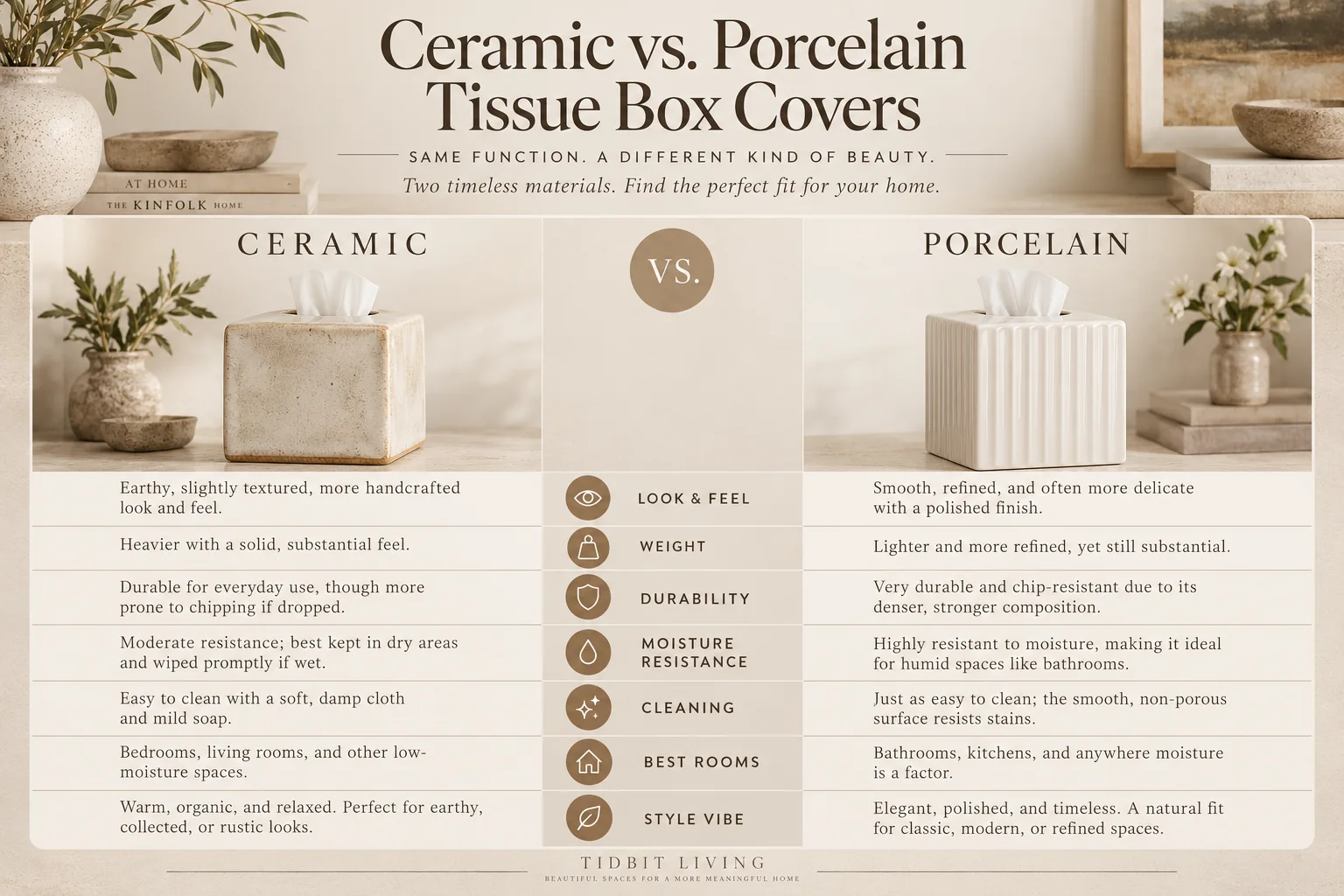
Ceramic vs. Porcelain Tissue Box Covers
| Feature | Ceramic / stoneware | Porcelain |
|---|---|---|
| Typical look | Warm, substantial, handmade or organic | Refined, crisp, smooth, sometimes more delicate |
| Visual weight | Often heavier and more grounded | Often cleaner and lighter-looking |
| Finish | Matte, reactive glaze, speckled, textured, glossy | Usually smoother, finer and more polished |
| Best decor fit | Japandi, rustic, organic modern, Mediterranean, relaxed contemporary | Classic, hotel-like, traditional, minimalist, polished contemporary |
| Everyday handling | Often feels sturdy but can still chip if dropped | Can feel refined but edges may be less forgiving if knocked |
| What matters most | Glaze quality, weight, dimensions, stable base | Wall thickness, edge quality, dimensions, stable base |
For everyday use, the label matters less than the actual construction. A thick porcelain cover can be more durable in practice than a thin ceramic one, while a heavy stoneware holder may feel much more secure on a bathroom counter than a lightweight decorative piece. Buy the object in front of you, not just the material name.
A beautiful ceramic cover that does not fit your usual tissue box is still the wrong cover.
Pros of Ceramic and Porcelain Tissue Box Covers
1. They make a tissue box feel like part of the room
Ceramic has enough visual presence to read as an accessory rather than a disguise. A simple off-white cube can disappear into a quiet bathroom, while a sculptural or patterned holder can work more like a vase or small decorative object on a console table.
2. The weight can make tissue pulling easier
A lightweight cardboard box can lift when tissues are pulled quickly, especially as the box empties. A reasonably heavy ceramic holder tends to stay in place better. This is particularly useful on bathroom counters, desks, and bedside tables where you often reach with one hand.
3. Smooth glazed surfaces are easy to wipe
Most glazed ceramic and porcelain surfaces can be dusted or wiped clean without the washing routine that a fabric cover may need. That makes them practical in bathrooms and other spaces where splashes, makeup residue, or dust can collect on accessories.
4. They can look more permanent than seasonal decor
A good ceramic holder can stay in the same room for years because neutral glazes, simple forms, and classic patterns are less dependent on changing textile trends. If you prefer buying fewer home accessories and keeping them longer, that permanence can be a benefit.
5. There is a wide range of decorative finishes
Glossy white porcelain is only one direction. Ceramic covers also come in matte glazes, speckled stoneware, reactive glazes, hand-painted motifs, ribbed textures, floral relief, blue-and-white patterns, organic shapes, and sculptural forms. That variety is why this material works in both minimal and highly decorative rooms.
Cons to Consider Before You Buy
They can chip or break
Ceramic is rigid, which is part of its appeal, but it is not forgiving when dropped onto tile or stone. Avoid fragile ceramic holders on narrow shelves, unstable stools, children’s bedside tables, or other places where they are likely to be knocked over.
Rigid dimensions leave little room for error
A fabric cover can flex around small differences in box size. Ceramic cannot. If the internal cavity is too small, the tissue box simply will not fit. If it is much too large, the box may slide around or sit awkwardly inside. This is why dimensions should be checked before style.
If you switch frequently between cube and rectangular tissue boxes, see our square vs. rectangular tissue box cover guide before choosing a rigid holder.
Some finishes show water spots, dust, or fingerprints
High-gloss dark finishes can show residue more easily than matte, speckled, or softly colored surfaces. In a busy bathroom, a satin or lightly textured glaze may be easier to live with than a mirror-like black finish.
A heavy cover can scratch delicate furniture
Check the underside. An unglazed ceramic base can be rough enough to mark lacquer, glass, marble, or softer wood finishes. Felt pads, silicone feet, cork, or a finished base are worth having when the holder will sit on furniture you care about.
What to Look For in a Ceramic Tissue Box Cover
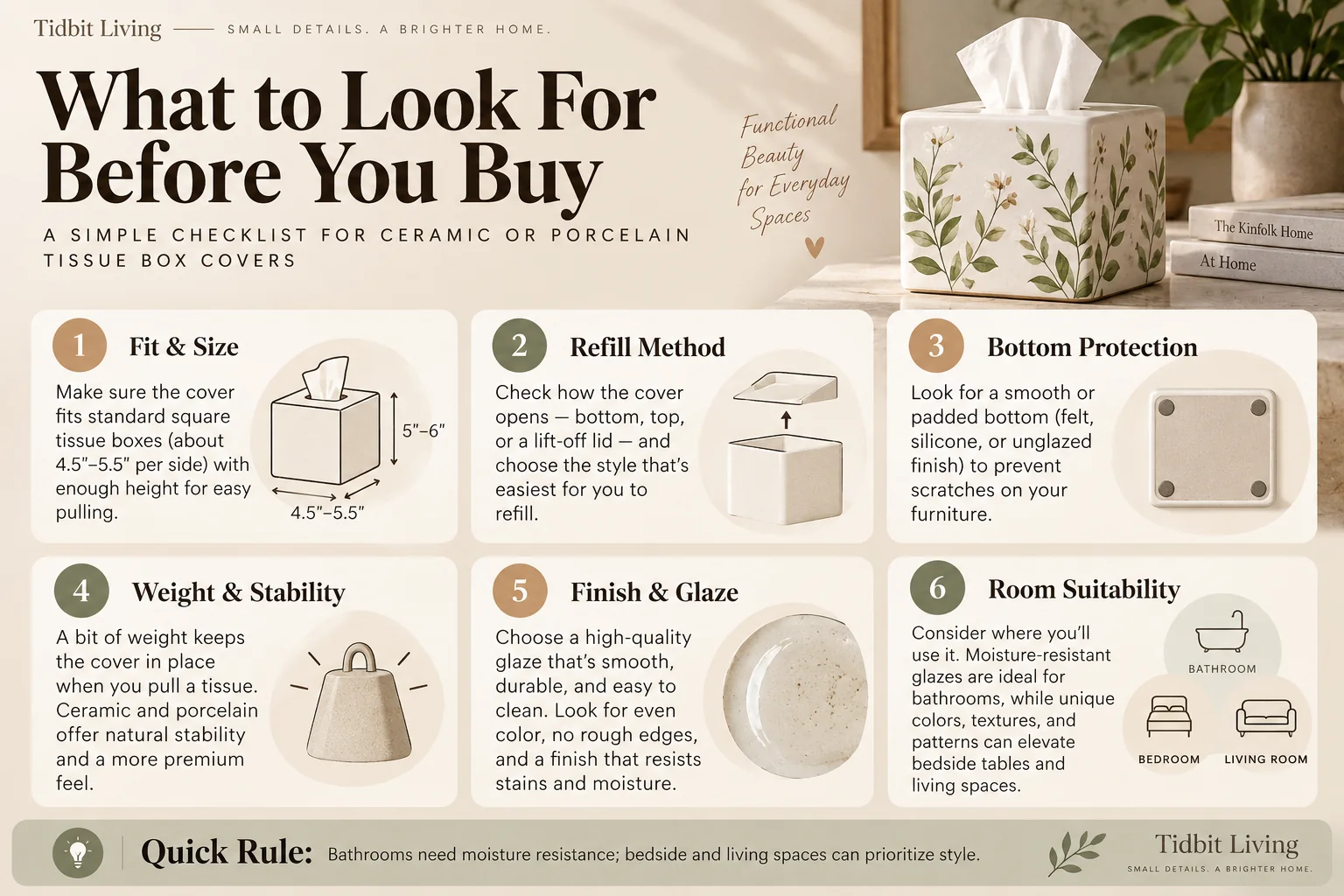
1. Measure the tissue box you actually buy
Do not rely on “standard size” alone. Measure the box length, width, and height, then compare those numbers with the interior dimensions of the ceramic holder. Allow enough room to insert and remove the box without scraping or forcing it.
2. Check how the cover is refilled
The easiest designs usually have either a fully open bottom, a removable base, or a generous lift-off shell. Decorative covers with narrow access can become annoying if you replace tissues often. Refill method matters more than it seems because you interact with it every time the box empties.
3. Look at the tissue opening
The opening should be wide enough that tissues pull smoothly without tearing, but not so large that you see most of the cardboard box underneath. Rounded edges are preferable because rough ceramic edges can catch delicate tissue.
4. Check the base for furniture protection
On a bathroom vanity, an unfinished base may be fine if the counter is durable. On a wood dresser or painted nightstand, look for felt, cork, silicone feet, or a smooth finished underside. If the piece lacks protection, add pads before putting it into regular use.
5. Choose the right amount of weight
Some weight is helpful because it keeps the holder stable. Too much weight becomes inconvenient when you have to lift the entire cover for every refill. For frequent-use bathrooms, stability plus easy refill is a better combination than simply buying the heaviest piece.
6. Inspect glaze and edge quality
Small handmade variations can add character, but sharp chips, rough dispensing edges, unstable bases, or poorly finished openings are functional problems. Decorative irregularity should never make the holder unpleasant to touch or use.
Which Ceramic Tissue Box Cover Style Fits Your Room?
| Style | Best features | Works well in |
|---|---|---|
| Glossy white porcelain | Crisp, hotel-like, easy to coordinate | Bathrooms, guest rooms, classic interiors |
| Matte neutral stoneware | Soft, quiet, organic | Japandi, minimalist, organic-modern rooms |
| Speckled / reactive glaze | Handmade character, hides small marks | Casual bathrooms, bedrooms, relaxed living rooms |
| Blue-and-white pattern | Traditional decorative impact | Grandmillennial, coastal, classic rooms |
| Ribbed or fluted ceramic | Texture without a busy pattern | Contemporary bathrooms and bedrooms |
| Floral or sculptural porcelain | Statement accessory | Powder rooms, consoles, formal guest spaces |
| Dark glossy ceramic | Dramatic contrast | Modern offices, moody bathrooms, contemporary rooms |
Best Places to Use Ceramic Tissue Box Covers
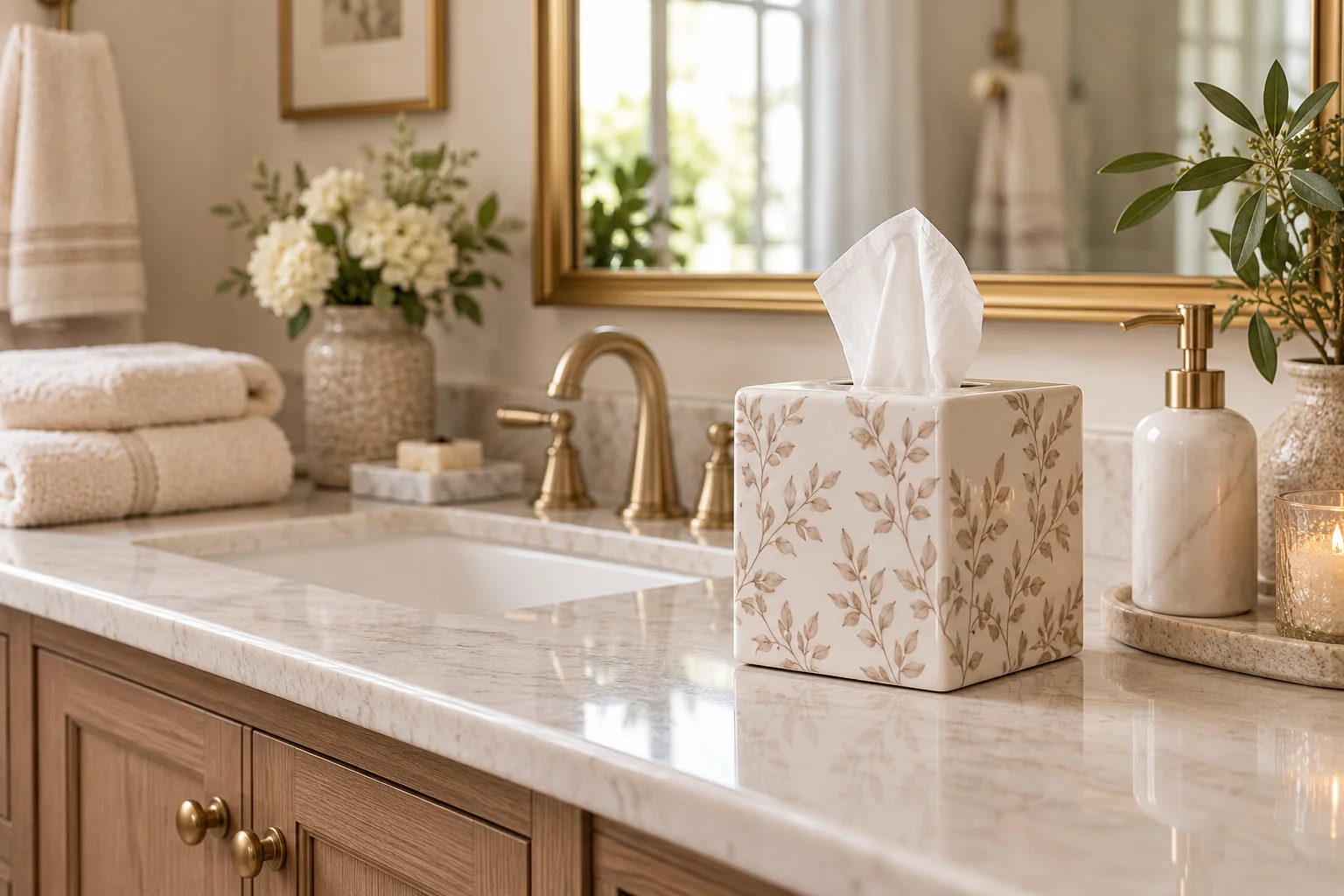
Bathroom vanity
This is one of the strongest use cases. Ceramic feels at home beside sinks, soap dispensers, trays, and jars, and glazed surfaces are easy to wipe. Choose a compact shape if counter space is limited, and keep the holder far enough from the sink edge that it cannot be knocked onto the floor.
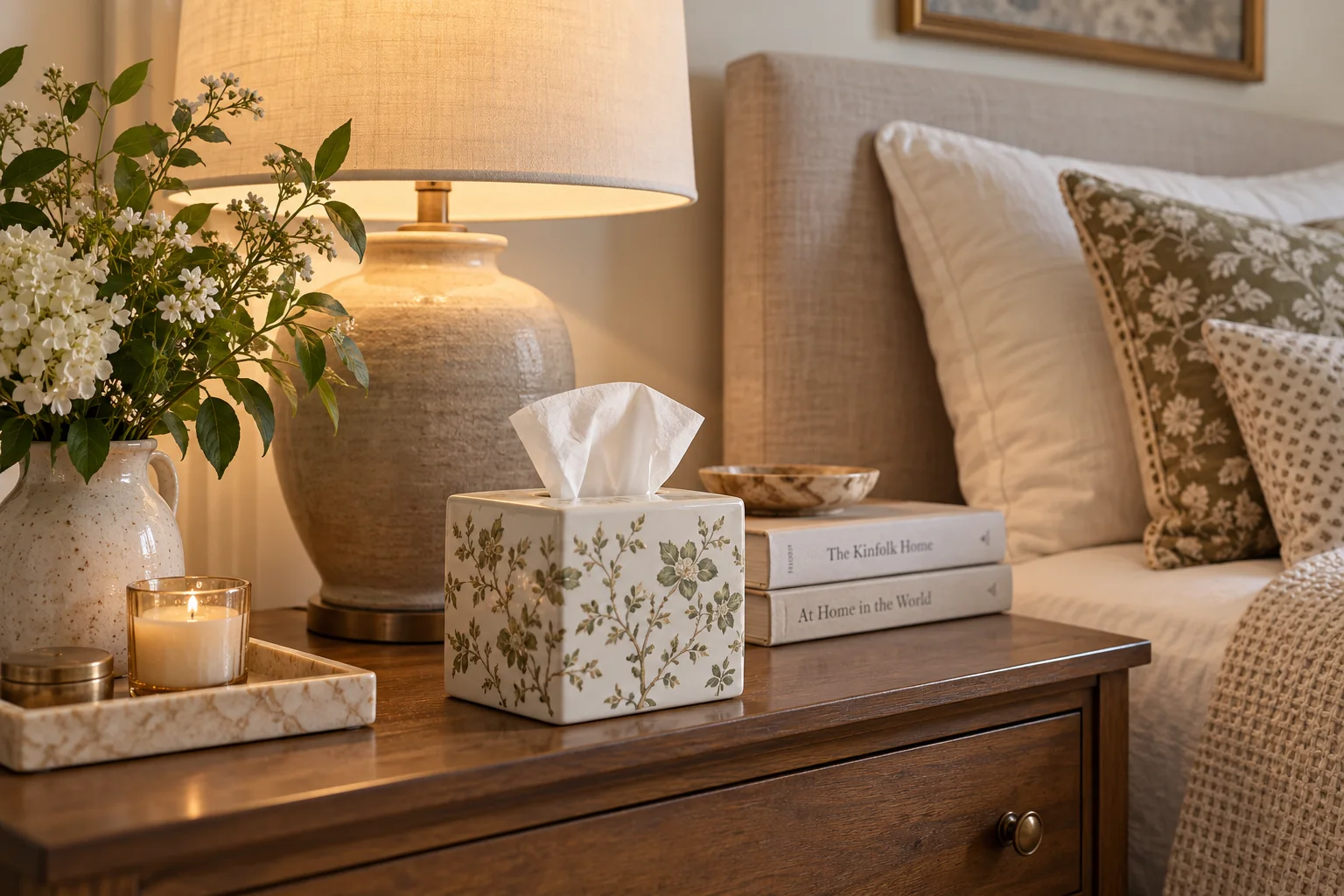
Guest bedroom
A simple porcelain or stoneware cover makes tissues feel more intentional on a bedside table without adding much visual clutter. In a small room, keep the design compact and leave enough bedside surface for water, a phone, and glasses.
Living room console or side table
Here the cover can act as part of the styling. Pair a ceramic holder with books, a lamp, vase, or tray, but avoid overfilling the surface. Our guide to styling tissue boxes in different rooms has more placement ideas.
Home office
Choose a clean, stable holder that does not steal too much desk space. Matte black, white porcelain, fluted neutral ceramic, and compact cube forms tend to work well because they feel deliberate without becoming distracting.
Where Ceramic Is Probably Not the Best Choice
- Children’s rooms: a soft fabric cover is safer if items are frequently knocked over.
- Very narrow shelves: the weight of ceramic is a disadvantage if the piece can fall easily.
- Travel or car use: rigid ceramic is impractical compared with lightweight holders.
- Frequently rearranged spaces: if you move accessories constantly, a lighter material may be easier.
- Homes where the tissue brand/box size changes often: a flexible fabric cover may tolerate size variation better.
If you are deciding between a rigid ceramic holder and a softer cover, our fabric vs. hard-material tissue box holder comparison explains the broader tradeoffs.
How to Clean a Ceramic or Porcelain Tissue Box Cover
- Remove the tissue box before cleaning.
- Dust or wipe the exterior with a soft damp cloth.
- Use a small amount of mild soap for visible residue if the finish allows it.
- Avoid abrasive scrubbers on glossy, painted, metallic, or hand-decorated finishes.
- Dry the cover before putting the cardboard tissue box back inside.
- Inspect chips or cracks periodically, especially around the tissue opening and base.
If the holder is handmade, unglazed, metallic-detailed, or hand-painted, follow the maker’s care instructions rather than assuming it can be soaked or washed like ordinary tableware.
60-Second Ceramic Tissue Holder Buying Checklist
- Measure your usual tissue box — length, width, and height.
- Confirm interior dimensions — not just the outside size of the holder.
- Check the refill method — open bottom, removable base, or lift-off shell.
- Inspect the tissue opening — wide enough for smooth pulling, with no rough edges.
- Check the underside — felt, cork, silicone feet, or a smooth base for furniture protection.
- Match weight to location — stable enough to stay put, but not awkward to lift.
- Choose the finish for the room — matte or speckled for forgiving everyday use; polished porcelain for a cleaner, more formal look.
Compact cube + wipeable glaze + non-slip base.
Soft neutral porcelain or stoneware + quiet shape + protected underside.
Patterned or sculptural ceramic + generous footprint + stable weight.
Common Buying Mistakes
Buying by exterior dimensions instead of interior fit
A ceramic wall may be thick. A cover that looks large enough from the outside can still have a smaller internal cavity than expected. Interior measurements are the numbers that matter.
Choosing a dramatic shape before checking refill access
Sculptural designs can look great and still be awkward to refill. If the cover will be used every day, make sure function is obvious before treating it like a decorative object.
Ignoring the underside
The bottom edge is easy to overlook in photos. A rough, unglazed base can damage furniture, while a very smooth base may slide on polished counters. Check for protective feet or plan to add them.
Assuming “porcelain” automatically means better
Porcelain can be beautiful, but a well-made stoneware holder may be the better choice if you want more weight, a handmade look, or a relaxed finish. Construction, dimensions, stability, and glaze quality should drive the decision.
Frequently Asked Questions
Is porcelain better than ceramic for a tissue box cover?
Not automatically. Porcelain often has a smoother, more refined appearance, while stoneware and other ceramics can feel heavier and more handcrafted. For everyday use, fit, refill design, weight, glaze quality, and edge finish matter more than the category name.
Can ceramic tissue box covers be used in bathrooms?
Yes. Glazed ceramic and porcelain are practical bathroom materials because their surfaces are easy to wipe. Keep the tissue box itself dry, avoid standing water around the base, and choose a stable location away from the edge of the vanity.
Do ceramic tissue holders fit all tissue boxes?
No. They are rigid and normally designed around a specific cube or rectangular size. Measure the box you buy most often and compare it with the holder’s internal dimensions before ordering.
Are ceramic tissue box covers heavy?
They are generally heavier than fabric, plastic, or thin acrylic covers. Moderate weight can be useful because the holder stays put when you pull a tissue, but very heavy pieces can be inconvenient to lift for refilling.
What color ceramic tissue box cover is easiest to decorate with?
Warm white, ivory, soft beige, light gray, and muted stone tones are the easiest to move between rooms. If you want the holder to act as a statement piece, blue-and-white patterns, deep green, black, terracotta, or hand-painted designs create more visual impact.
Before You Buy: Do These 3 Checks
- Measure first: write down your usual tissue box length, width, and height, then compare those numbers with the holder’s interior dimensions.
- Check the refill path: make sure you can remove and replace the tissue box without turning the whole piece into a puzzle.
- Protect the surface: check the underside for felt, cork, silicone feet, or a smooth base before placing a heavy ceramic holder on wood, lacquer, glass, or stone.
If a cover passes those three checks, then choose the glaze, pattern, and ceramic style that best fits the room.
Before You Order: A 3-Step Fit Check
- Measure your usual tissue box at home. Write down length, width, and height rather than relying on the brand name or “standard” wording.
- Compare those numbers with the holder’s interior dimensions. If the seller only lists exterior dimensions, ask for the usable inside space before ordering.
- Confirm the refill and base details. Check how the box goes in, whether the tissue opening is smooth, and whether the underside has felt, cork, silicone feet, or another furniture-safe finish.
If a listing passes all three checks, then choose the glaze, color, and decorative style you like. This order prevents the most common problem with rigid ceramic covers: buying a beautiful piece that does not fit or is awkward to use.
Bottom Line
A ceramic or porcelain tissue box cover works best when you want the tissue box to feel like a permanent part of the room rather than temporary packaging. The strongest options combine a finish you enjoy with accurate internal dimensions, easy refill access, a smooth tissue opening, a stable base, and enough weight to stay put.
Start with fit, then choose the ceramic style that suits the room. A plain porcelain cube, speckled stoneware cover, ribbed neutral holder, or hand-painted statement piece can all work well when the practical details are right.


