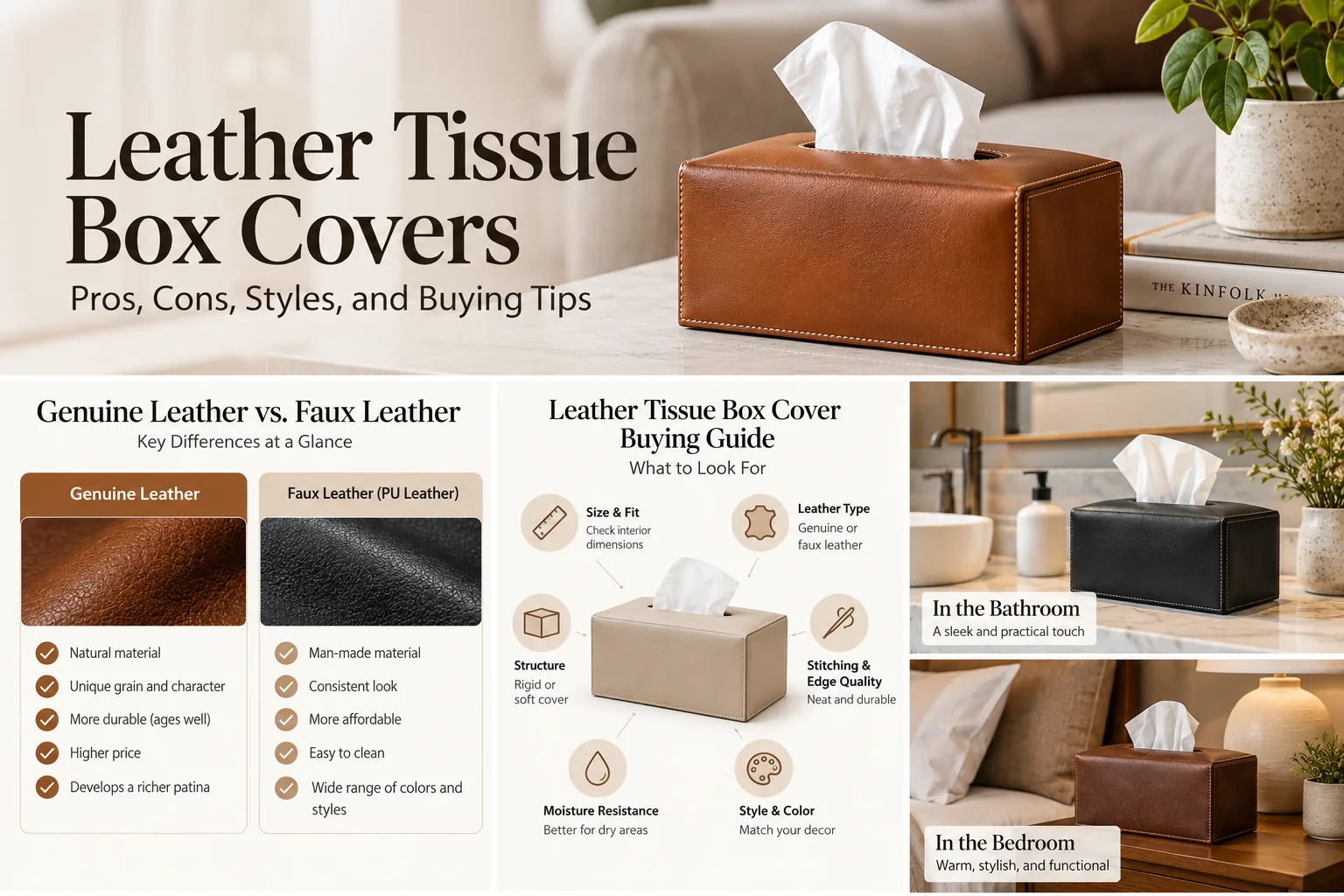

A leather tissue box cover is one of those small home accessories that can make an ordinary tissue box feel more intentional. Compared with ceramic or wood, leather brings a softer, warmer look while still feeling structured and polished enough for a living room, office, bedroom, or guest space.
This guide focuses specifically on leather and leather-look tissue box covers. If you want a broader overview of all materials, start with our tissue box cover guide. If you are comparing a soft cover with a rigid holder, our fabric vs. hard-material tissue box holder comparison explains the bigger tradeoffs.
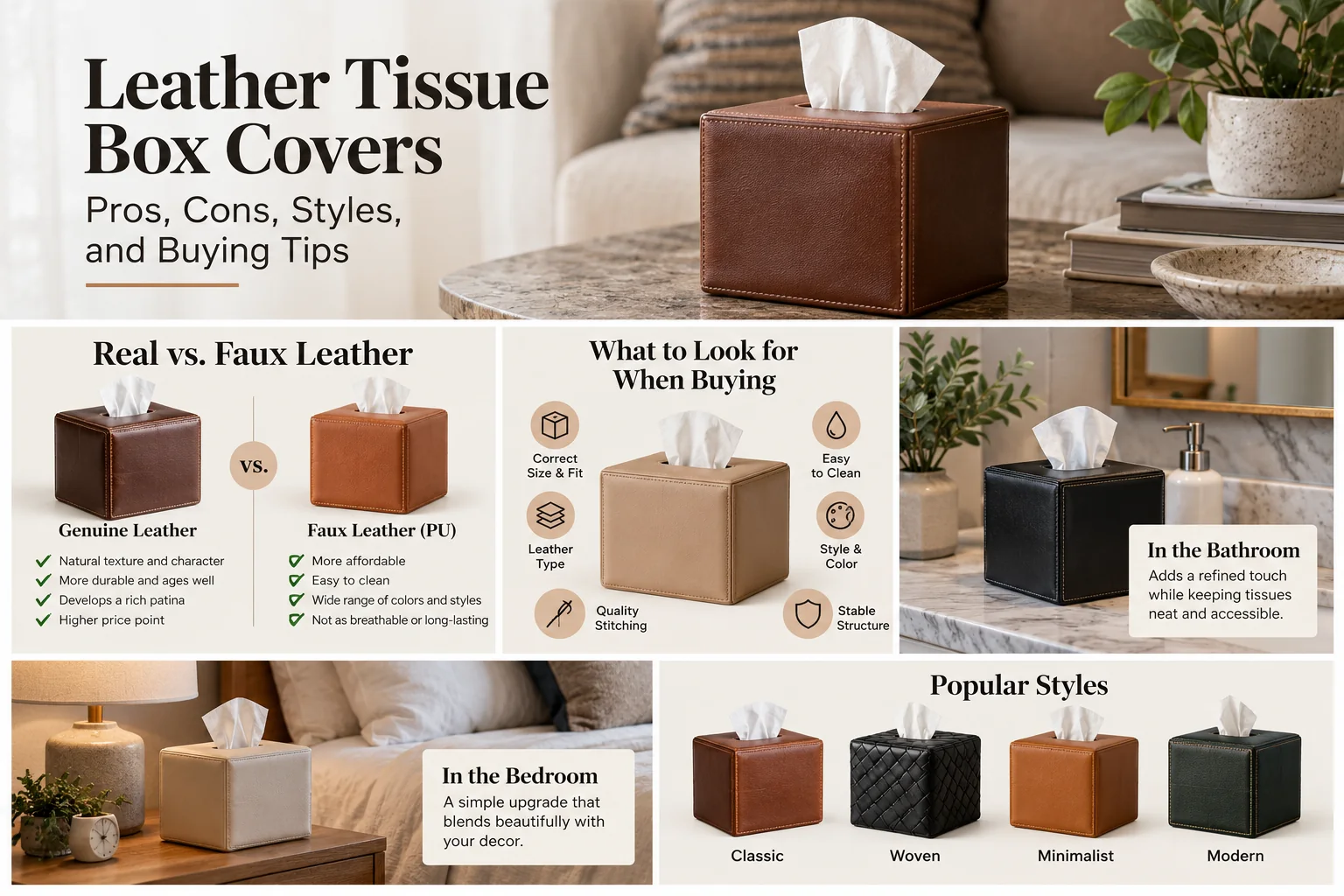
What Is a Leather Tissue Box Cover?
A leather tissue box cover is usually a sleeve, structured shell, or box-shaped case designed to conceal the original cardboard tissue package. Depending on the design, it may be made from genuine leather, bonded leather, vegan leather, polyurethane-coated faux leather, or a mixed construction with a rigid inner frame wrapped in leather.
The most important distinction is not simply “real or fake.” A soft unstructured leather sleeve behaves very differently from a rigid faux-leather box with a reinforced frame. One bends, develops patina, and can feel casual; the other keeps crisp corners and reads more like a tailored desk or hotel accessory.
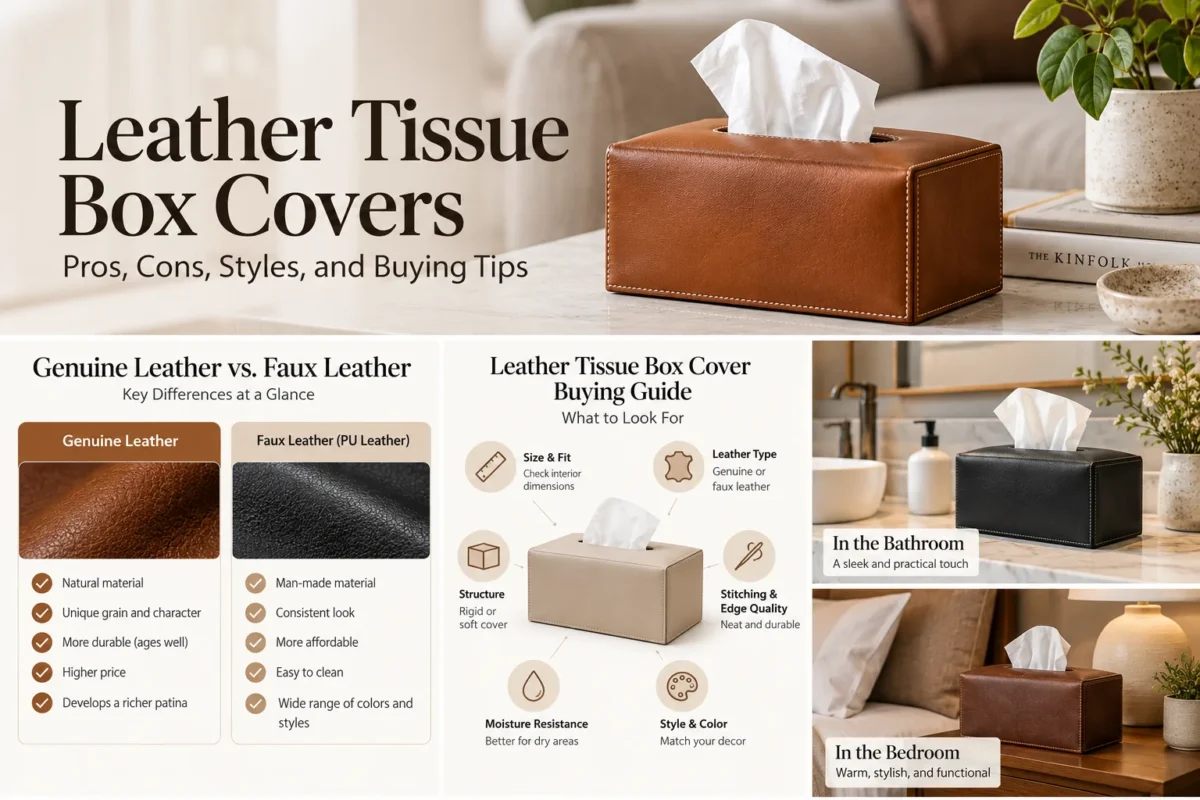
Real Leather vs. Faux Leather Tissue Box Covers
| Feature | Genuine leather | Faux / vegan leather |
|---|---|---|
| Look | Natural grain, variation, richer patina over time | More uniform color and texture |
| Feel | Warm, supple, tactile | Often smoother and more structured |
| Maintenance | Needs gentler care; may stain or dry out | Usually easier to wipe clean |
| Water resistance | Varies; untreated leather dislikes moisture | Often better for everyday splashes |
| Durability | Can age beautifully if well made | Quality varies; coating may peel over time |
| Best fit | Living rooms, offices, bedrooms, premium decor | Bathrooms, guest rooms, desks, easy-care spaces |
| Main buying concern | Leather quality, finish, stitching, care | Surface quality, seams, peeling resistance, odor |
Neither option is automatically better. Genuine leather makes sense when you want natural texture and long-term character. Faux leather is often the more practical choice when you want a consistent finish, easy cleaning, and less worry about splashes or stains.
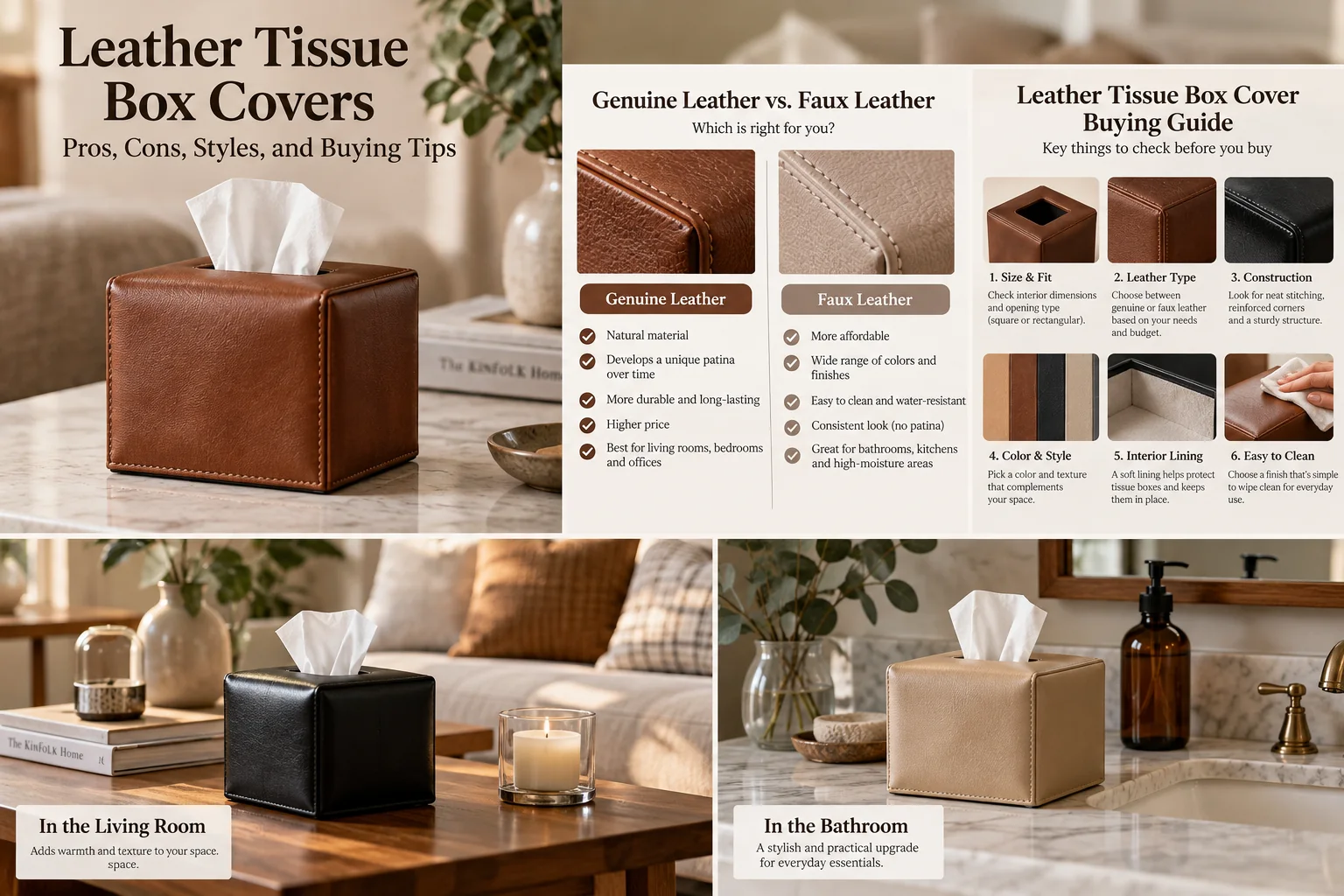
The best-looking leather cover is still a poor buy if the box does not fit cleanly or the seams start lifting after a few months.
Pros of Leather Tissue Box Covers
1. Leather adds warmth without looking casual
Leather sits between fabric and hard materials visually. It has the warmth and softness of a textile, but a structured leather cover can still look polished on a desk, console, or bedside table. That balance works particularly well in modern, transitional, masculine, hotel-inspired, and classic interiors.
2. It is quieter and less fragile than ceramic
A leather-covered box is less likely to chip if bumped and does not create the hard clatter of ceramic against a stone or wood surface. If you like the clean look of a rigid holder but worry about breakage, leather can be a practical middle ground. For a direct contrast with ceramic, see our ceramic and porcelain tissue box cover guide.
3. Neutral leather colors are easy to coordinate
Tan, camel, cognac, chocolate, black, taupe, cream, and warm gray work with a wide range of furniture finishes. A leather cover can echo a desk pad, chair, headboard, tray, or storage box without forcing you into a highly decorative pattern.
4. Many faux-leather finishes are easy to wipe
Quality polyurethane or coated leather-look surfaces can usually be wiped with a soft damp cloth, making them easier to maintain than fabric. This is useful in guest rooms, offices, and some bathrooms where you want a soft visual finish without frequent laundering.
5. A structured leather cover can hide an inexpensive tissue box completely
Rigid leather-wrapped covers tend to keep sharp lines even when the cardboard box inside is flimsy. That makes them useful in visible areas where branded packaging feels distracting.
Cons to Consider Before You Buy
Real leather can stain or darken
Untreated or lightly finished leather can absorb water, hand lotion, makeup, and oils. That may create attractive patina in a study or living room, but it can be frustrating in a bathroom or busy bedside setup if you want the cover to stay uniform.
Cheap faux leather can peel
The weak point in low-quality faux leather is often the surface coating. It may crack at folded edges, bubble near seams, or peel where tissues and hands repeatedly rub the top opening. Look closely at edge finishing and customer photos if you are buying online.
Soft sleeves can sag
A thin leather sleeve may look relaxed when full but collapse or wrinkle as the tissue box empties. If you prefer crisp corners, choose a reinforced cover with an inner frame or thicker panels.
Dark colors can show dust
Black and deep brown leather can show pale dust or tissue lint, especially on smooth finishes. Pebbled or lightly textured leather is more forgiving than a glossy flat surface.
What to Look For in a Leather Tissue Box Cover
1. Check interior dimensions first
Rigid leather-covered boxes have the same fit problem as ceramic and wood: the outside size tells you very little about usable interior space. Measure the tissue box you normally buy and compare it with the holder’s inside length, width, and height.
If you regularly switch between cube and rectangular boxes, our square vs. rectangular tissue box cover guide can help you choose the more practical shape.
2. Decide whether you want soft or structured
A soft leather sleeve feels relaxed and tactile. A reinforced cover looks neater and keeps its shape even as the tissue supply runs low. For desks, formal guest rooms, and minimalist surfaces, structured styles usually look cleaner.
3. Inspect stitching and edge finishing
Look for straight seams, even stitch spacing, secure corners, and cleanly finished edges. On faux leather, unfinished cut edges can expose the backing and may begin to separate. Folded or painted edges generally look more polished.
4. Check the top opening
The tissue opening should be smooth and wide enough for easy dispensing. If the edge is too tight, tissues can drag against the surface and pull the entire cover upward. If it is oversized, the cardboard box underneath may become visible.
5. Look for a lined or finished interior
A lining helps protect the inside surface and makes refilling smoother. Felt, microfiber, fabric, or a clean coated interior also reduces friction when sliding the tissue box in and out.
6. Check the underside
A structured leather cover often sits on wood, lacquer, glass, or stone. Felt feet, a soft base panel, or silicone pads can prevent scratching and reduce sliding. This detail matters more on polished furniture than it does on a durable bathroom counter.
7. Smell matters with faux leather
Some low-cost synthetic covers have a strong chemical odor when first opened. That may fade, but it is worth checking reviews for repeated complaints if the cover will sit beside your bed or on a desk where it is close to your face.
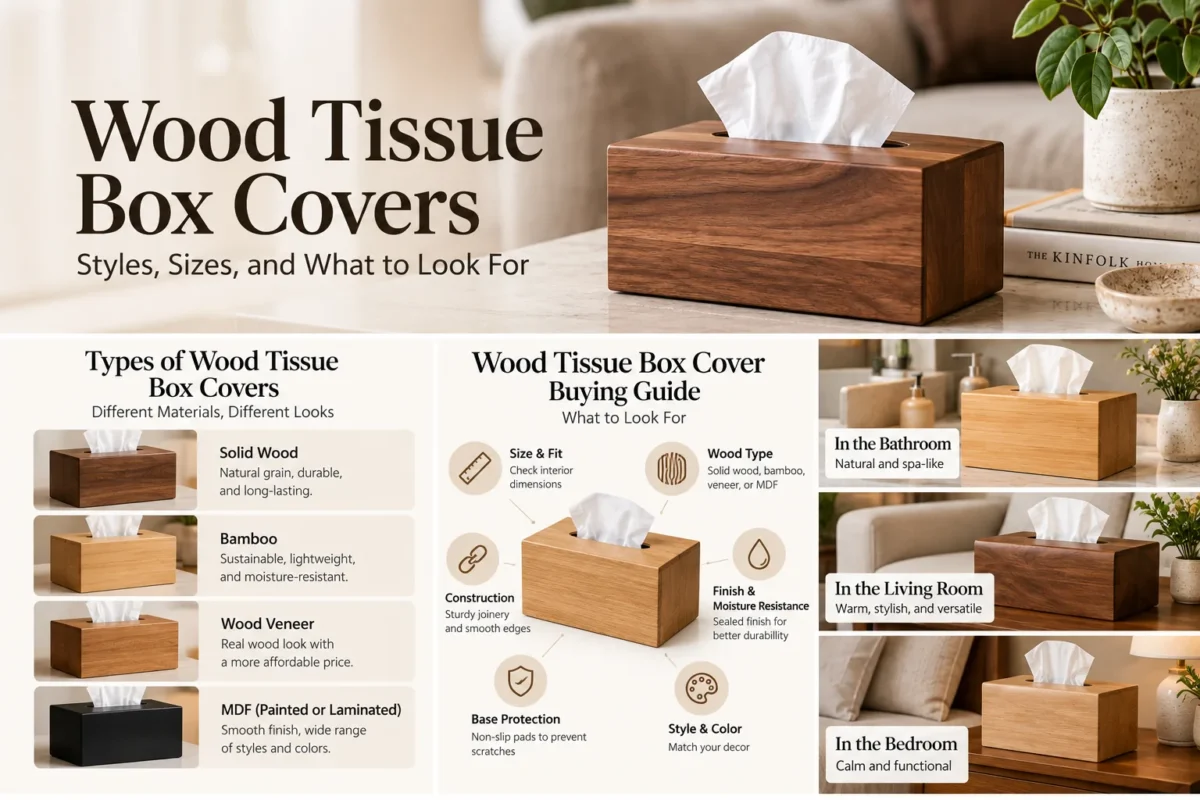
Best Leather Styles for Different Rooms
| Style | Best feature | Where it works |
|---|---|---|
| Cognac pebbled leather | Warm, classic, hides minor marks | Living rooms, studies, bedrooms |
| Black smooth leather | Crisp and minimal | Offices, modern bedrooms, media rooms |
| Taupe or greige faux leather | Soft neutral, easy to coordinate | Guest rooms, bathrooms, contemporary spaces |
| White or cream leather-look | Light, hotel-inspired look | Vanities, guest bedrooms, polished interiors |
| Stitched saddle style | Visible craftsmanship | Traditional, equestrian, masculine interiors |
| Minimal seam-free box | Clean architectural shape | Modern and minimalist rooms |
| Embossed or croc-texture finish | Decorative statement | Powder rooms, consoles, glam spaces |
Best Places to Use Leather Tissue Box Covers
Home office or desk
Leather works naturally with desk pads, notebooks, trays, and office chairs. A black, cognac, or taupe structured cover can make a tissue box feel like part of the workspace rather than an afterthought.
Bedroom nightstand
A soft neutral leather cover adds warmth without competing with bedding. Choose a compact shape and make sure the base will not scratch a wood or painted nightstand.
Living room console
Leather works well beside books, trays, lamps, and wood furniture. For more placement ideas, see our guide to styling tissue boxes in every room.
Guest room
A wipeable faux-leather cover is a practical guest-room choice because it looks finished but does not require the care of untreated leather. Neutral colors also blend easily with changing bedding and seasonal decor.
Bathroom vanity
Use caution here. A coated or faux-leather cover can work in a well-ventilated bathroom, but untreated genuine leather is not the best match for standing water, repeated splashes, or high humidity. If the vanity is frequently wet, ceramic or acrylic may be easier to live with.
Where Leather Is Probably Not the Best Choice
- Very wet bathrooms: repeated moisture can stain genuine leather or damage backing materials.
- Children’s rooms: a washable fabric cover may be easier if sticky hands and spills are common.
- Pet-accessible low surfaces: claws can scratch genuine and faux leather.
- Outdoor spaces: sun, moisture, and temperature swings shorten the life of leather finishes.
- Homes that change tissue box sizes often: rigid leather covers are unforgiving if dimensions vary.
How to Clean a Leather Tissue Box Cover
For faux leather
- Remove the tissue box.
- Dust the surface with a soft dry cloth.
- Wipe marks with a lightly damp microfiber cloth.
- Use a tiny amount of mild soap only if the manufacturer allows it.
- Dry the surface immediately.
- Avoid alcohol, bleach, abrasive sponges, and strong solvents that can damage the coating.
For genuine leather
Use the maker’s care instructions first. In general, dust gently, blot spills quickly, avoid soaking the surface, and use a leather-specific cleaner or conditioner only when appropriate for that leather finish. Suede, nubuck, aniline leather, and coated leather all require different care.
60-Second Leather Tissue Box Cover Buying Checklist
- Measure your usual tissue box and compare it with the holder’s interior dimensions.
- Choose soft or structured based on whether you want relaxed or crisp styling.
- Decide real vs faux based on patina, moisture exposure, and maintenance.
- Inspect seams and edges for straight stitching, secure corners, and no exposed backing.
- Check the tissue opening for smooth dispensing.
- Check the underside for a soft, non-scratch base.
- Read care instructions before assuming the cover is wipe-clean.
- Check reviews for peeling or odor if you are considering faux leather.
Structured black or cognac + crisp seams + stable base.
Taupe faux leather + easy-wipe finish + compact footprint.
Pebbled cognac leather + warm tone + protected underside.
Common Buying Mistakes
Choosing by color before checking construction
A beautiful camel or black finish cannot make up for crooked seams, weak corners, or a sagging body. Structure and edge finishing determine whether the cover still looks good after daily use.
Assuming all faux leather is equally easy to clean
Some surfaces are durable and wipeable; others are thin, porous, or prone to peeling. Check the actual material and care instructions rather than relying on the phrase “vegan leather.”
Ignoring the top opening
Thick folded leather around the dispensing slot can create drag. A smooth, properly sized opening matters more than decorative stitching around the top.
Putting untreated leather in a splash zone
Bathroom humidity is not always a problem, but direct water exposure can be. If you love the leather look near a sink, choose a coated, sealed, or faux-leather option and keep it away from standing water.
Frequently Asked Questions
Is real leather better than faux leather for a tissue box cover?
Not necessarily. Genuine leather offers natural texture and can age beautifully, while faux leather is usually easier to wipe and more consistent in color. The best choice depends on where the cover will be used and how much maintenance you want.
Can I use a leather tissue box cover in a bathroom?
Yes, if the bathroom is reasonably dry and the cover has a wipeable, moisture-resistant finish. Avoid untreated genuine leather in areas that receive frequent splashes or standing water.
Do leather tissue box covers fit every box?
No. Structured covers are usually designed for a specific cube or rectangular size. Measure your usual tissue box and compare it with the cover’s interior dimensions before buying.
How do I stop a leather tissue box cover from sliding?
Look for a suede, felt, rubberized, or silicone base. If the bottom is smooth, small clear silicone pads can add grip and protect furniture.
What leather color is easiest to decorate with?
Cognac, tan, taupe, black, cream, and chocolate brown are the most versatile. Cognac adds warmth, black looks crisp and modern, and taupe or cream tends to disappear into quiet neutral interiors.
Bottom Line
A leather tissue box cover is a strong choice when you want something warmer than ceramic, more structured than fabric, and polished enough to sit openly on a desk, console, or nightstand. The best options combine accurate dimensions, clean seams, a smooth dispensing opening, a protected base, and a surface finish that matches the amount of moisture and handling in the room.
Start with fit and construction, then choose the leather type and color. A simple taupe faux-leather cube, a pebbled cognac cover, or a crisp black structured holder can all work well when the practical details are right.
A 3-Step Fit Check Before You Order
- Measure the box you actually use. Write down length, width, and height rather than relying on “standard cube” or “standard rectangle.”
- Compare those measurements with the holder’s interior dimensions. Leave a little clearance so the box slides in without forcing the seams or corners.
- Check the refill path. Confirm whether the cover lifts off, opens at the bottom, or uses a removable base, and make sure you can replace tissues without bending or scraping the cover.
If a product listing gives only exterior dimensions, ask the seller for interior measurements before buying. That single check prevents most fit-related returns with structured leather covers.