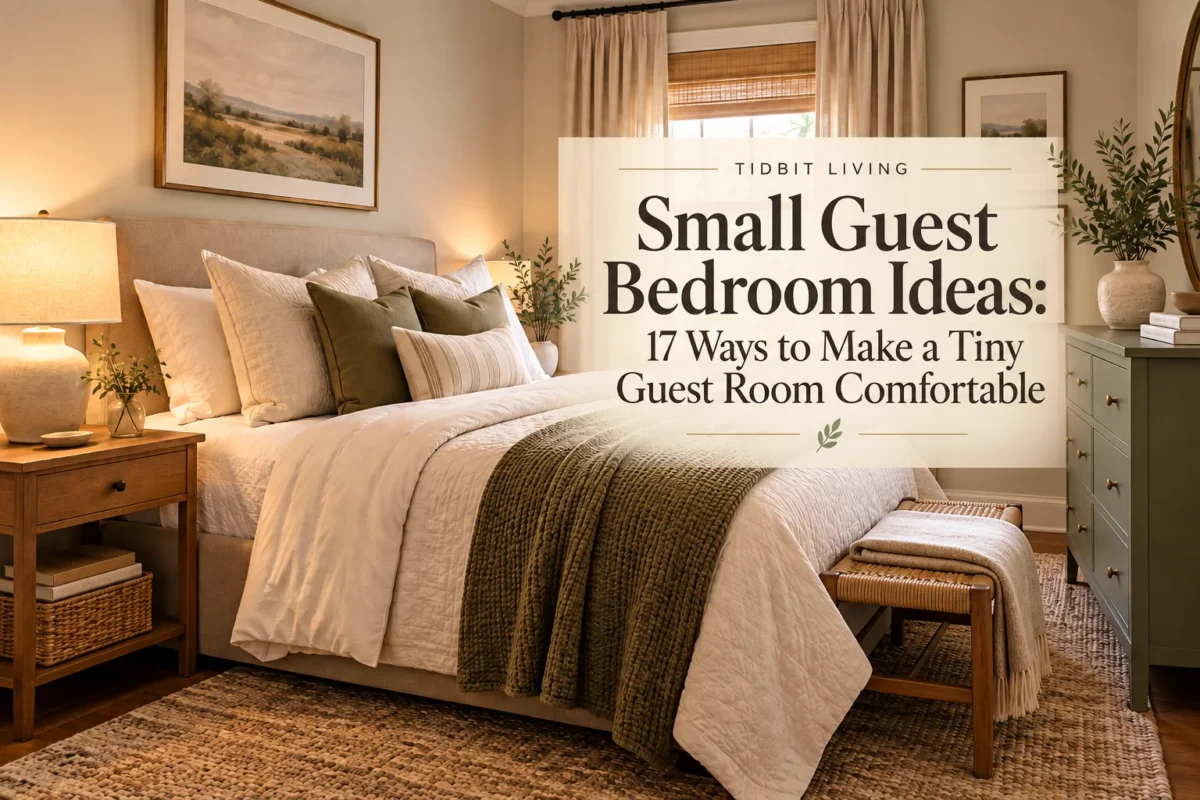


The best furniture for a small bedroom is not simply the smallest furniture you can find. It is furniture that protects the bed, preserves a clear walking path, solves storage problems, and avoids adding functions the room does not actually need.
This guide focuses on what furniture is worth buying for a small bedroom, how to size it, and what commonly wastes space. If your main problem is placement rather than shopping, start with our small bedroom layout ideas. If you are still working on the room visually, see how to decorate a small bedroom.
What Makes Furniture Good for a Small Bedroom?
Small-bedroom furniture has to pass a stricter test than furniture in a larger room. A piece can look compact online and still be wrong once you account for drawers, doors, bedding, chair pull-out space, and the route you use to get in and out of bed.
| Test | Question to ask | Why it matters |
|---|---|---|
| Footprint | How much floor does it use when fully in use? | Drawers, chairs and lift mechanisms need operating space. |
| Storage value | Does it replace another piece or storage category? | A piece that eliminates a dresser or bin earns more space. |
| Circulation | Can you still reach the bed, closet and door comfortably? | A technically fitting room can still function badly. |
| Visual weight | Does it block light, floor visibility or long sightlines? | Heavy furniture can make the room feel tighter. |
| Daily use | Will you use it often enough to justify the footprint? | Occasional functions should not dominate a small bedroom. |
Start With the Bed Because It Controls the Room
The bed is usually the largest footprint in a bedroom, so it should be the first furniture decision. Do not choose nightstands, a dresser or a desk first and then try to squeeze the bed into the leftover area.
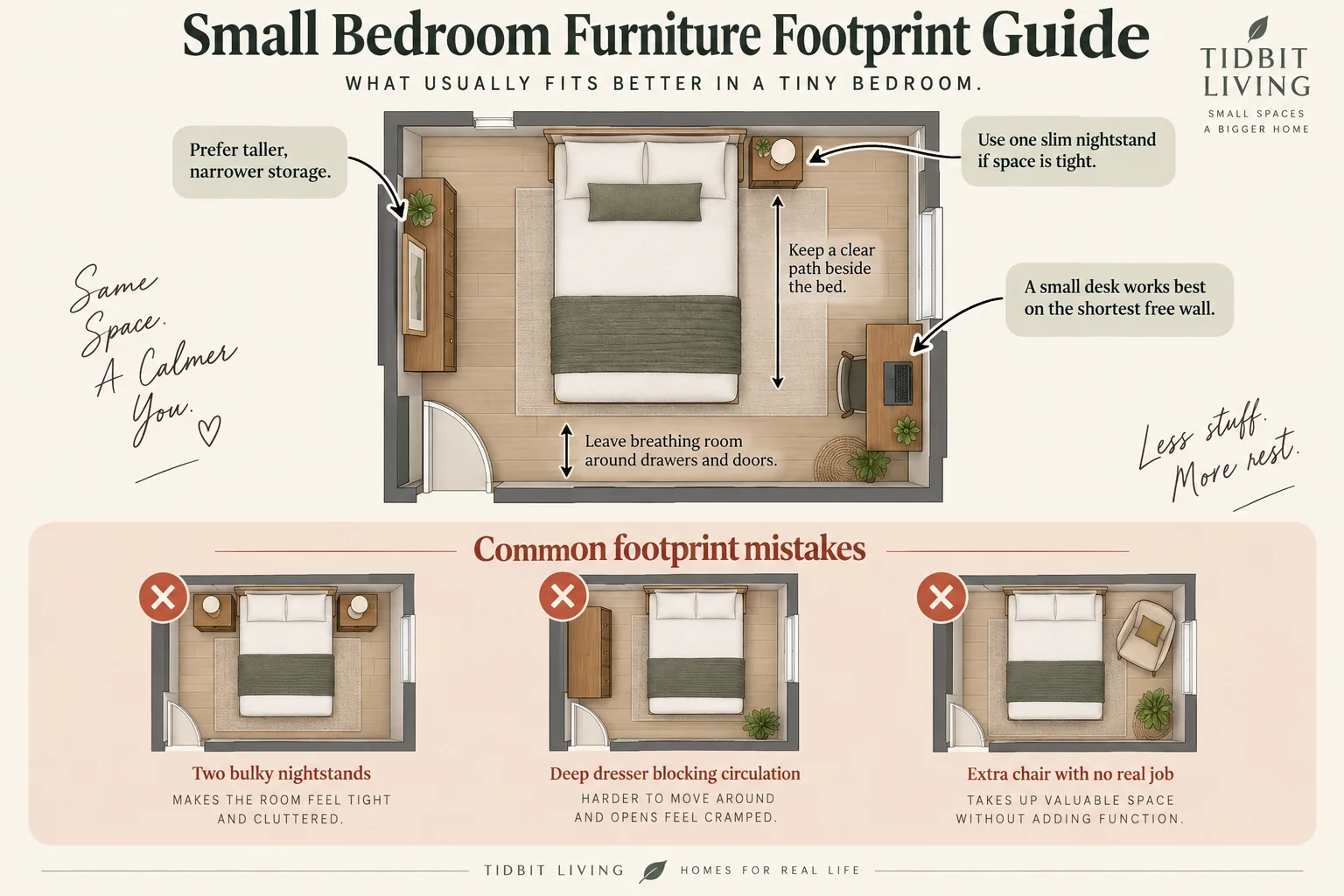
Use painter’s tape to mark the mattress and frame footprint on the floor. Then test the route from the door to the bed, the closet, drawers and windows. If a frame adds several inches around the mattress, include those inches in the tape outline.
Buy: a simple, properly scaled bed frame
A low-profile frame with a slim perimeter usually gives you more usable room than a heavily upholstered frame with thick rails and an oversized headboard. Visible legs can also make the room feel lighter because more floor remains visible.
Consider: a storage bed when storage is the real problem
A storage bed can be excellent when it replaces bins, a second dresser or a bulky linen cabinet. Drawer-style beds need side clearance, while lift-up platforms are often easier in tight rooms because the storage is accessed from above.
Use the storage for bulky categories such as extra bedding, seasonal clothes, luggage or less-used shoes. If the mechanism is difficult to open or the drawers will hit a wall, the storage feature is not actually useful.
Skip: oversized frames that add bulk without function
Deep upholstered rails, giant footboards, canopy frames and very thick headboards can consume valuable inches around the mattress. They may look dramatic, but in a tight room those inches often come directly out of the walking path.
Nightstands: Smaller Is Not Always Better
A nightstand only needs to support the things you actually use beside the bed. For many people that means a phone, glass of water, book, glasses and perhaps one small drawer.
Buy: narrow nightstands with useful storage
A narrow table with one drawer is often more useful than an ultra-tiny pedestal with no storage. The key is to keep the depth and width in proportion to the aisle beside the bed.
Consider: floating nightstands
Floating nightstands preserve visible floor and can fit where a normal table feels heavy. They are especially useful when the bed is close to a wall or when the bedside aisle is narrow.
Renters should confirm what wall mounting is permitted. A floating shelf is not automatically better if you need significant drawer storage.
Skip: matching nightstands just because the bed has two sides
One nightstand may be enough for a single sleeper. In a shared room, the two sides do not have to match. One side can use a narrow drawer unit while the tighter side uses a floating shelf.
Dresser or Wardrobe? Choose the Storage Shape the Room Can Support
Dressers are one of the easiest pieces to oversize in a small bedroom. A wide, deep dresser can consume an entire wall and reduce the usable aisle between the bed and storage.
Buy: a tall dresser when floor width is limited
A taller chest can provide comparable clothing storage with less wall width. The tradeoff is height, so avoid placing it where it blocks a window or makes the room feel top-heavy.
Consider: a shallow wardrobe when the room lacks a closet
A wardrobe can solve hanging storage, folded clothes and accessories in one footprint. Prioritize shallow designs with efficient internal organization rather than a deep armoire that projects far into the room.
Skip: wide low dressers when they create a narrow corridor
A long dresser can look visually calm, but it is a poor trade if it leaves the bed facing a cramped passage. Measure the space with drawers open, not only with them closed.
| If your main problem is… | Furniture to consider | What to avoid first |
|---|---|---|
| Not enough hanging space | Shallow wardrobe | More drawer-only storage |
| Not enough folded-clothing storage | Tall dresser | Wide, deep low dresser |
| Seasonal items and bedding | Storage bed | Extra freestanding bins |
| Mixed visible clutter | Closed cabinet | Open shelving |
| Very narrow aisle | Shallower storage | Deep furniture even if narrow |
Desks in Small Bedrooms: Buy One Only If the Room Really Needs It
A bedroom desk can be useful, but it is also one of the most common pieces that turns a calm bedroom into a crowded multipurpose room. The right question is not “Can a desk fit?” but “Is the bedroom the best place for this function?”
Buy: a real compact desk for daily work
If you work from home for hours at a time, prioritize a desk deep enough for your equipment and a chair you can sit in comfortably. An ultra-shallow shelf may save floor space but create a bad daily work setup.
Consider: a wall-mounted or narrow desk for occasional use
For occasional laptop work, a shallow wall desk or narrow console can be enough. A folding design is helpful only if you will actually fold it away after use.
Skip: a desk that blocks the closet, window or bedside route
The chair needs pull-out space as well as sitting space. Tape the desk and chair zone on the floor before buying. If the chair must live in the main walkway, the desk is too large for the location.
Need daily work? Buy a real compact desk.
Need occasional laptop space? Use a narrow console or wall desk.
Need only a place for a phone or journal? Do not add a desk at all.
Bedroom Seating: Usually the First Category to Question
A chair or bench can be useful, but in a very small bedroom it often becomes a clothing drop zone rather than meaningful seating. Seating deserves space only when you use it regularly.
Consider: a small bench when it also stores something
A storage bench can earn its footprint if it holds bedding, shoes or bags while giving you a place to sit. Check lid clearance and make sure it does not make the foot of the bed difficult to walk around.
Skip: a decorative armchair in a room with no spare circulation space
If the chair is mostly visual, the same corner may work harder as open floor, a narrow dresser or a small work surface. Empty space has value in a small bedroom because it preserves movement and calm.
Use Vertical Storage Carefully
Going vertical is useful when floor area is limited, but tall furniture should be placed where it does not block daylight or make the room feel boxed in.
Buy: one tall closed storage piece before several small units
One tall cabinet can be more efficient than several short cabinets scattered around the room. Closed doors also reduce visual clutter, especially for mixed categories such as accessories, paperwork, electronics and personal care items.
Consider: wall shelves for books and intentional display
Open shelves work well for a limited number of books and objects. They work less well for miscellaneous daily clutter. Do not install shelves simply because the wall is empty.
Skip: multiple open shelving systems for things you want hidden
If most of your belongings look messy when visible, open storage creates more decorating work. Closed storage usually makes a small bedroom feel calmer.
Wall-Mounted Lighting Can Replace Furniture
Lighting is not technically furniture, but it changes what furniture you need. A wall sconce or plug-in wall light can free a small nightstand from supporting a lamp base, which may let you choose a narrower bedside surface.
That is one of the most useful small-room strategies: solve a furniture problem by removing a function from the furniture entirely.
Furniture to Skip in a Small Bedroom
Matching bedroom sets
A bed, two nightstands and a dresser from one collection may look coordinated, but matching sets are designed as a group rather than for your exact room constraints. Mix pieces by function and size instead.
Oversized upholstered headboards
Very thick headboards can push the mattress farther into the room and make a narrow aisle tighter. Choose drama through color, art or textiles if the wall cannot spare the depth.
Deep dressers
Depth often matters more than width in a narrow bedroom. A dresser that projects too far into the walkway can make the entire room uncomfortable even if it technically fits.
Benches and chairs with no real job
If you never sit there and it stores nothing, the piece is using floor space for appearance alone. In a small bedroom, that is usually a poor trade.
Too many tiny storage pieces
Several narrow carts, bins and mini cabinets can create a fragmented room. One well-sized storage piece often looks calmer and holds more.
Best Furniture by Small-Bedroom Problem
| Problem | Best furniture direction | What to skip first |
|---|---|---|
| No closet | Shallow wardrobe + storage bed | Open display shelving |
| Very narrow bedroom | Slim bed frame + floating nightstand + shallow dresser | Deep storage pieces |
| Need a desk | Compact desk sized to actual work needs | Decorative vanity plus separate desk |
| Shared bedroom | Two different bedside solutions if necessary | Forcing matching nightstands |
| Lots of bedding | Lift-up storage bed | Extra floor bins |
| Too much visible clutter | Tall closed cabinet | More open shelves |
| Need occasional seating | Storage bench | Large armchair |
Three Small-Bedroom Furniture Scenarios
A tiny bedroom with one closet and a queen bed
Keep the queen bed frame visually light and skip a footboard. Use one or two narrow bedside surfaces depending on clearance. Choose a tall dresser rather than a wide low one, and keep the wall opposite the bed as shallow as possible.
Buy first: bed, bedside solution, clothing storage. Skip first: bench, armchair, second decorative cabinet.
A bedroom that also has to function as an office
Decide whether the desk is for full workdays or occasional laptop use. If it is daily, give the desk enough depth and allow chair clearance. Then simplify elsewhere: use a floating nightstand, wall-mounted lighting and under-bed storage rather than adding more freestanding furniture.
Buy first: bed, work surface, closed storage. Skip first: vanity, decorative chair, extra side table.
A small bedroom with almost no built-in storage
Use the bed footprint for storage first. Add one tall closed cabinet or wardrobe rather than multiple small pieces. If the room still needs a dresser, choose the shallowest useful depth and test the drawers fully open before buying.
Buy first: storage bed, wardrobe or tall dresser. Skip first: open shelves, decorative bench, storage pieces that duplicate the same category.
A 10-Minute Furniture Audit Before You Buy
- Measure the mattress and full bed-frame footprint.
- Mark the bed on the floor with painter’s tape.
- Measure the main route from the door to the bed and closet.
- Open the closet door while the tape is down.
- Measure dresser drawers fully extended.
- Pull out the proposed desk chair to working position.
- Write down your three biggest storage categories.
- Identify one piece that could replace two smaller pieces.
- Remove any furniture category you do not use weekly.
- Only then compare products.
If the room works on the floor before the furniture arrives, your odds of making a good purchase are much higher.
Use This Buy-or-Skip Scorecard in the Store
Before buying any bedroom piece, give it one point for every “yes” below. A score of four or five usually means the piece has a strong reason to be in the room. A score of two or less means it is probably adding more furniture than function.
- Does it solve one of my top three bedroom problems?
- Can I use it without blocking the main walking path?
- Does it replace another piece or storage category?
- Can drawers, doors or chairs open fully in the planned location?
- Will I use the function at least weekly?
For broader buying principles outside the bedroom, compare this checklist with our best furniture for small apartments guide.
A Practical Shopping Order for a Small Bedroom
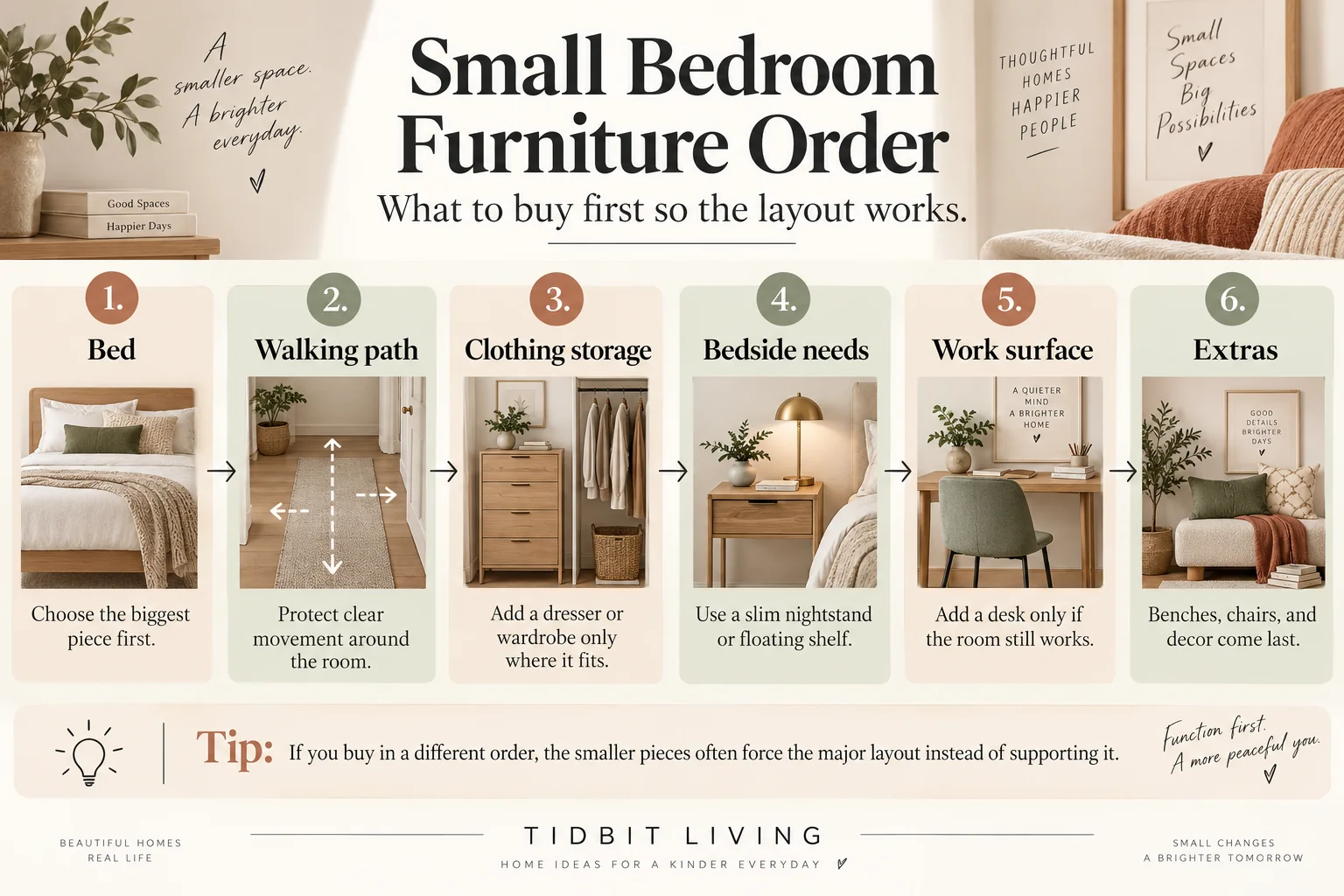
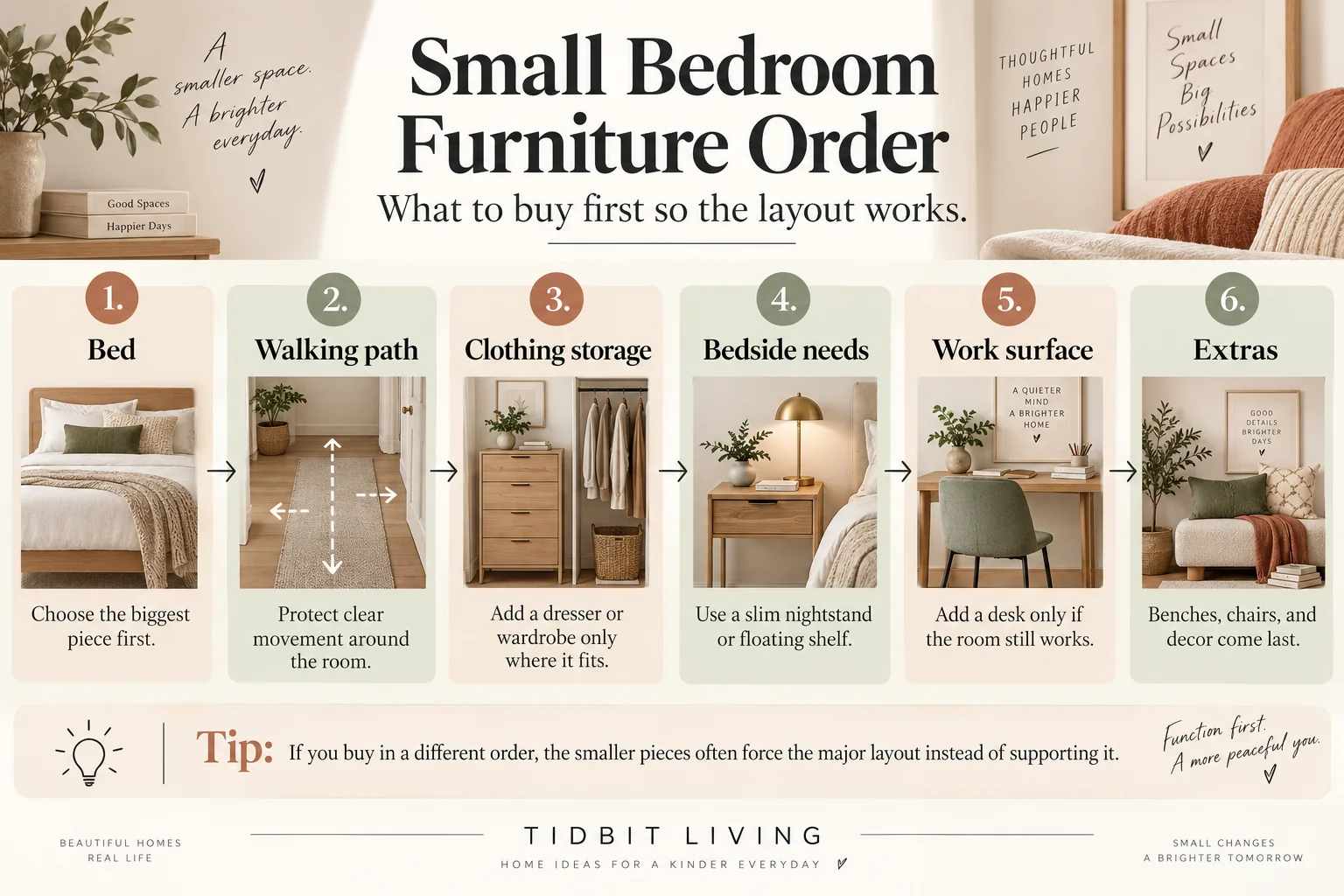
- Measure the bed wall and main walking route. Do this before browsing furniture.
- Choose the bed frame first. Include the frame, not only the mattress, in the footprint.
- List what must be stored in the bedroom. Separate hanging clothes, folded clothes, bedding, shoes and work items.
- Choose one main storage strategy. Decide whether the room needs a storage bed, dresser, wardrobe or a combination of only two.
- Solve bedside needs with the smallest useful surface. Do not automatically buy two full-size nightstands.
- Add a desk only after testing chair clearance. Mark both the desk and pulled-out chair on the floor.
- Wait on seating and decorative furniture. Live with the core layout first; add extras only if open space remains.
Shopping rule: after each major purchase, stop and reassess the room before buying the next piece. Small bedrooms become crowded fastest when several items are ordered together before their real footprints are visible.
What Should You Spend More On?
Spend more where comfort, structure or daily operation matters. A bed frame that creaks, a drawer system that sticks, or a desk that is uncomfortable will affect you every day. Decorative secondary pieces can be simpler.
| Furniture | Worth spending more on when… | Where you can often save |
|---|---|---|
| Bed frame | It includes storage or will be moved repeatedly | Simple visual design |
| Dresser | Drawers are used every day | Finish and decorative details |
| Nightstand | You need reliable drawers or charging features | Simple floating shelf or basic table |
| Desk | You work from home daily | Occasional-use laptop surface |
| Wardrobe | It replaces the room’s missing closet | Interior accessories can be added gradually |
Frequently Asked Questions
What furniture should every small bedroom have?
At minimum, most bedrooms need a bed and enough storage for the items that must live in the room. Nightstands, dressers, desks, benches and chairs are optional. Add them only when they solve a specific daily need without damaging circulation.
Is a storage bed worth it in a small bedroom?
It can be, especially when it replaces bins or a separate storage piece. Lift-up storage often works better than side drawers in a very tight room because it needs less lateral clearance.
Should I use a tall dresser or a wide dresser?
A tall dresser is often more efficient when wall width is limited. A wide dresser can work when the room has sufficient depth and the drawers can open without narrowing the main walkway.
Are floating nightstands better for small bedrooms?
They are useful when preserving floor visibility and a narrow bedside aisle matter more than drawer storage. A standard narrow nightstand may be better if you need enclosed storage.
Should a small bedroom have a desk?
Only if the bedroom genuinely needs to function as a workspace. If you work there daily, choose a properly sized desk. If you only need occasional laptop space, a narrow console or wall desk may be enough.
What furniture makes a small bedroom feel crowded?
Deep dressers, thick bed frames, matching furniture sets, bulky chairs, wide benches, oversized headboards and too many small storage units commonly make a small bedroom feel crowded because they reduce open floor and fragment the room.
Bottom Line
The best furniture for a small bedroom earns its footprint. Start with the bed, protect the walking path, solve storage with as few efficient pieces as possible, and add desks, seating or decorative furniture only when the room truly needs those functions.
When in doubt, choose one useful piece over several tiny ones. A small bedroom usually feels better when the furniture plan is simpler, not when every empty corner has been filled.