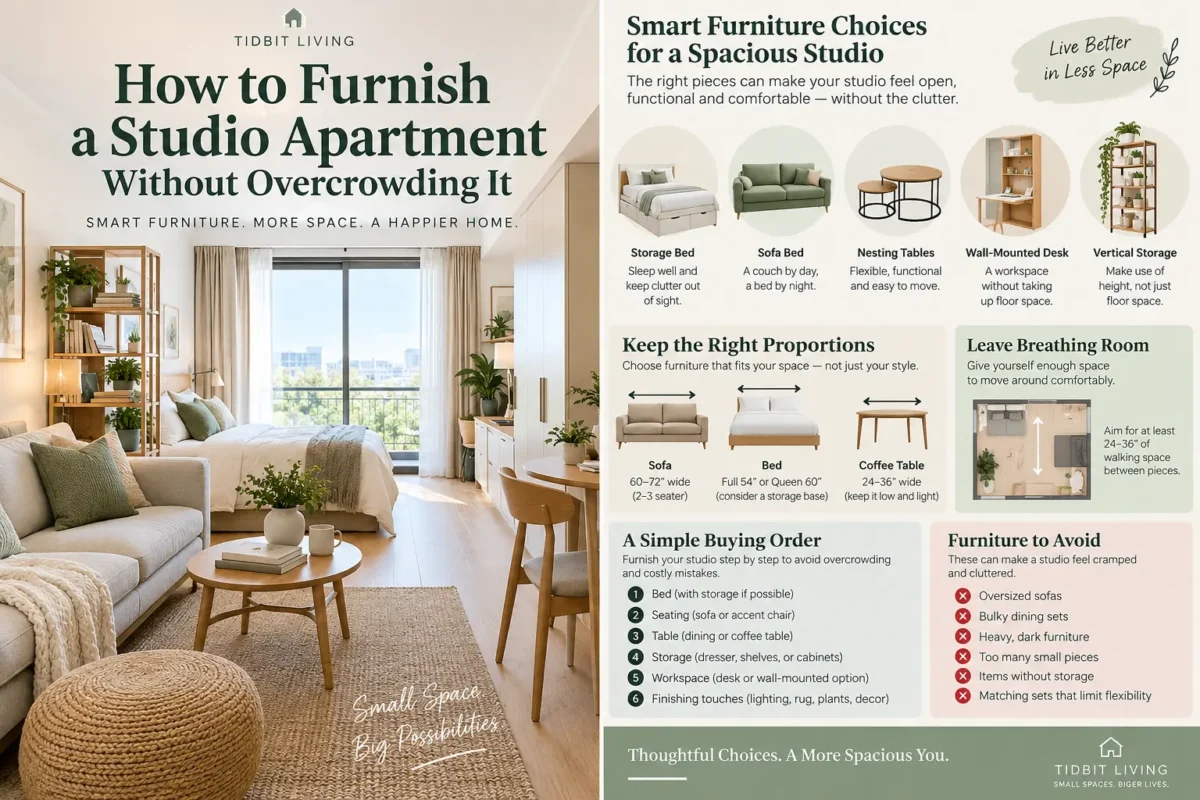
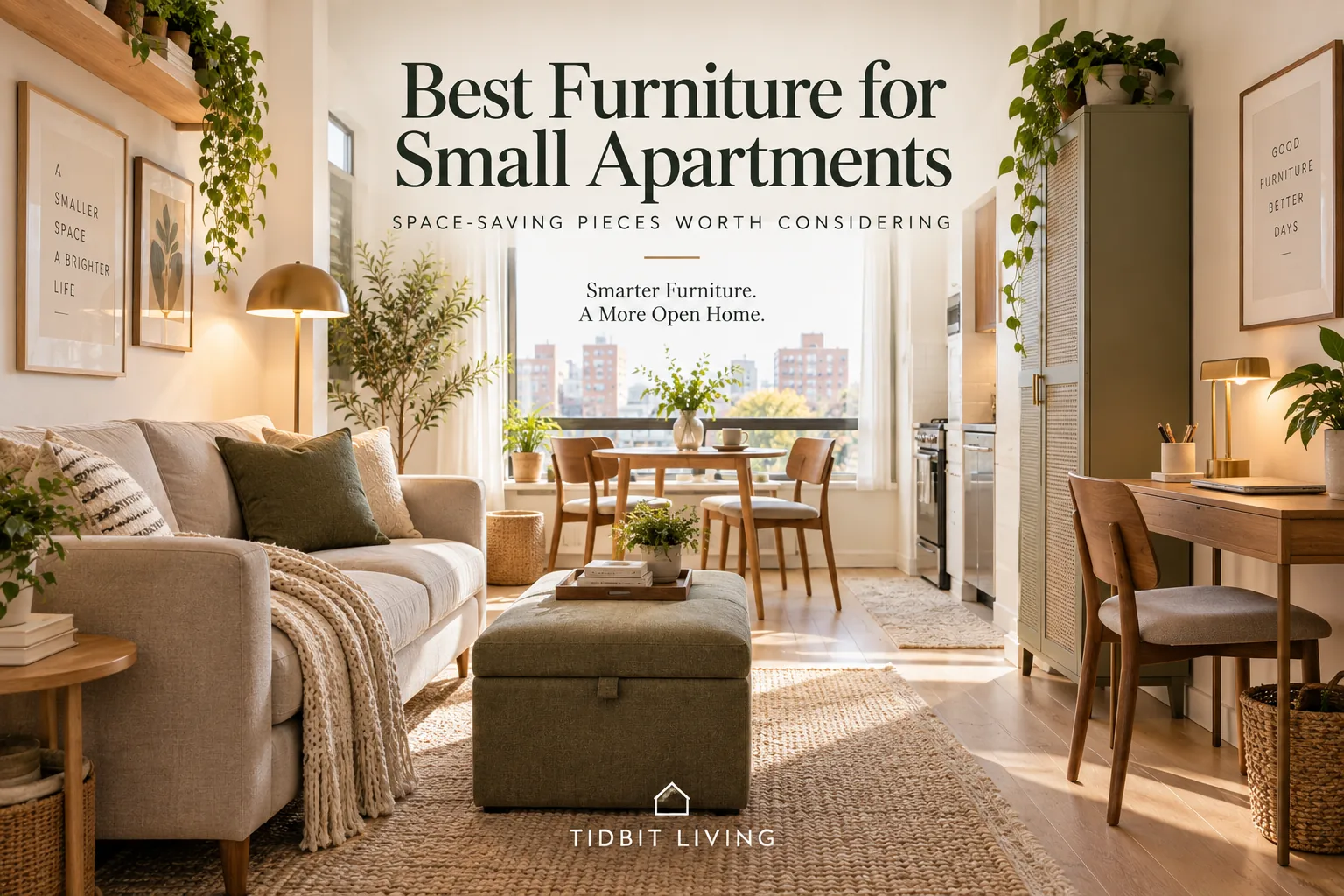

The best furniture for a small apartment is not simply smaller furniture. It is furniture that earns its footprint: it fits the room, gets through the building, supports the way you actually live, and ideally solves more than one problem without becoming awkward to use.
This guide focuses on what furniture types are worth considering and what to look for before buying. If you need help arranging the pieces once you own them, see our guide to furnishing a small apartment. For one-room homes, our studio apartment furnishing guide goes deeper into avoiding overcrowding.
What Makes Furniture Good for a Small Apartment?
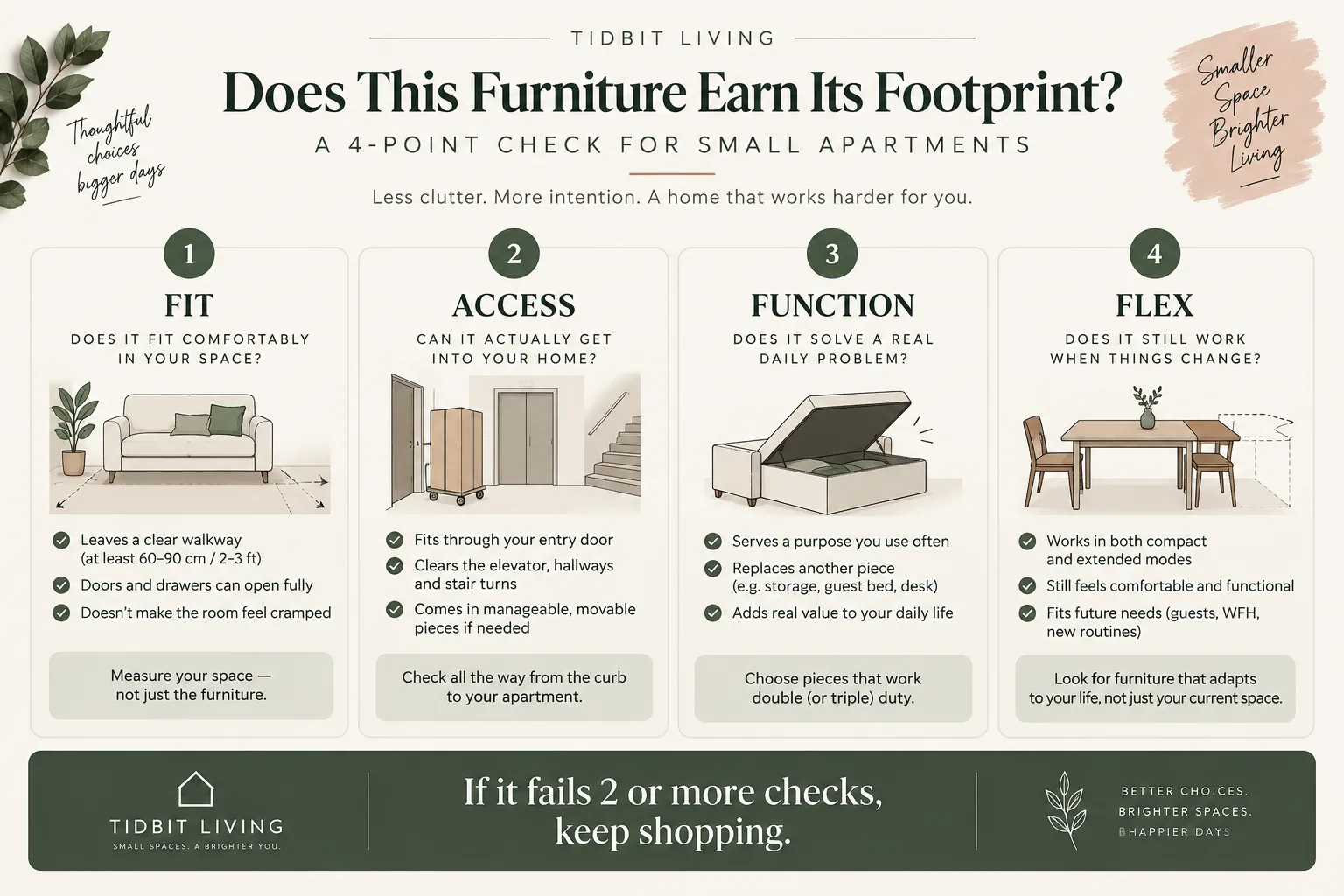
A piece can be marketed as “small-space furniture” and still be a poor choice. The right furniture should pass four tests: fit, access, function, and visual weight.
| Test | Question to ask | Why it matters |
|---|---|---|
| Fit | Does it leave enough room to walk, open doors and use nearby furniture? | A piece can technically fit but still make the room hard to use. |
| Access | Can it get through the building entrance, elevator, stairs, hallway and apartment door? | Apartment delivery often fails before furniture reaches the room. |
| Function | Does it solve a daily problem or serve more than one useful purpose? | Every footprint should justify itself. |
| Visual weight | Does it block light, sightlines or too much visible floor? | Heavy furniture can make a small room feel more crowded than its measurements suggest. |
Current small-space buying guides from Architectural Digest, Apartment Therapy and House Beautiful repeatedly emphasize compact dimensions, modular delivery, storage, multifunctionality and measuring access routes—not just room dimensions. Those are the same criteria we use throughout this guide.
Measure Before You Shop
Measure the wall or floor area where the furniture will sit, but do not stop there. Record the width and height of your apartment door, the narrowest hallway turn, elevator opening and interior dimensions, stair width, and any building entrance that the item must pass through.
For furniture that opens or transforms, measure the used footprint, not only the closed footprint. A sleeper sofa needs room to open. A drop-leaf table needs chair clearance. A storage bed needs room for drawers or a lifting platform. A reclining chair needs space behind it.
Before buying a large piece, write down: 1) furniture width, 2) furniture depth, 3) furniture height, 4) delivery-path minimum width, and 5) the open/extended footprint.
If any one of those measurements is missing, you are not ready to order.
15 Best Furniture Types for Small Apartments
1. A Properly Scaled Apartment Sofa
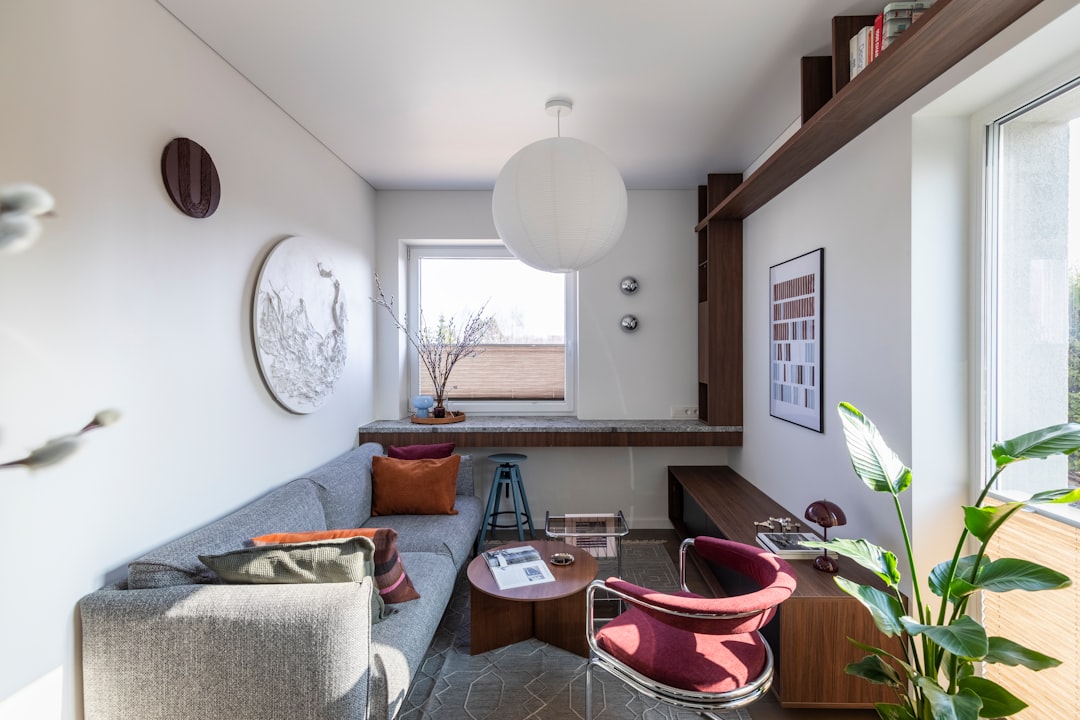
A compact sofa is usually a better foundation than filling the room with several tiny chairs. Look for a sofa that provides real seating without swallowing the main wall or blocking circulation.
Useful small-space features include slimmer arms, a shallower overall depth, visible legs, removable legs for delivery, modular sections, and cushions that do not add unnecessary bulk. Apartment Therapy and House Beautiful both emphasize measuring not only the room but also doors, hallways and stairwells when choosing small-space sofas.
Worth considering when: you use the living room daily and need comfortable seating for two or three people.
Skip or rethink when: the room is so narrow that a sofa forces you to eliminate the main walking path. In that case, two substantial lounge chairs may work better.
2. A Sleeper Sofa That Replaces a Guest Bed
A sleeper sofa earns its footprint when you host overnight guests often enough that a separate guest bed would otherwise consume valuable space. The category has improved considerably, and current buying guides focus on compact sleeper mechanisms, modular delivery, mattress comfort and storage options.
Measure the sofa both closed and fully open. Also check whether coffee tables, rugs or other pieces must be moved every time the bed is used. If converting the room requires a major furniture shuffle, the sleeper function may become annoying rather than useful.
Worth considering when: you host guests several times a year and do not have a second bedroom.
Skip when: you rarely host overnight guests and would be sacrificing daily comfort for a feature you almost never use.
3. A Storage Bed
A storage bed can replace several freestanding bins or even reduce the need for a dresser. Drawer beds work best when you have enough side clearance to pull the drawers fully open. Lift-up storage beds are often better in tight rooms because the storage is accessed from above.
Use under-bed storage for categories you do not need every hour: extra bedding, seasonal clothing, luggage, sports gear or bulky soft goods. Do not turn it into a deep miscellaneous zone that you forget exists.
Worth considering when: the bedroom lacks a closet or you need to remove a bulky dresser.
Skip when: the mechanism is difficult for you to operate or the drawers will be blocked by walls, nightstands or another piece of furniture.
4. A Drop-Leaf Dining Table
A drop-leaf table can be narrow most of the week and expand when you eat with another person, host friends, work on a larger project or need extra prep space.
The best version for a small apartment is one that remains genuinely useful when closed. A table that becomes too shallow to use unless fully open does not save as much space as it appears to.
Worth considering when: dining space is limited but you still want a proper table sometimes.
Skip when: you will leave both leaves open permanently. In that case, buy the right fixed table size instead.
5. An Extendable Dining Table
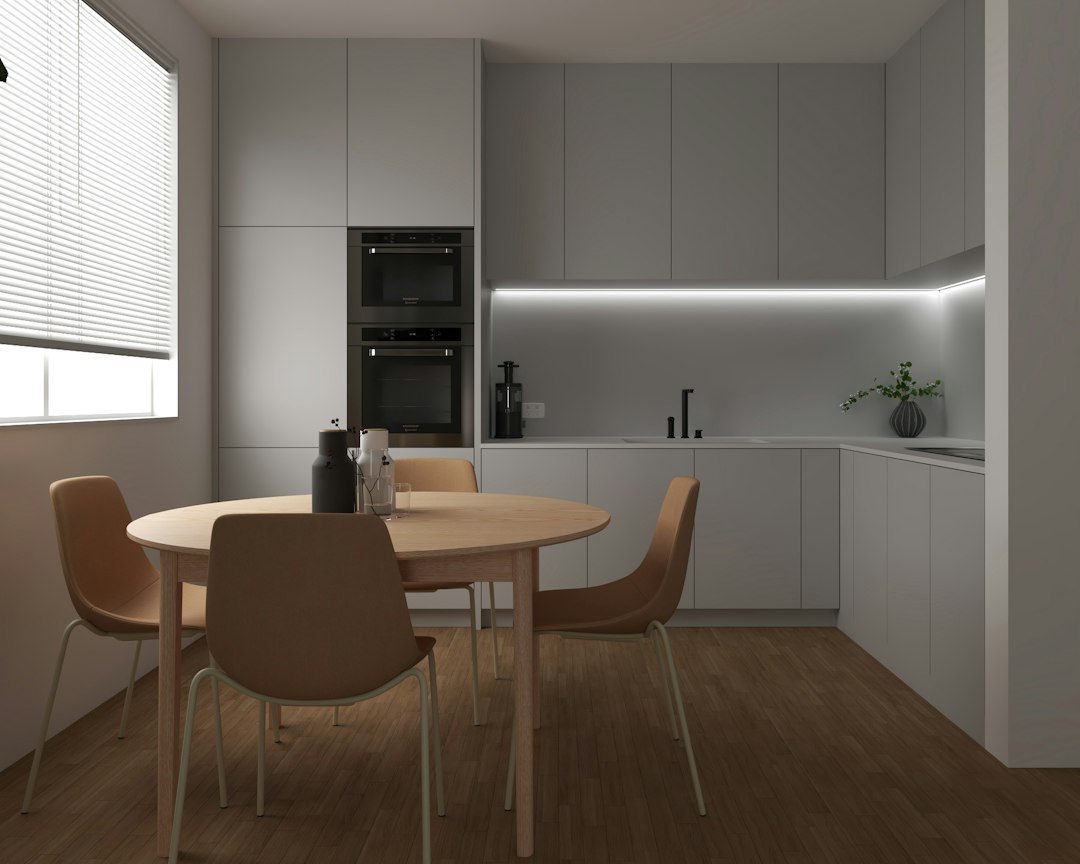
An extendable table is useful when you eat at the table every day but only need extra seats occasionally. Unlike many folding tables, it can function like normal furniture when closed.
Before buying, confirm where the extension leaf is stored and how much room the table needs when fully extended. Some designs require you to store a large loose leaf in a closet—which may defeat the purpose in a small apartment.
Worth considering when: you regularly dine at home and occasionally host.
Skip when: your apartment has no practical location for chairs when the table is in its smaller configuration.
6. Nesting Side Tables
Nesting tables are one of the easiest small-space furniture wins because they give you extra surfaces only when you need them. Keep them stacked or partially overlapped day to day, then separate them when guests need a place for drinks or when you want an extra laptop surface.
Choose a set that is easy to move and stable enough to use independently. Avoid elaborate nesting sets that are heavy or awkward to pull apart.
Worth considering when: your living room needs flexible surfaces but cannot support several permanent tables.
Skip when: you already have enough side surfaces and the tables would simply become more places to collect clutter.
7. A Lift-Top Coffee Table
A lift-top coffee table can become a laptop surface or casual dining table while hiding remotes, chargers or other small items inside. It is especially useful in apartments without room for both a coffee table and a desk.
Check the lifted height against your sofa seat height and body position. Some lift tops look clever online but put the work surface too high or too far away to use comfortably.
Worth considering when: you occasionally work or eat from the sofa and need hidden living-room storage.
Skip when: you already have a comfortable desk and the lifting mechanism adds cost without solving a real problem.
8. A Storage Ottoman
A storage ottoman can serve as a footrest, extra seat, coffee table with a tray, and hidden storage. That combination makes it one of the most efficient pieces for a small living room.
Use the interior for one clear category—blankets, workout gear, toys or occasional guest bedding—rather than random objects. A large ottoman that blocks circulation can be worse than a small coffee table, so measure carefully.
Worth considering when: you need both flexible seating and hidden storage.
Skip when: you prefer a hard tabletop for everyday use and will constantly fight with trays and lids.
9. A Storage Bench
A storage bench works particularly well in an entryway, at the foot of a bed, under a window, or along a dining wall. It can combine seating with shoe, linen or seasonal storage.
A bench is most efficient when it occupies a location that would otherwise need both seating and storage. If you are adding it simply because an empty wall exists, it may become another bulky object.
Worth considering when: you need a landing zone near the door or extra bedroom storage.
Skip when: the lid cannot open comfortably in its intended location.
10. A Wall-Mounted or Folding Desk
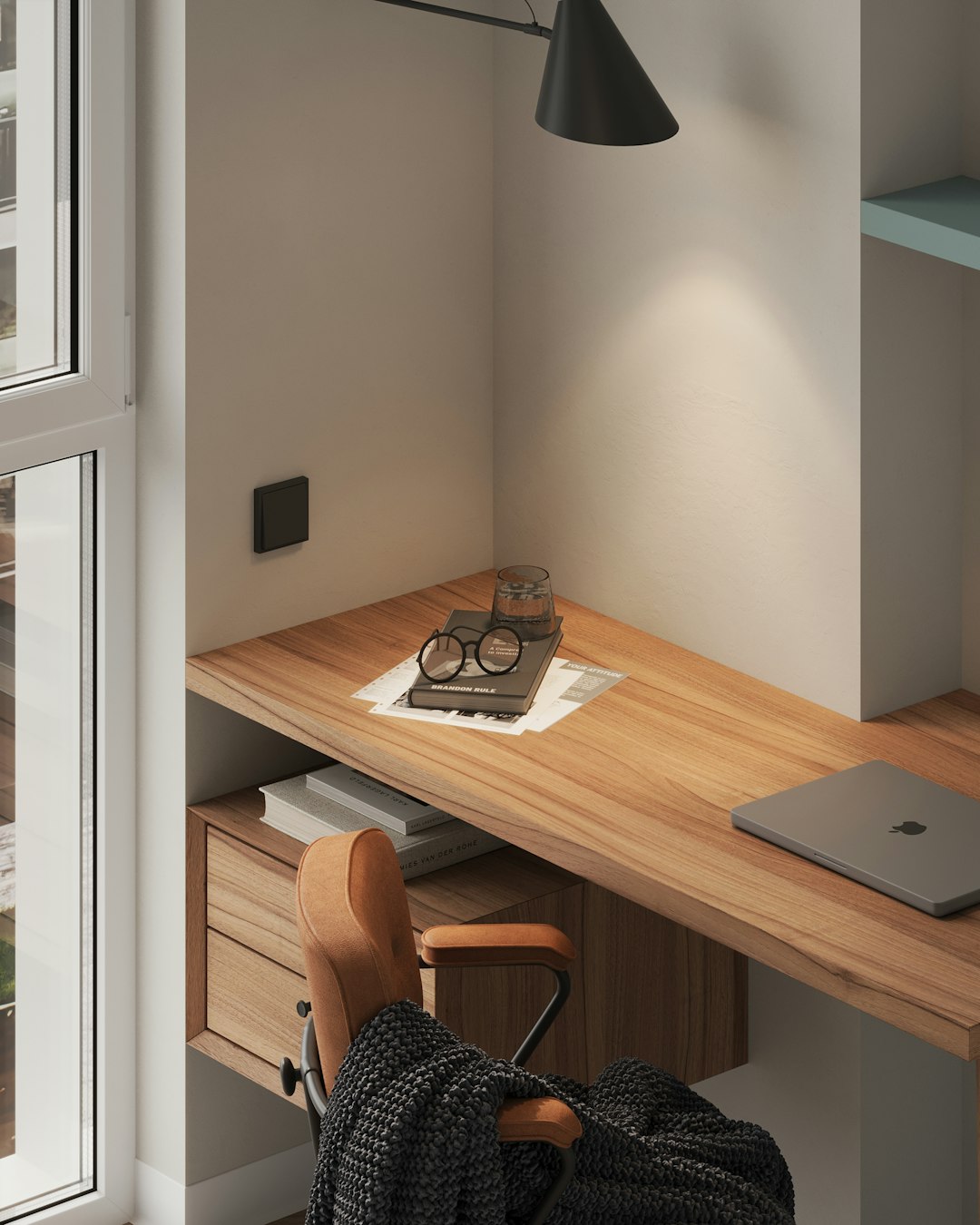
A wall-mounted desk preserves floor area and can be ideal for a laptop-based work setup. Folding versions can disappear after work, which is particularly useful in studios where the desk is visible from the bed or sofa.
The tradeoff is storage and ergonomics. A tiny floating shelf may work for occasional email but not for eight-hour workdays. If you work from home full-time, prioritize enough surface depth, a real chair and proper monitor position even if the desk takes more room.
Worth considering when: you work occasionally and floor space is the main constraint.
Skip when: you need a large monitor, multiple devices or deep paperwork storage every day.
11. A Narrow Console Table
A shallow console can create an entryway, provide a drop zone behind a sofa, or become a compact laptop surface. In very narrow apartments, a console may be more practical than a traditional desk or entry cabinet.
Look for depth first. A few inches can determine whether the table creates useful function or blocks the walkway.
Worth considering when: you have a long narrow wall or need a lightweight landing surface.
Skip when: it would duplicate another surface only a few feet away.
12. Floating Nightstands
Floating nightstands keep the floor visually open and can fit beside beds where a normal table would feel bulky. Even a small shelf can hold a phone, book, glasses and a glass of water.
Choose a mounting method appropriate for your wall and the expected load. Renters should confirm what mounting is permitted.
Worth considering when: the bedside aisle is narrow or you want to preserve visible floor.
Skip when: you need significant drawer storage beside the bed.
13. Modular Shelving
Modular shelving can adapt as you move, reconfigure a room, or need more storage. Architectural Digest specifically highlights modular shelving as a smart alternative to bulky fixed bookcases in small spaces.
The advantage is flexibility; the risk is visual clutter. Use open shelves for books and objects that look good together, and add closed boxes, doors or baskets for mixed categories.
Worth considering when: you expect your storage needs or apartment layout to change.
Skip when: most of what you need to store is visually messy and you would be better served by a closed cabinet.
14. A Tall, Shallow Closed Cabinet
When floor area is limited, a taller cabinet can store more without becoming much deeper. Closed doors are especially useful for paperwork, electronics, toiletries, cleaning products and miscellaneous household supplies that make open shelves look busy.
Anchor tall furniture where appropriate and follow manufacturer safety instructions. Also check whether the door swing will block a walkway.
Worth considering when: the apartment lacks closets and visible clutter is the main problem.
Skip when: the cabinet would block daylight or dominate the longest sightline in the room.
15. A Small Modular or Flat-Pack Piece for Difficult Access
Sometimes the best furniture is not the smallest piece—it is the piece that can actually reach the room. Modular and flat-pack furniture can be much easier to carry through narrow doors, stairwells and elevators than a fully assembled sofa, bed or cabinet.
Architectural Digest’s 2026 flat-pack furniture guide emphasizes this exact apartment problem: large furniture can fail at the doorway even when it fits the final room.
Worth considering when: your building has tight stairs, a small elevator or narrow turns.
Skip when: assembly quality, repeated moves or long-term durability matter more than delivery convenience and a fully assembled option fits safely.
Which Furniture Should You Buy First?
Buy in the order of daily impact, not in the order that makes the apartment look finished fastest.
- Bed: solve sleep and clothing/linen storage first.
- Sofa or primary seating: choose the main living-room footprint before side tables.
- Closed storage: solve recurring clutter before adding display furniture.
- Dining or work surface: choose based on which activity happens most often.
- Lighting: make each main activity comfortable.
- Flexible secondary pieces: add nesting tables, ottomans or extra seating only after the main layout works.
Best Furniture by Apartment Problem
| Problem | Furniture to consider | What to avoid buying first |
|---|---|---|
| No closet space | Storage bed, tall closed cabinet, storage bench | More open shelves |
| No dining room | Drop-leaf or extendable table | Large fixed dining set |
| No home office | Wall desk, narrow console, lift-top coffee table | Full executive desk unless truly needed |
| Frequent guests | Sleeper sofa, storage ottoman, nesting tables | Permanent guest bed in the living area |
| Very narrow room | Shallow sofa, floating nightstand, narrow console | Deep armchairs and bulky cabinets |
| Difficult building access | Modular or flat-pack furniture | Large one-piece furniture without confirmed clearances |
When Multifunctional Furniture Is Actually Worth It
Multifunctional furniture is useful when both functions solve real problems. A storage bed is valuable if you need a bed and storage. A sleeper sofa is valuable if you need a sofa and guest bed. A lift-top table is valuable if you actually work or eat from the sofa.
The second function should not make the primary function worse. A sofa that is uncomfortable every day is not a good purchase simply because it converts into a bed twice a year.
Before paying extra for a convertible piece, ask:
1. Will I use both functions at least monthly?
2. Is the main function still comfortable?
3. Can I convert it without moving half the room?
4. Does the mechanism add bulk that cancels out the space savings?
If two or more answers are “no,” choose a simpler piece.
Furniture That Often Looks Space-Saving but Is Not
Very small rugs and tables
Undersized furniture can make a room feel fragmented and may not perform its job well. A tiny coffee table that cannot hold everyday items or a rug that connects none of the seating does not become a good choice simply because it is small.
Bulky convertible furniture
Some transforming furniture saves space only on paper. If the hinges, frame or mechanism make the piece significantly deeper or heavier, compare it with a simpler alternative.
Open shelving for messy categories
Open shelves are excellent for books and display items. They are less effective for cables, documents, toiletries, cleaning supplies and mixed household objects. For those categories, closed storage usually creates more visual calm.
Furniture that requires a permanent “conversion zone”
A table that folds down may still require you to keep a large empty area clear around it. A sleeper sofa may need the coffee table moved every time it opens. Evaluate the space the furniture needs during use, not just during storage.
How Much Should You Spend?
Spend more where comfort, structure and frequent use matter. A sofa, mattress, desk chair and bed frame affect you every day. Flexible secondary pieces such as nesting tables or entry benches can often be simpler or thrifted.
| Category | Worth spending more on when… | Where you can often save |
|---|---|---|
| Sofa | You use it daily and expect to keep it for years | Skip decorative upgrades before comfort and fit |
| Bed | Storage mechanism or frame quality matters | Simple visual design can be enough |
| Dining table | The extension mechanism is used often | Fixed or thrifted tables can be excellent if the size works |
| Desk | You work from home full-time | Occasional work can use a simpler console or wall desk |
| Storage | Doors, drawers and hardware are used constantly | Baskets and internal organizers do not need to be premium |
Three Small-Apartment Furniture Scenarios
A 450-square-foot one-bedroom with almost no closet storage
Prioritize furniture that removes the need for additional cabinets. A lift-up storage bed can absorb seasonal clothing and extra bedding, while a tall closed cabinet can handle paperwork, cleaning products and miscellaneous household supplies. In the living room, choose a storage ottoman instead of adding a separate coffee table and blanket basket.
What to skip first: extra open shelving. It creates more visible storage without solving the categories that actually need to disappear.
A 350-square-foot studio with occasional overnight guests
Start with the sofa and bed relationship. If a comfortable sleeper sofa can genuinely replace the guest bed function, it may be worth the premium. Pair it with nesting tables instead of a large coffee table so the floor can be cleared quickly when the sleeper opens. Use a narrow console or wall desk rather than a full desk if work-from-home needs are occasional.
What to skip first: a permanent guest chair or bench that exists only for visitors. Flexible seating earns space more effectively.
A narrow apartment where delivery access is the biggest constraint
Choose modular or flat-pack pieces for the sofa, shelving and larger storage. Before ordering, write down the narrowest doorway and turn in the delivery path. A sofa that is perfect for the room but cannot make the stairwell turn is not the right sofa.
What to skip first: one-piece oversized furniture unless the retailer confirms access requirements and return logistics.
Do This 15-Minute Furniture Audit Before Buying Anything
- Photograph the room from the entrance.
- Measure the main walkway and every large furniture footprint.
- Write down the three items that create the most daily friction.
- Identify any furniture that duplicates another function.
- Measure the delivery path from building entrance to final room.
- Mark the proposed new piece on the floor with painter’s tape.
- Open nearby doors, drawers and cabinets while the footprint is taped.
- Walk the normal route through the room several times.
If the new piece solves one of the three biggest problems without creating a circulation or access problem, it has a reason to earn space. If it simply fills an empty area, wait.
A Practical Small-Apartment Furniture Shopping Order
- Measure the room and delivery path.
- List the three biggest daily problems in the apartment.
- Choose one foundational piece that solves the biggest problem.
- Tape its footprint on the floor and live around it for a day.
- Check the open or extended footprint if it transforms.
- Confirm where displaced furniture or chairs will go.
- Buy the major piece before accessories designed to match it.
For layout guidance after you have chosen the main pieces, see our studio apartment layout ideas and small apartment decorating guide.
Frequently Asked Questions
What is the best furniture for a small apartment?
The best pieces are appropriately scaled, easy to deliver, comfortable for everyday use, and efficient with space. Common high-value categories include compact sofas, storage beds, drop-leaf tables, nesting tables, storage ottomans, wall-mounted desks and tall closed storage.
Is multifunctional furniture always better for a small space?
No. It is worthwhile only when you will use both functions and the added mechanism does not make the main function less comfortable or the furniture substantially bulkier.
Should I buy a loveseat instead of a sofa?
Not automatically. Compare the actual dimensions. Some apartment sofas provide more usable seating with only a small increase in width, while some loveseats have deep seats and bulky arms that consume almost as much space.
Are sectionals bad for small apartments?
No. A compact or modular sectional can use a corner efficiently and sometimes provides more seating per square foot than a sofa plus several chairs. The important factors are dimensions, circulation and delivery access.
What furniture makes a small apartment feel bigger?
Furniture that preserves sightlines and visible floor can reduce visual heaviness: raised-leg sofas, floating nightstands, shallow cabinets, glass or visually light tables, and fewer properly scaled pieces rather than many tiny ones. Layout and clutter control matter just as much as the furniture style.
What should I buy first for a small apartment?
Start with the pieces that support daily life: bed, primary seating and essential closed storage. Then add dining or work furniture based on your routine. Flexible secondary furniture should come after the core layout works.
The Bottom Line
The best furniture for small apartments is furniture that makes limited space easier to live in—not furniture that simply carries a “small-space” label. Measure the entire delivery path, protect circulation, choose foundational pieces by daily use, and pay extra for multifunctionality only when both functions matter.
A compact apartment rarely needs more furniture. It needs fewer pieces that fit better, work harder and leave enough room for the home to breathe.