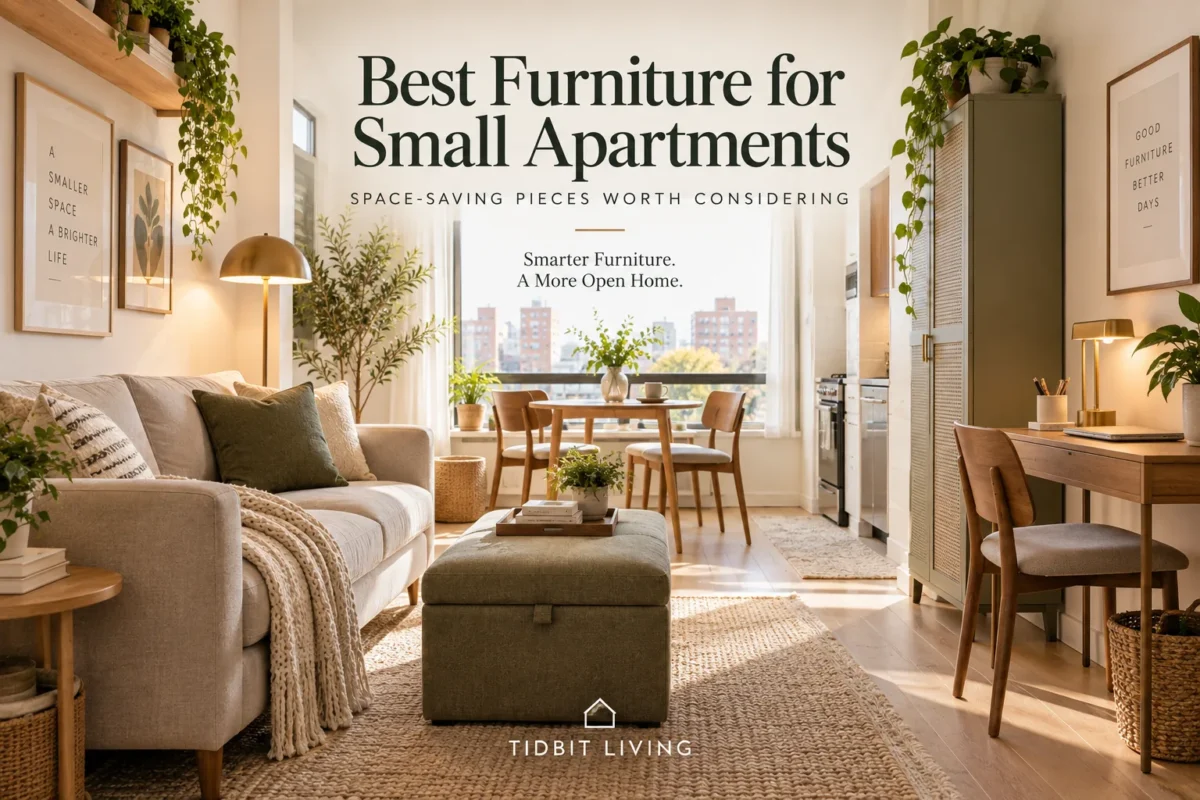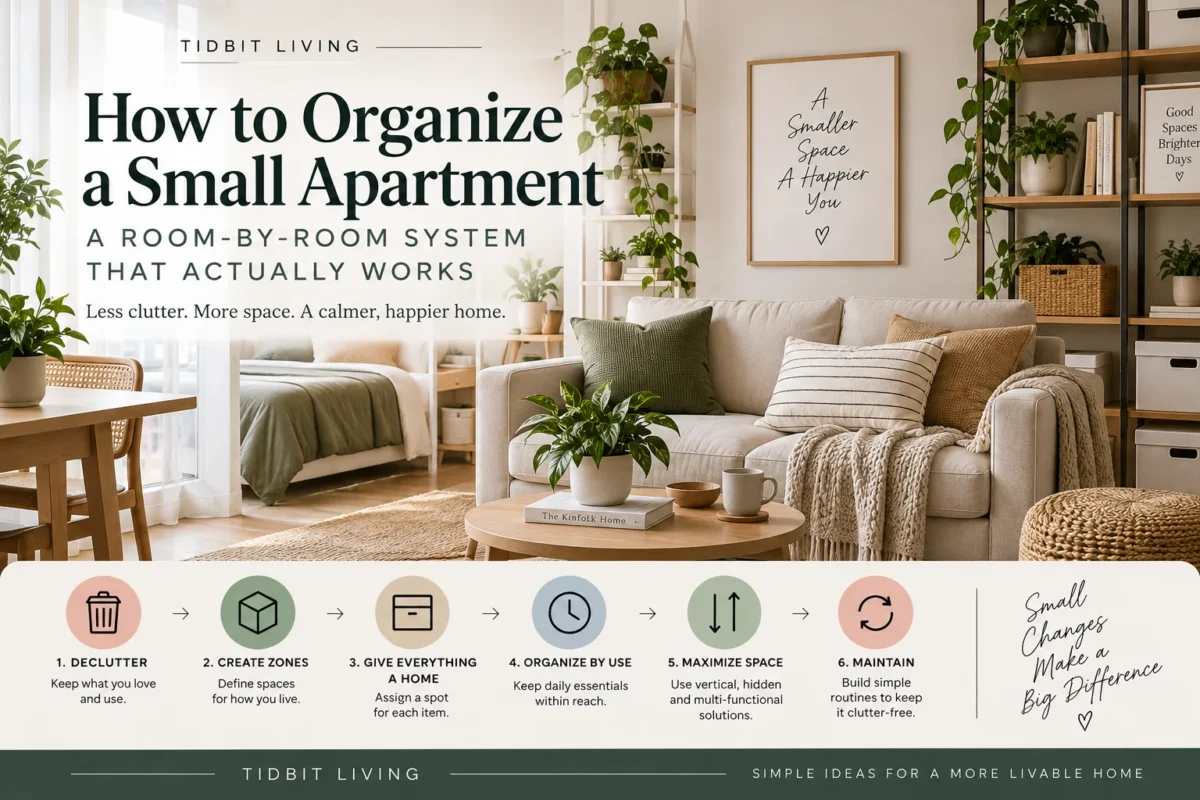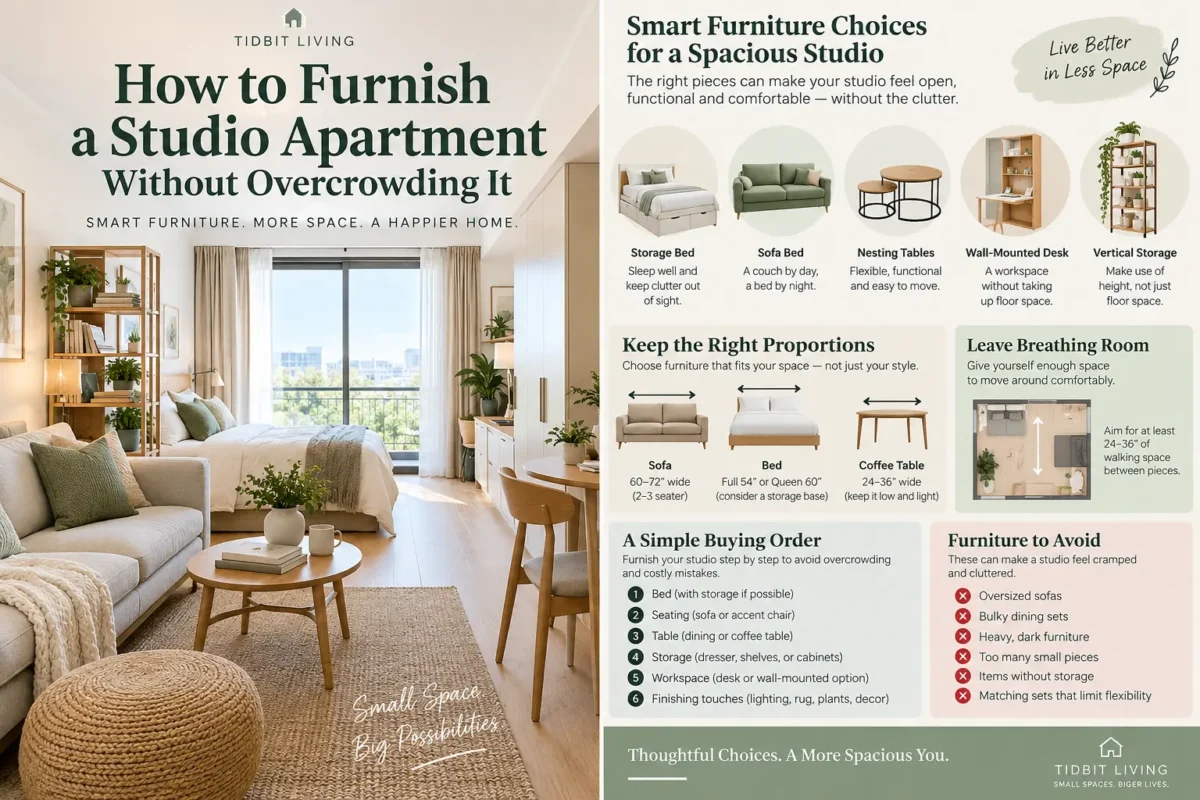


Furnishing a small apartment is not about squeezing tiny furniture into every corner. The real goal is to make each piece justify the space it takes up. In a compact home, furniture affects not only comfort but also circulation, storage, light, and how calm or crowded the apartment feels.
This guide walks through how to furnish a small apartment from the ground up: what to measure, what to buy first, which furniture shapes tend to work best, how to avoid common layout mistakes, and where multifunctional pieces are genuinely useful.
If you are still deciding how the finished rooms should look, pair this guide with our 21 small apartment decorating ideas. For the storage layer, use our small-apartment storage solutions guide. And if your home is one open room, start with our studio apartment layout guide before choosing large furniture.
Before You Buy Anything: Decide What the Apartment Needs to Do
The easiest way to waste space is to furnish according to a generic checklist instead of your actual routine. A person who works from home every day needs a different apartment than someone who entertains friends every weekend.
Start by writing down the activities your home must support. Common examples include:
- Sleeping comfortably
- Relaxing and watching TV
- Working or studying
- Eating meals at a table
- Hosting one or two guests
- Exercising at home
- Storing seasonal clothing or hobby supplies
Rank those activities by importance. Your top three should influence your biggest furniture purchases. If you never host dinner parties, for example, a four- or six-person dining set may be a poor use of floor space. If you work from home five days a week, a proper desk may be more valuable than a large coffee table.
If you are furnishing a studio specifically, it also helps to understand how a single-room home functions differently. See our guide to what a studio apartment is and how its layout typically works.
Tidbit Living Quick Visual: The Small-Apartment Furniture Filter
| Before you buy | Ask this |
|---|---|
| Fit | Does it fit the room, doorway, elevator, and walking path? |
| Function | Will I use it at least several times a week? |
| Storage | Can this footprint solve a storage problem too? |
| Flexibility | Can it move, fold, extend, nest, or serve another purpose? |
| Visual weight | Does it leave enough visible floor and breathing room? |
Tidbit rule: if a large piece fails two or more of these checks, keep shopping. In a small apartment, correcting the wrong sofa, table, or storage unit later is far harder than waiting for the right one.
Measure the Apartment Before You Shop
Measure more than the walls. A sofa can fit perfectly on paper and still fail to make it through the building entrance.
Record:
- Room width and length
- Ceiling height
- Door and hallway widths
- Elevator dimensions if applicable
- Window locations and sill heights
- Radiators, vents, outlets, and baseboard heaters
- Closet-door and room-door swing paths
- Awkward corners, columns, and alcoves
Then sketch a simple floor plan. It does not need to be beautiful. Even a rough drawing with dimensions will help you compare furniture footprints before you commit.
A useful rule: measure circulation, not just furniture
People need space to move around a piece, open drawers, pull out dining chairs, and walk from one zone to another. A technically fitting piece can still make the room frustrating if it blocks movement.
When comparing two sofas, tables, or dressers, look at depth as carefully as width. In a small apartment, saving even a few inches of depth can noticeably improve a walkway.
Tidbit Living Quick Visual: Furniture Spacing Guide
| Keep this space clear | Useful planning target |
|---|---|
| Sofa to coffee table | 14–18 in (36–46 cm) |
| Main walking path | 30–36 in (76–91 cm) where possible |
| Behind dining chairs | 30–36 in (76–91 cm) when space allows |
| Bedside | Enough to enter comfortably and fully open drawers or doors |
| Furniture to doorway | Keep the door swing and primary route unobstructed |
Best test: mark the footprint with painter’s tape, then walk around it, open nearby doors and drawers, and pull chairs out before ordering.
Use Fewer Pieces, Not Necessarily Smaller Pieces
One common small-space mistake is filling the room with many tiny furnishings. A small sofa, two small chairs, several side tables, a small cabinet, and a small coffee table can create more visual clutter than a few well-scaled pieces.
Instead, aim for a simpler composition. One comfortable sofa plus one movable accent chair may work better than multiple undersized seats. One tall storage cabinet may be more useful than several short units scattered around the room.
Furniture with exposed legs, slimmer arms, open bases, glass or visually light surfaces, and simple silhouettes can help a small apartment feel less heavy because more of the floor remains visible.
Choose Furniture That Does More Than One Job
Multifunctional furniture is most valuable when both functions solve problems you actually have. Do not buy a complicated convertible piece simply because it is marketed for small spaces.
| Furniture piece | Useful second function | Best for |
|---|---|---|
| Storage ottoman | Hidden storage + extra seat | Living rooms with little closet space |
| Drop-leaf table | Dining + desk | One- or two-person households |
| Sleeper sofa | Seating + guest bed | People who host overnight guests |
| Storage bed | Sleeping + bulky-item storage | Bedrooms without enough closet space |
| Nesting tables | Compact surface + flexible extra tables | Occasional entertaining |
| Bench with storage | Seating + shoe or linen storage | Entryways or dining areas |
The best multifunctional pieces are easy to use in daily life. If converting a table or sofa requires moving half the room each time, you may eventually stop using the secondary function.
How to Furnish a Small Apartment Living Room
Start with the largest essential item, usually the sofa. Instead of automatically buying a full-size three-seat sofa, compare compact sofas, loveseats, apartment-size sectionals, and armless options.
Choose the sofa first
A good small-apartment sofa should leave room for movement around it and should not dominate every sightline. Slim arms can preserve usable seat width while reducing the overall footprint.
If the room is long and narrow, a shallower sofa may matter more than a shorter one. If the room is square, a compact sectional may define the seating area efficiently.
Pick a flexible coffee-table solution
A large rectangular coffee table is not mandatory. Alternatives include:
- A storage ottoman with a tray
- Two nesting tables
- A small round table that is easy to walk around
- C-shaped side tables that slide toward the sofa
- No coffee table at all if floor space is more valuable
Use wall space for media
If your lease and wall construction allow it, wall-mounting a television can free the top of a media console. If you prefer a console, choose a shallow one with closed storage so electronics, cords, and accessories do not add visual clutter.
For more ideas on making a compact living area feel open, see our small apartment decorating ideas.
How to Furnish a Small Apartment Bedroom
In most small bedrooms, the bed consumes the largest percentage of floor space. That makes it the most important piece to optimize.

Make the bed provide storage
A bed with built-in drawers, a lift-up storage base, or enough clearance for bins underneath can replace the need for another cabinet. Under-bed space is especially useful for luggage, off-season clothing, spare bedding, and rarely used items.
Reconsider traditional nightstands
If two standard nightstands make the room cramped, try narrow tables, wall-mounted shelves, floating drawers, or even a small stool on one side. Wall-mounted sconces can also free tabletop space.
Go taller with clothing storage
When choosing between a wide low dresser and a narrower tall chest, the taller option often provides more storage per square foot. Just make sure tall furniture is safely secured when appropriate.

Create a Dining Area That Can Shrink When You Do Not Need It
A dedicated dining table can still work in a small apartment, but shape and flexibility matter.
Round tables are useful in tight circulation zones because there are no sharp corners to navigate around. Pedestal bases also make it easier to position chairs. Drop-leaf and gateleg tables are especially effective when you only need a larger surface occasionally.
If you live alone or with one other person, consider whether a table for two that expands to four is more practical than keeping four dining chairs out all the time.
A dining table can also serve as a work surface, craft station, or food-prep area. In very tight apartments, a wall-mounted folding table or counter-height ledge may be enough.

Use Vertical Space Before Adding More Floor Furniture
When storage runs out, many people instinctively add another cabinet. Before doing that, look upward.
Vertical storage options include:
- Tall bookcases
- Wall-mounted shelves
- Over-door organizers
- Hooks behind doors
- Cabinet-top baskets
- Wall rails in kitchens
- Floor-to-ceiling closet systems
Keep everyday items between roughly waist and eye level, and use higher shelves for seasonal or infrequently used belongings. This keeps the apartment practical instead of turning upper storage into a daily inconvenience.
For a deeper storage-focused guide, see our best storage solutions for small apartments.

Do Not Forget the Entryway
Even a tiny entry area can prevent clutter from spreading through the apartment. The goal is to create a clear landing zone for the things you carry in and out every day.
Useful pieces include a narrow shoe cabinet, a wall-mounted key shelf, hooks, a small bench with storage, or a slim console. If floor space is nearly nonexistent, prioritize hooks and wall storage instead of furniture.
Tidbit Living Quick Visual: What to Furnish First
- Sleep: bed, mattress, privacy and bedside light.
- Sit: primary seating sized around the actual walking path.
- Light: task lighting where you read, work, cook and get dressed.
- Eat or work: one surface matched to your most frequent routine.
- Contain: storage for the clutter you see every day.
- Flex: movable tables, extra seating or guest solutions only if needed.
- Decorate: rugs, art, textiles and plants after the layout works.
Why this order works: it spends your floor space and budget on daily function before optional furniture.
A Simple Furniture Buying Order for a Small Apartment
Trying to furnish everything at once often leads to unnecessary purchases. A better approach is to build the apartment in stages.
- Bed and mattress: daily comfort comes first.
- Primary seating: choose the sofa or chairs that define the living area.
- Lighting: add task and ambient lighting where built-in lighting is insufficient.
- Eating or working surface: choose a table or desk based on your routine.
- Essential storage: solve your biggest visible clutter problem.
- Secondary tables and accent pieces: add only after living with the layout.
- Decor: finish with art, textiles, plants, and personal objects.
This sequence gives you time to notice what the apartment actually lacks. A corner that seems perfect for a cabinet on move-in day may turn out to be the best spot for a desk once you have lived there for two weeks.
What to Buy vs. What to Skip
| Usually worth considering | Often worth skipping in very small apartments |
|---|---|
| Storage bed | Large decorative bench at the foot of the bed |
| Compact sofa with slim arms | Oversized sectional |
| Drop-leaf or extendable table | Large fixed dining table |
| One tall storage unit | Several small low cabinets |
| Nesting or movable side tables | Bulky matching table sets |
| Wall-mounted lighting | Multiple large floor lamps |
These are not universal rules. The right choice always depends on your floor plan and habits. The point is to question whether a conventional furniture item deserves the space it consumes.
Common Small-Apartment Furnishing Mistakes
Buying before measuring
This is the fastest way to end up with furniture that blocks a doorway, overwhelms a room, or cannot even enter the building.
Pushing every piece against a wall
Sometimes this works, but not always. Floating a sofa slightly away from the wall can create a clearer living zone or improve the path behind it.
Choosing storage without deciding what it will hold
A beautiful cabinet is not useful if its shelves are too shallow for the objects you need to store. Define the storage problem before buying the solution.
Filling every empty corner
Empty space is functional. It creates breathing room, improves circulation, and makes a small home feel calmer.
Buying “small-space” furniture just because it converts
A transforming table, fold-out desk, or sleeper sofa is only valuable if the conversion is easy enough that you will actually use it.
Small Apartment Furniture Checklist
- Bed and mattress sized appropriately for the bedroom
- Under-bed storage or a storage bed if closet space is limited
- Comfortable primary seating with an apartment-friendly footprint
- A dining table, desk, or multipurpose surface that suits your routine
- One or two flexible side tables instead of a large set
- Vertical shelving or a tall cabinet where needed
- Entry storage for shoes, keys, bags, and coats
- Task lighting for reading, working, and cooking
- Closed storage for items that create visual clutter
- Enough open floor area to move comfortably between zones
A Weekend Furnishing Plan Before You Spend More
- Friday evening: measure every room, doorway and major walking path; photograph each room from the entrance.
- Saturday morning: tape the footprints of your largest planned pieces on the floor and test doors, drawers and circulation.
- Saturday afternoon: rank your daily activities and identify the three furniture pieces that support them most.
- Saturday evening: audit lighting and visible clutter after dark; note where a lamp or closed storage would solve a real problem.
- Sunday morning: compare your shortlist using the Tidbit furniture filter: fit, function, storage, flexibility and visual weight.
- Sunday afternoon: create a buy-now, buy-later and skip list with maximum dimensions beside every item.
- Sunday evening: order only the foundational pieces. Live with them before filling remaining corners.
This process turns furnishing into a sequence of tested decisions instead of one large shopping trip. It is especially useful for first apartments, where it is difficult to predict which storage and layout problems will matter until you begin living in the space.
Frequently Asked Questions
What furniture should I buy first for a small apartment?
Start with the pieces that affect daily comfort: a bed and mattress, primary seating, basic lighting, and a surface for eating or working. Add storage next, then wait before buying decorative or secondary furniture.
Should all furniture in a small apartment be small?
No. A room often looks better with fewer well-proportioned pieces than with many tiny ones. Focus on footprint, depth, circulation, and visual weight rather than simply choosing the smallest option available.
What type of sofa is best for a small apartment?
Compact sofas, loveseats, and apartment-size sectionals can all work. Look for slimmer arms, moderate depth, and dimensions that preserve walking space. The best shape depends on the room rather than on a single ideal sofa type.
How can I get more storage without overcrowding the apartment?
Use vertical space, under-bed storage, closed cabinets, over-door storage, and multifunctional pieces before adding more standalone furniture. It also helps to store rarely used items higher up and keep daily items accessible.
Is multifunctional furniture always better in a small apartment?
No. It is better only when the extra function is genuinely useful and easy to operate. A simple, well-sized piece can be more practical than a complicated convertible one you rarely use.
Final Thoughts
Learning how to furnish a small apartment is mostly about prioritization. Measure first, design around your real routines, choose fewer pieces that fit the room properly, and use storage vertically whenever possible.
You do not need to copy the furniture checklist of a larger home. A small apartment works best when every item supports the way you actually live and when there is still enough open space for the home to feel comfortable rather than crowded.