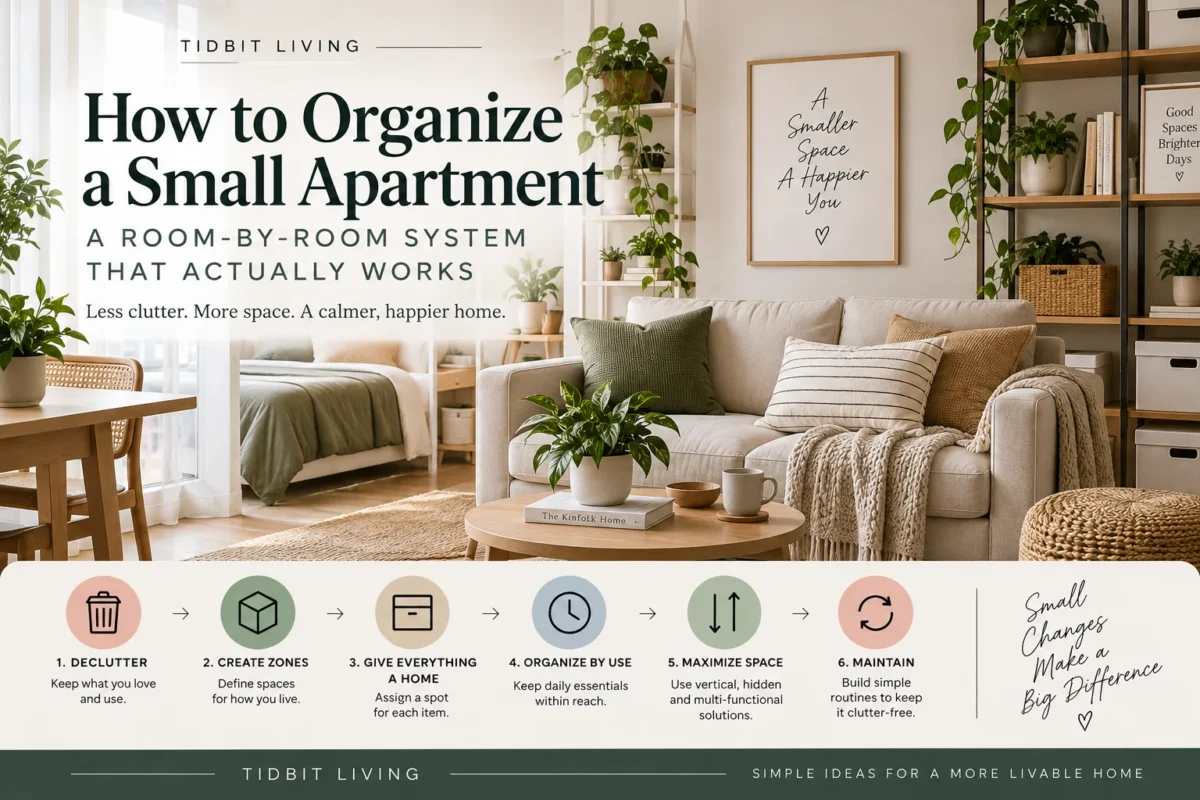
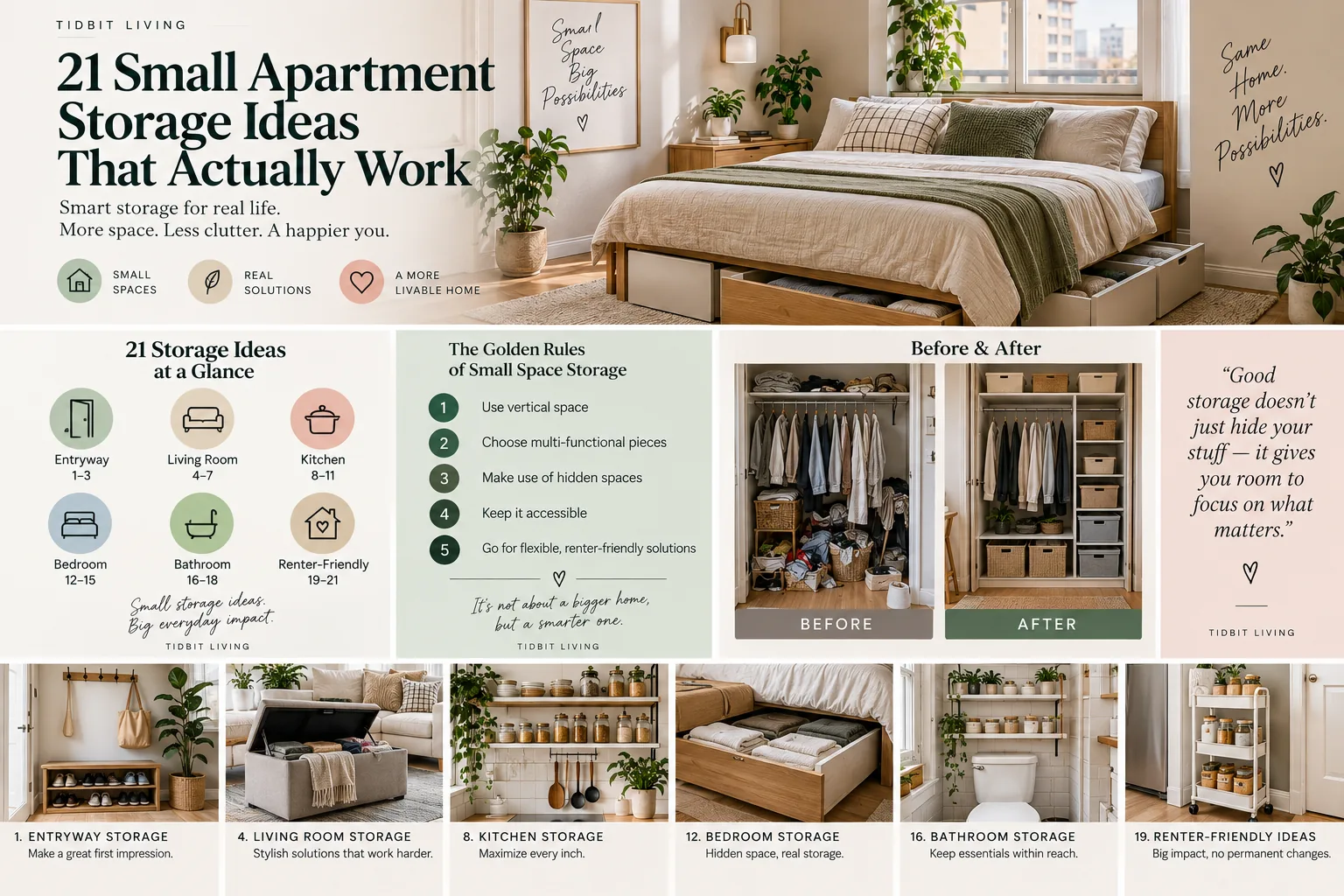

Small apartment storage works best when you stop trying to fit more containers into the room and start using the space the apartment already has: the area under furniture, the backs of doors, unused wall height, awkward gaps, cabinet interiors, and furniture that can do two jobs.
If clutter is the bigger problem, begin with our room-by-room small apartment organization system. This guide focuses specifically on where and how to create more usable storage once you know what you need to keep.
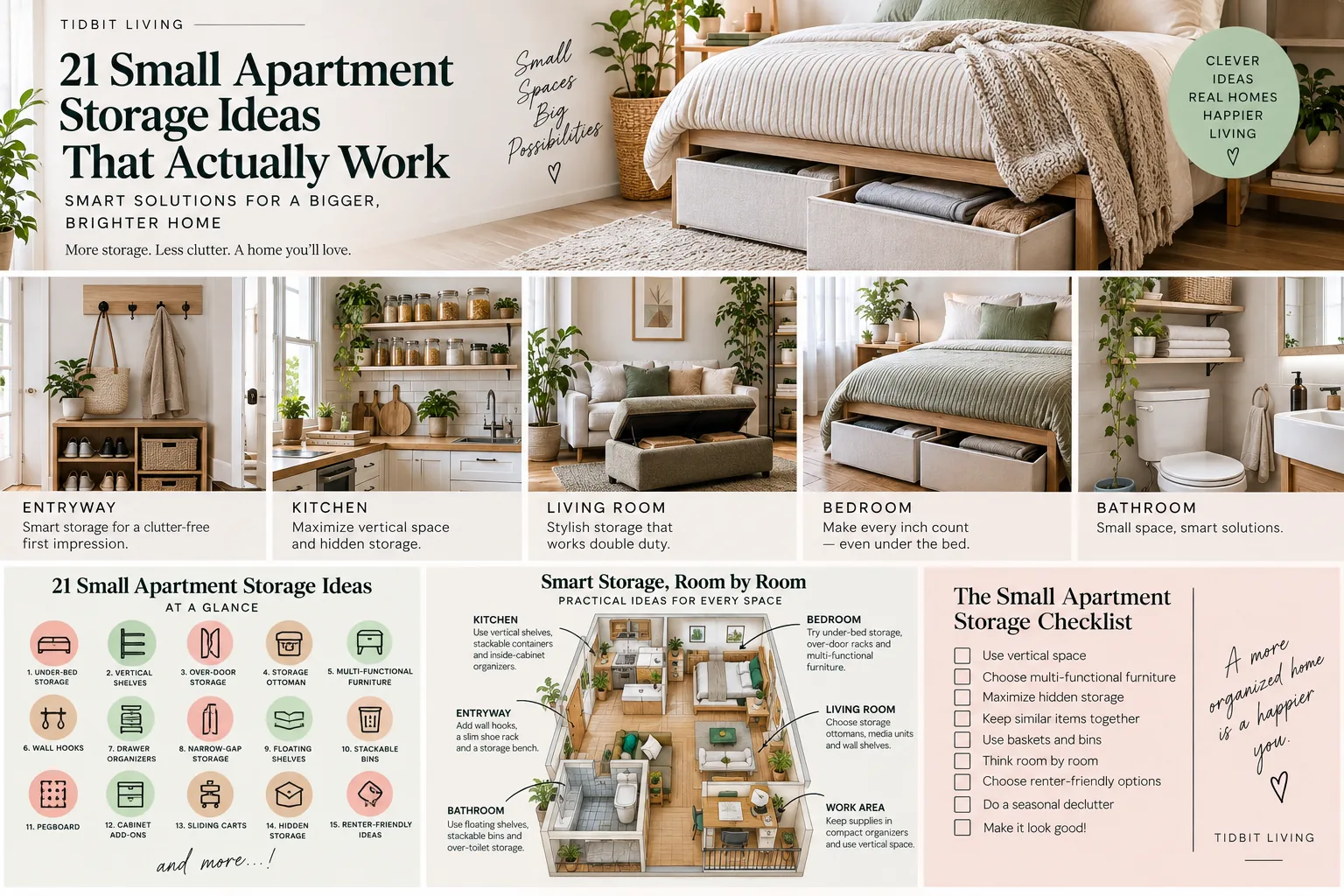
Before You Add Storage, Find Your Apartment’s Dead Space
Walk through the apartment before buying bins or shelving. Look for areas that are physically present but doing almost no work: under the bed, above cabinets, beside the refrigerator, behind doors, above the toilet, beneath a console, over a desk, and at the top of a closet.
Then sort those spaces by accessibility. Storage you touch every day should be easy to reach. Seasonal or backup items can live higher, deeper, or farther under furniture.
| Storage zone | Best for | Avoid storing |
|---|---|---|
| Eye/waist height | Daily essentials | Rarely used bulky items |
| High shelves | Seasonal and backup items | Heavy everyday objects |
| Under furniture | Linens, shoes, off-season clothing | Things needed several times a day |
| Doors/walls | Light, frequently used items | Anything that blocks movement |
21 Small Apartment Storage Ideas
1. Use the Full Space Under the Bed
The floor area beneath a bed is often the largest hidden storage zone in a small apartment. Use low rolling drawers, zippered fabric cases, or lidded bins for spare bedding, off-season clothing, shoes, luggage accessories, or hobby supplies.
Measure the actual clearance before buying anything. A slightly taller bed frame can sometimes create dramatically more storage without consuming another inch of floor space.
2. Choose a Bed With Built-In Drawers
If you are replacing the bed anyway, a storage bed can substitute for part of a dresser. Drawer-style bases are convenient for everyday clothes; lift-up platforms work better for bulky or seasonal items.
This follows the same principle as our small-apartment furnishing guide: large furniture should earn the floor space it occupies.
3. Take Shelving All the Way Up the Wall
A short bookcase uses the same footprint as a tall one but leaves valuable vertical space empty. When appropriate, choose taller shelving and reserve upper shelves for less frequently used items.
Keep visually busy objects in matching baskets or boxes and leave some open space. Vertical storage should make the room more functional, not turn every wall into a warehouse.
4. Add Shelves Above Doorways
The strip of wall above a doorway is rarely useful for furniture but can hold a shallow shelf. It works especially well for books, attractive storage boxes, baskets, or items you only need occasionally.
5. Use the Back of Interior Doors
Over-door organizers can create storage without drilling or taking floor space. Depending on the room, use them for shoes, scarves, cleaning supplies, pantry packets, toiletries, wrapping supplies, or small accessories.
Choose a slim organizer and check that the door still opens fully. A storage solution that makes the room awkward to use is not really saving space.
6. Turn the Inside of Cabinet Doors Into Storage
Small racks or adhesive holders inside kitchen and bathroom cabinet doors can hold lightweight items such as cleaning cloths, foil, hair tools, measuring spoons, or small lids.
Always check shelf clearance before mounting anything so the door can still close.
7. Use Narrow Gaps With a Slim Rolling Cart
The space beside a refrigerator, washer, vanity, desk, or cabinet may be too narrow for conventional furniture but perfect for a slim rolling cart. Use one for pantry goods, laundry products, bathroom supplies, craft materials, or office accessories.
8. Add Storage Above the Toilet
In a compact bathroom, the wall above the toilet is prime vertical real estate. Floating shelves or a freestanding over-toilet unit can hold towels, spare paper products, toiletries, and baskets.
Keep the lowest shelf high enough that the area does not feel cramped and use closed containers for visually messy necessities.
9. Use Wall-Mounted Bedside Storage
A floating nightstand, narrow wall shelf, or bedside pocket can replace a bulky bedside table. It gives you somewhere for a phone, glasses, book, and charger while keeping the floor visible.
10. Put Hooks Where Clutter Naturally Lands
Hooks are most effective when installed where you already drop things. Put them near the entry for bags and jackets, inside closets for belts, in the kitchen for frequently used tools, and in the bathroom for towels or robes.
For rentals, use removable hooks where weight and wall finish allow.
Use first: hidden dead space → vertical wall space → doors/cabinet interiors → multifunctional furniture.
Use last: additional freestanding cabinets and bins that consume open floor area.
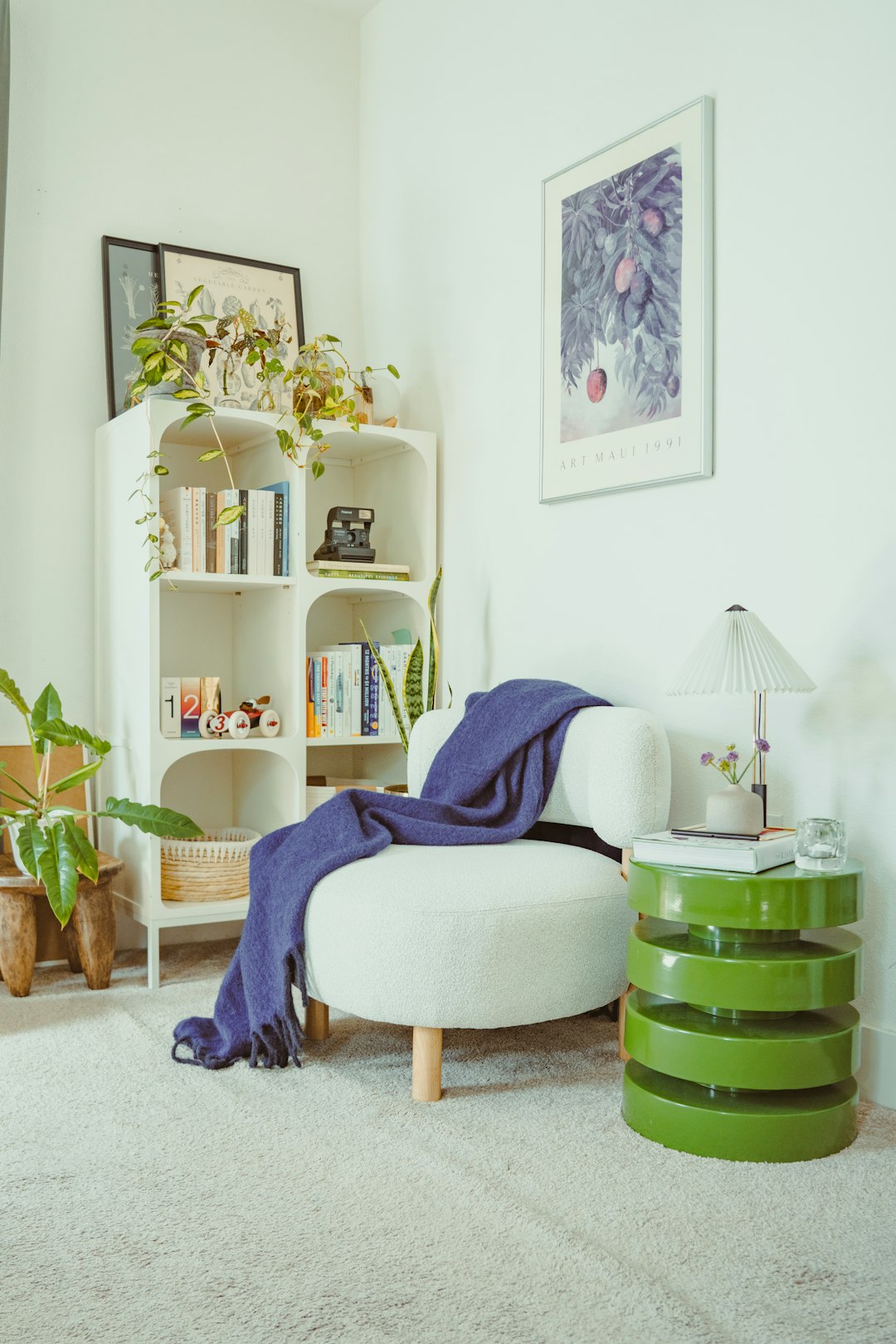
11. Use a Storage Ottoman Instead of a Plain Footstool
A storage ottoman can hold blankets, games, workout gear, cables, or occasional-use items while functioning as a footrest or extra seat. In a very small living room, choose one that can also serve as a coffee table with a tray.
12. Choose a Coffee Table With Storage
Lift-top, drawer, shelf, and nesting coffee tables can store remote controls, chargers, books, laptop accessories, and other living-room clutter. The goal is not to fill the table with possessions but to give frequently used objects a nearby home.
13. Use the Space Behind the Sofa Carefully
If the layout leaves a narrow strip behind the sofa, a slim console can hold lamps, charging stations, books, or baskets. This is especially useful when there is no room for side tables.
Do not force this idea into a tight walkway. Our studio apartment layout guide explains why maintaining clear circulation matters more than squeezing storage into every possible gap.
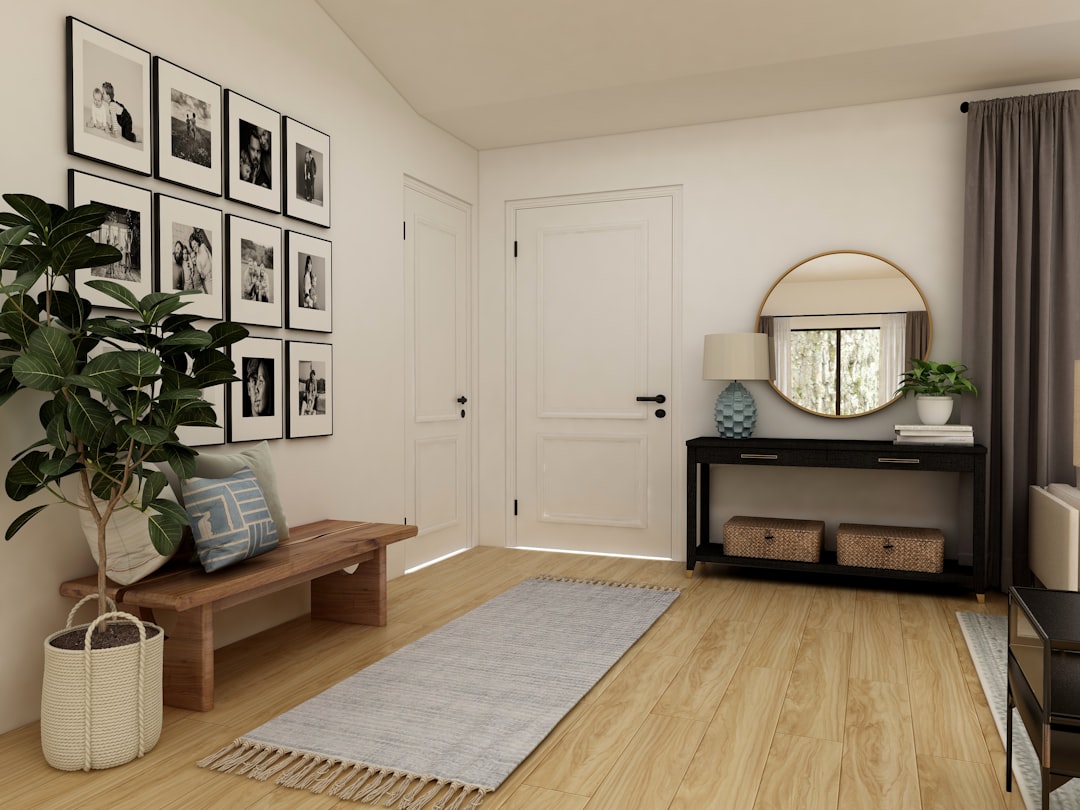
14. Create a Vertical Entryway
Small entries rarely have room for a full hall cabinet. Instead, combine a narrow shoe rack or bench with wall hooks and one upper shelf. Give keys, mail, shoes, bags, and outerwear defined homes near the door.
This keeps incoming clutter from migrating to the dining table, sofa, or kitchen counter.
15. Add Shelf Risers Inside Kitchen Cabinets
Many cabinets waste vertical space between short stacks of plates, bowls, or pantry goods. Shelf risers create a second level without permanently altering the cabinet.
Use them where the extra level improves visibility. Avoid stacking so densely that you must remove three things to reach one.
16. Store Pans and Lids Vertically
Instead of stacking pans, baking sheets, cutting boards, and lids horizontally, use a divider to file them vertically. Each item becomes easier to remove without disturbing the rest of the cabinet.
17. Use Magnetic or Wall-Mounted Kitchen Storage
A magnetic knife strip, wall rail, or hanging utensil system can free drawer and counter space. Keep only frequently used tools visible so the wall remains calm rather than cluttered.
18. Add Baskets Above Kitchen Cabinets
If your cabinets stop below the ceiling, use the gap for attractive baskets or matching boxes containing lightweight, rarely used supplies. This works best when the containers are visually consistent and easy to lift safely.
19. Divide Deep Drawers and Shelves
A large drawer is not automatically useful storage. Dividers prevent small items from becoming a mixed pile and help you see when a category is full. Use adjustable dividers in kitchen drawers, dresser drawers, bathroom storage, and desk drawers.
20. Use Matching Containers Only Where They Solve a Problem
Matching bins can make open storage calmer, but buying a container for everything often wastes money and space. First define the category, measure the shelf, and decide whether the contents need to be hidden.
Transparent containers work well when visibility matters; opaque baskets work better when visual calm matters. For more product-specific options, see our best storage solutions for small apartments.
21. Keep One Small ‘Flex Space’ Empty
This sounds counterintuitive, but the best storage systems are not packed to 100 percent capacity. Leave a little room in a closet, drawer, pantry shelf, or utility basket for temporary overflow.
Without breathing room, every new grocery item, delivery, guest towel, or seasonal object immediately becomes visible clutter.
Storage Ideas by Room
| Room | Best first moves |
|---|---|
| Entryway | Hooks, narrow shoe storage, upper shelf |
| Living room | Storage ottoman, tall shelving, hidden cable storage |
| Kitchen | Shelf risers, vertical dividers, door storage, narrow cart |
| Bedroom | Under-bed storage, tall wardrobe, wall-mounted bedside shelf |
| Bathroom | Over-toilet shelving, cabinet-door storage, hooks |
| Work area | Wall shelves, drawer dividers, mobile cart |
How to Match Storage to the Problem
| If this keeps happening | Try this first | Skip for now |
|---|---|---|
| Shoes pile up by the door | Narrow shoe rack + 2–3 hooks | Large entry cabinet |
| Kitchen counters stay crowded | Shelf risers + vertical dividers + one wall rail | Another freestanding cart unless a gap truly fits it |
| Blankets and workout gear live on the sofa | Storage ottoman or lidded bench | Open baskets spread around the room |
| Closet shelves are packed but hard to use | Category limits + shelf dividers + seasonal rotation | More bins stacked in front of existing items |
| Bathroom counter is always full | Wall shelf or cabinet-door storage | Decorative countertop containers |
- Does it remove something from a visible surface or walkway?
- Can you retrieve and return the item in one or two movements?
- Does it use space that was previously doing little or no work?
If the answer is yes to all three, the storage solution is probably earning its place.
What to Buy First When Storage Is Limited
Here is a practical way to make the decision. Imagine a 450-square-foot apartment where shoes collect beside the door, spare bedding occupies half the wardrobe, and pantry packets cover the kitchen counter. Do not start with a new cabinet. Put a slim shoe rack or vertical holder at the entry, move bedding into measured under-bed cases, and add a shelf riser or narrow cart in the kitchen. Three targeted fixes can remove three visible clutter zones without adding a large piece of furniture.
Do not order ten organizers at once. Start with the storage problem that creates the most daily friction. If clothes have nowhere to go, address the closet or bed first. If kitchen counters are constantly full, improve cabinet and wall storage. If the entry becomes messy every evening, fix that landing zone first.
- Measure the available space. Record width, depth, height, door swing, and nearby walkways.
- Name the exact category. “Storage” is vague; “eight pairs of everyday shoes” is actionable.
- Choose the location before the container. The container should fit the space, not dictate it.
- Test one solution. Live with it before buying matching pieces for the rest of the apartment.
Small Apartment Storage Mistakes to Avoid
- Buying bins before decluttering. Containers can hide excess without solving it.
- Blocking circulation. A narrow cabinet is still too large if you constantly walk around it.
- Storing daily items too high. Accessibility matters more than maximizing every cubic inch.
- Using open storage for everything. Too many visible objects can make a small room feel busier.
- Ignoring dimensions. Measure shelves, gaps, furniture clearance, and door swings before ordering.
- Filling every empty surface. Some negative space helps a small apartment feel larger and easier to maintain.
If your storage is technically sufficient but the apartment still feels visually crowded, use the strategies in our small apartment decorating ideas guide to reduce visual weight and make the space feel more open.
Do This 10-Minute Storage Audit Before Shopping
- Pick one clutter hotspot. Choose the place you reset most often: the entry, sofa, kitchen counter, bathroom vanity, or bedside area.
- Count the actual items. Write down what needs a home instead of estimating. Eight pairs of shoes require a different solution from twenty.
- Measure the closest dead space. Check usable width, depth, and height, plus door swings and walking clearance.
- Choose the smallest intervention. Test a hook, divider, riser, under-bed case, or narrow shelf before adding a large cabinet.
- Recheck after seven days. If items still land outside their assigned home, move the storage closer or simplify the category.
Example: if five everyday bags collect on a dining chair, do not buy a new cabinet first. Measure the wall beside the entry, test hooks rated for the load and surface, keep only the bags currently in rotation there, and move occasional bags to secondary closet storage. The fix addresses the behavior at the point where it happens.
A Simple Weekend Storage Reset
Use this as a concrete action checklist rather than trying to reorganize the entire apartment at once:
- Photograph the three messiest storage zones before changing anything.
- Measure each available gap, shelf, wall, and under-furniture space.
- Remove items that belong elsewhere or are no longer worth storing.
- Assign the remaining items to daily-use or secondary-storage zones.
- Install one space-saving solution at a time and test whether it is genuinely easier to use.
- Repeat the photos afterward and check whether floors, counters, and walkways are actually clearer.
Friday: identify the three places where clutter accumulates most often and measure the available storage zones nearby.
Saturday: declutter those categories, relocate rarely used items to secondary storage, and install or test one vertical/hidden-space solution.
Sunday: label or divide anything that still becomes mixed together, then leave at least a little spare capacity in each improved zone.
1. What exact items need a home?
2. Where should they live based on frequency of use?
3. What are the maximum dimensions?
4. Can existing dead space solve it first?
5. Will the solution keep walkways and doors clear?
If you cannot answer all five, measure and edit before you buy.
Frequently Asked Questions
How do I create more storage in a small apartment?
Start with unused vertical and hidden space: under beds, above cabinets, behind doors, inside cabinet doors, and on walls. Then choose multifunctional furniture with built-in storage before adding more freestanding cabinets.
How do I store things in a small apartment without making it look cluttered?
Keep frequently used attractive items accessible, but place visually busy categories in closed cabinets, drawers, baskets, or boxes. Repeating a small number of container styles also reduces visual noise.
Is open shelving good for a small apartment?
It can be, especially when floor space is limited, but it works best when edited. Use open shelves for a mix of useful and attractive objects rather than treating every shelf as maximum-capacity storage.
What is the best storage furniture for a small apartment?
Furniture that replaces another function is usually most valuable: a storage bed, storage ottoman, lift-top coffee table, bench with shoe storage, or tall shelving unit. Choose based on the specific category you need to store.
How can renters add storage without drilling?
Consider over-door organizers, tension systems, removable hooks, freestanding tall shelves, rolling carts, under-bed bins, shelf risers, and furniture with integrated storage. Always follow the product’s weight limits and your lease requirements.
The Bottom Line
The best small apartment storage ideas do not simply add more boxes. They make overlooked space useful while keeping everyday items easy to reach and preserving open floor area. Start with one recurring clutter problem, measure the dead space closest to it, and choose the smallest solution that gives that category a reliable home.
When storage, organization, furniture, and layout work together, a small apartment can hold what you actually use without feeling like every wall and surface has been filled.