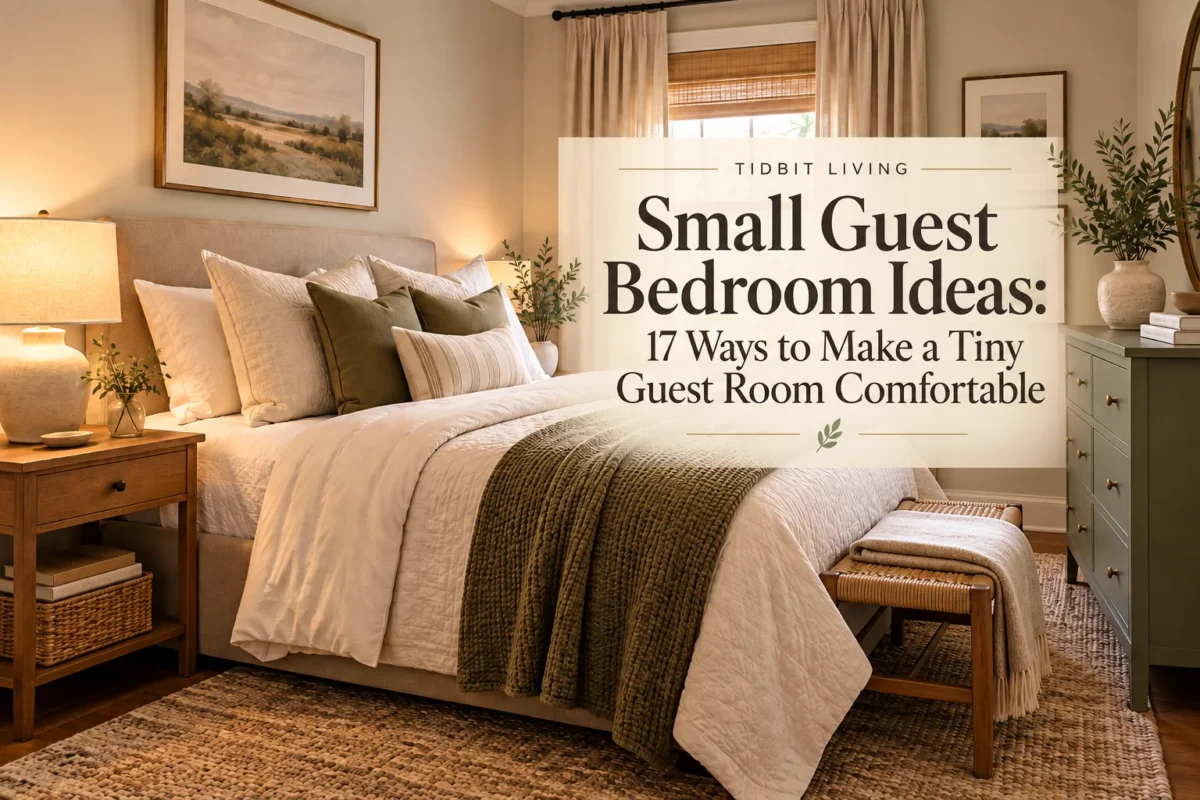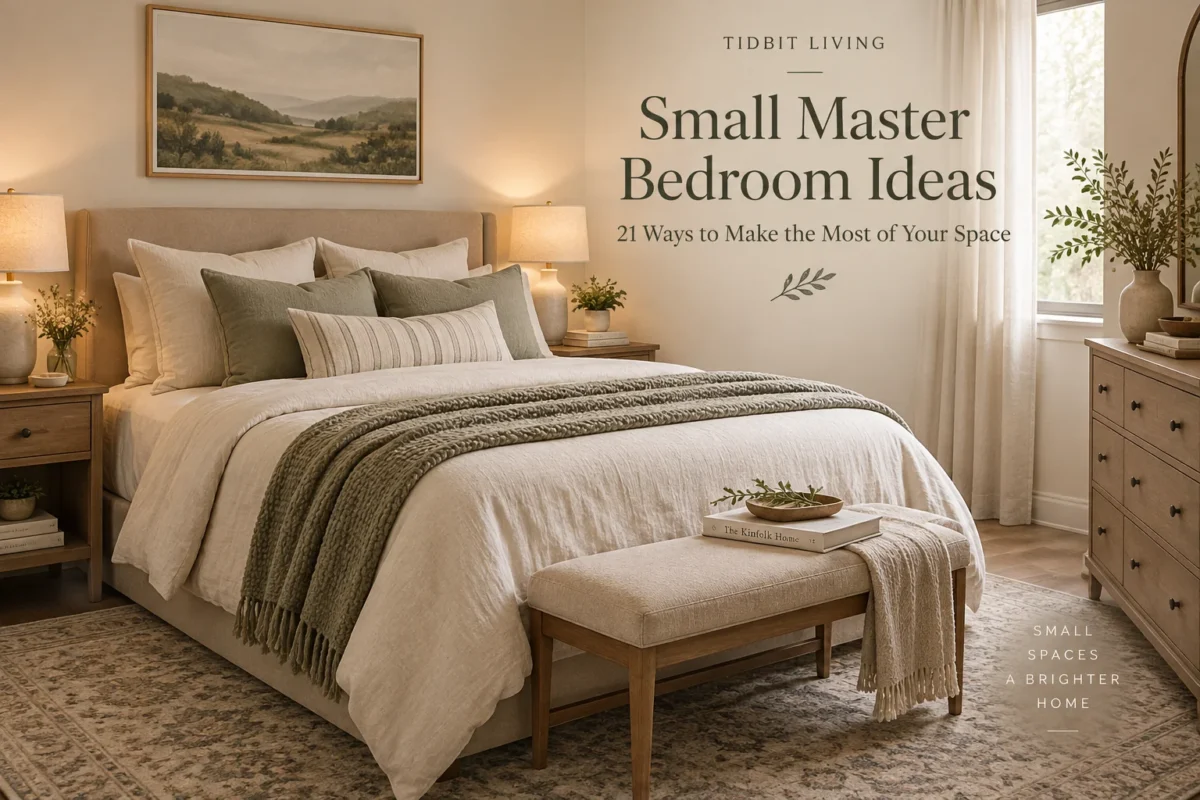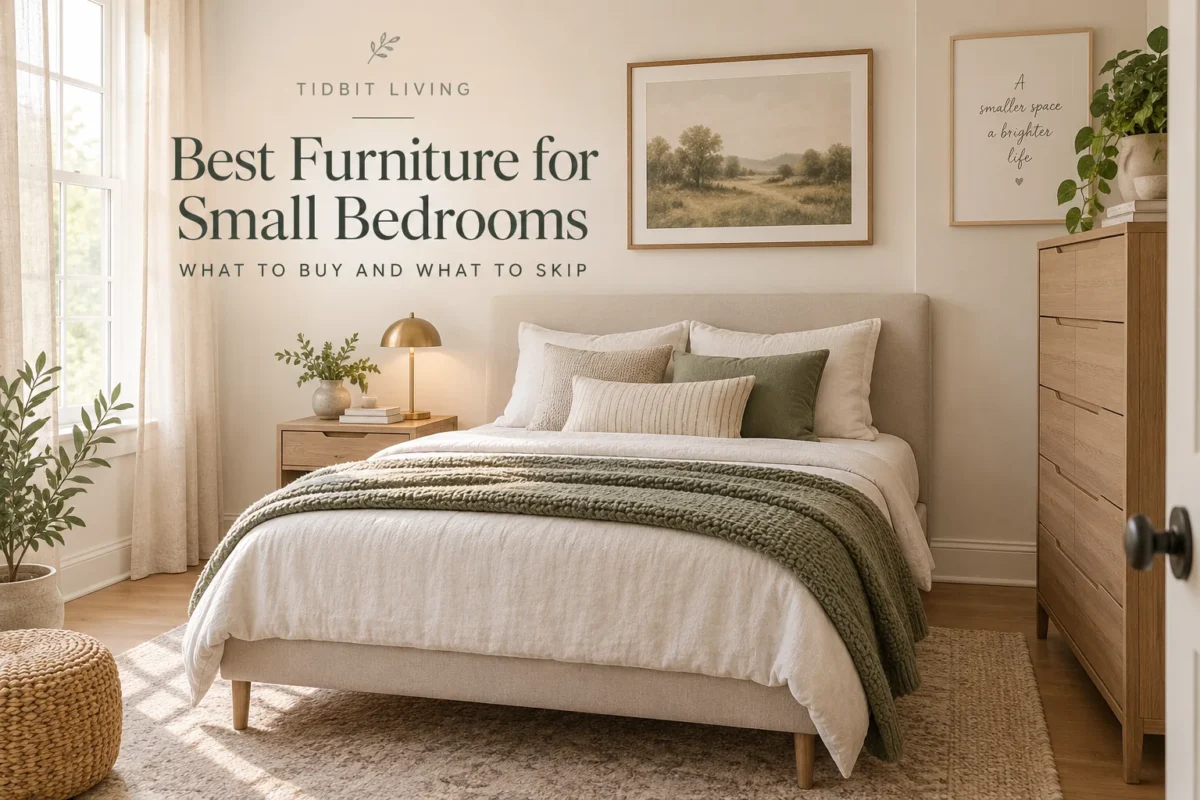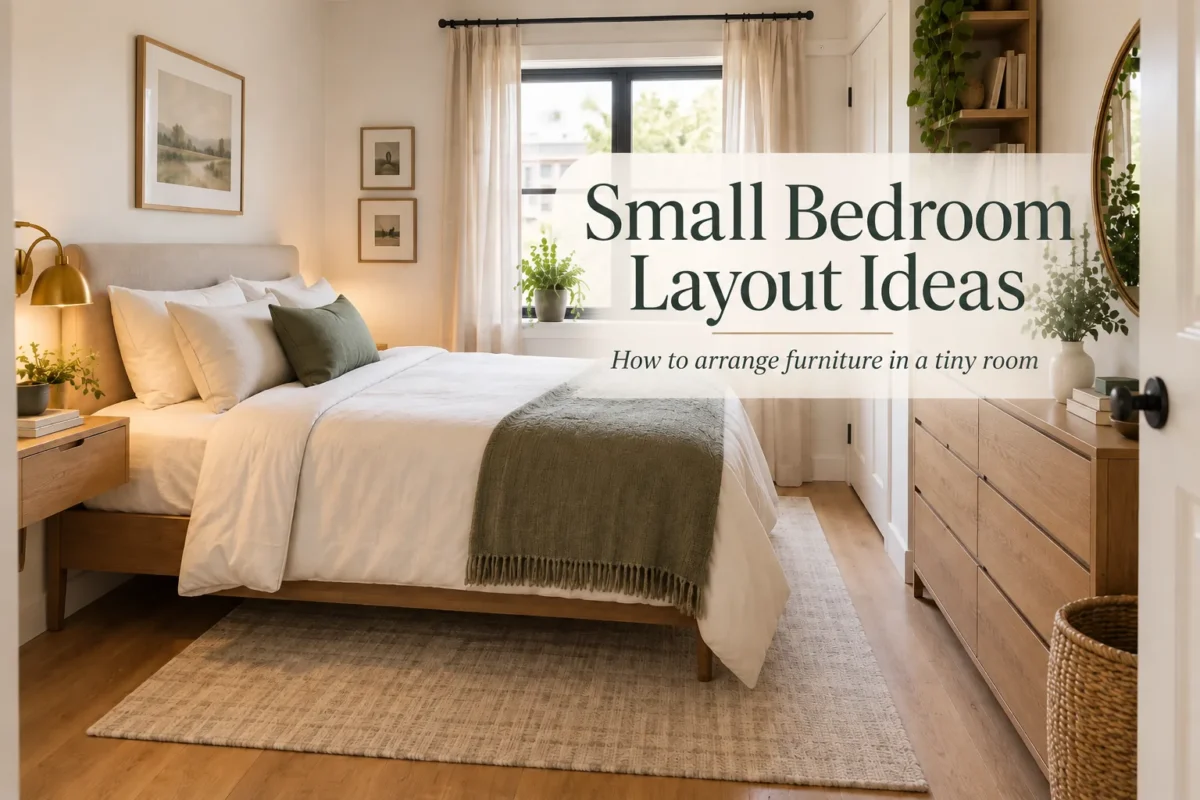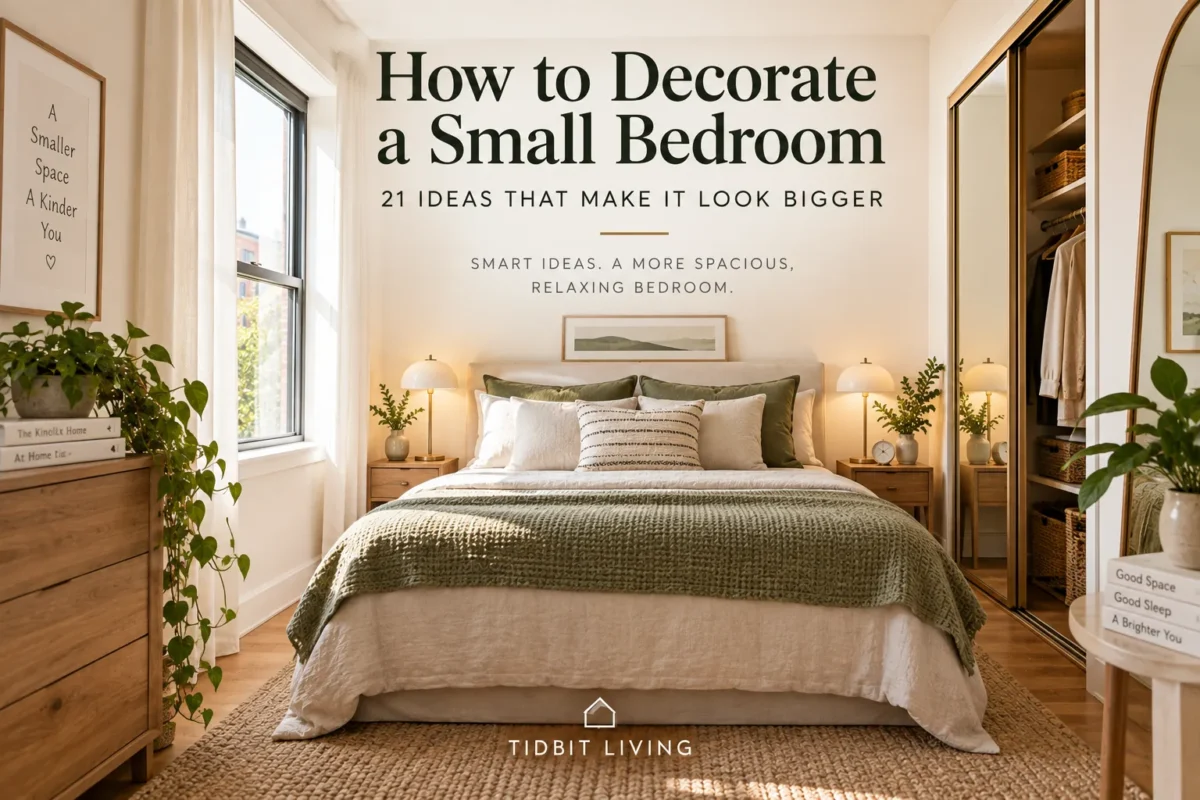

A small master bedroom has to do more than a typical spare bedroom. It usually needs to work for two people, store more clothing, support different bedtime routines, and still feel calm enough to function as the most private room in the home. The goal is not to squeeze in every piece a large primary bedroom might have. It is to make a compact room feel intentional, comfortable, and complete.
This guide is intentionally different from our small bedroom layout guide and our small-bedroom furniture buying guide. Here, the focus is on making a primary or master bedroom feel finished, restful, and shared well after the basic furniture footprint is under control. For general decorating principles that make any compact bedroom feel larger, see our small bedroom decorating guide.
What Makes a Small Master Bedroom Different?
A primary bedroom often carries more expectations than another bedroom. Two adults may need access to the bed, two sets of charging needs, more clothing storage, different reading habits, and a route to a closet or ensuite. Those extra demands are why a small master bedroom can feel crowded even when the furniture technically fits.
| Primary-bedroom need | Small-space response | What usually causes trouble |
|---|---|---|
| Shared bed access | Protect the sides that are actually used | Forcing perfect symmetry when one side has less room |
| Two people’s bedside items | Give each side a specific landing zone | Oversized matching nightstands |
| More clothing | Divide storage by category and person | Adding several small storage units |
| Calm atmosphere | Reduce visible clutter and repeated finishes | Too many decorative focal points |
| Privacy and retreat | Use lighting, textiles, and a strong bed wall | Trying to create a full sitting room inside the bedroom |
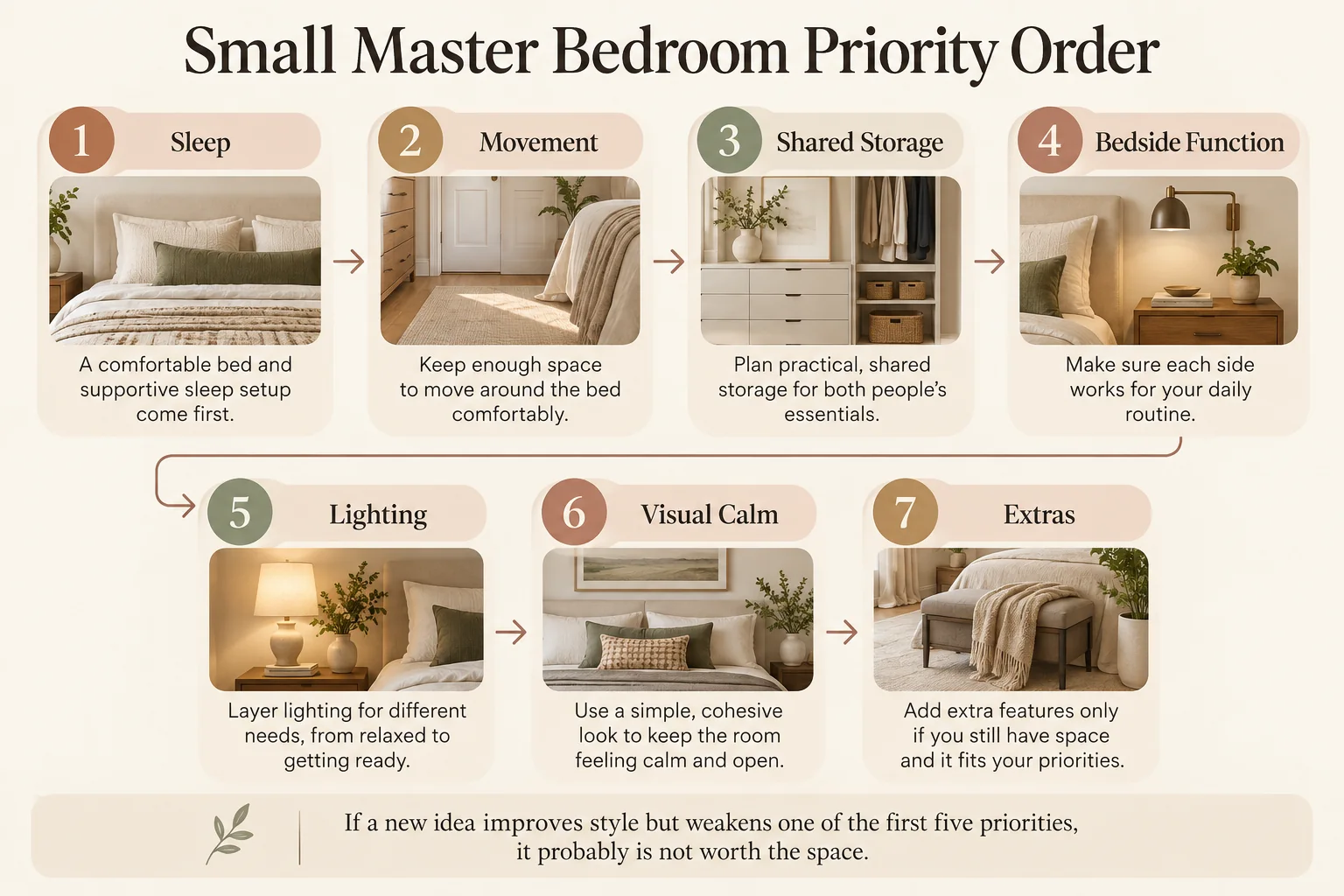
If a new idea improves style but weakens one of the first five priorities, it probably is not worth the space.
21 Small Master Bedroom Ideas That Make the Space Work Harder
1. Make the bed wall the main design moment
In a small master bedroom, one strong focal point usually works better than several competing ones. The bed wall is the natural place to concentrate color, texture, artwork, or a distinctive headboard because it gives the room a visual center without consuming extra floor area.
Keep the rest of the room quieter. If the bed wall has wallpaper, a saturated paint color, or a large piece of art, simplify the dresser wall and window treatments so the room still has somewhere for the eye to rest.
2. Use symmetry selectively, not automatically
Symmetry can make a primary bedroom feel calm and grown-up, but perfect symmetry is not worth sacrificing circulation. Two matching lamps can create balance even if the nightstands are different widths. Matching pillows can create order even if one person has a drawer unit and the other has a floating shelf.
Think in terms of visual balance rather than identical furniture. This is especially useful when the bed is not centered on a wall or one side has a closet door, radiator, or tighter aisle.
3. Give each person one dependable bedside landing zone
A shared bedroom works better when each person has a reliable place for the essentials: phone, glasses, water, book, medication, or jewelry. That surface does not need to be large, but it should be intentional.
If one side is tight, use a wall shelf, small pedestal, or narrow drawer unit instead of forcing two full-size nightstands. The result can still feel coordinated through matching sconces, finishes, or styling.
4. Move the lamps off the nightstands
Wall-mounted or pendant bedside lights free small nightstands for the things people actually need beside the bed. They also create a more finished, hotel-like look without adding furniture.
Plug-in wall sconces are especially practical when hardwiring is not an option. Position the light where it works for reading instead of placing it only for visual symmetry.
5. Use a limited palette, then layer texture
A small room can handle color, but too many unrelated finishes and hues make the edges of the room more noticeable. Choose a restrained palette—perhaps one wall color, one main wood tone, and two or three textile colors—then create interest with linen, wool, boucle, woven shades, or subtle patterns.
This approach keeps the room from feeling flat without turning every object into its own visual event.
6. Let the curtains make the room feel taller
Mounting curtains closer to the ceiling and allowing them to fall almost to the floor emphasizes the full height of the wall. When possible, extend the rod slightly beyond the window so the panels can sit beside the glass rather than covering daylight.
Keep the treatment proportional to the room. Very heavy layered drapery can visually crowd a small bedroom, while a clean full-length panel or shade-and-curtain combination often feels lighter.
7. Use one large mirror instead of several small mirrors
A large mirror can reflect daylight, add depth, and serve as a practical dressing mirror at the same time. One substantial mirror often looks calmer than a collection of small reflective pieces scattered around the room.
Place it where it reflects a window, an attractive wall, or open space rather than a cluttered surface. A mirror should improve the view you see twice.
8. Treat under-bed storage as part of the closet system
In a small master bedroom, under-bed storage should have a defined job rather than become a hidden miscellaneous zone. Use it for categories that are bulky but not needed every hour, such as extra bedding, seasonal clothing, luggage, or off-season shoes.
If two people share the room, divide the storage intentionally—for example, one side for bedding and one side for seasonal clothes—so both people know what belongs there.
9. Divide clothing storage by category, not by furniture piece
Instead of assuming each person needs an identical dresser, divide the storage based on what each person owns. One person may need more hanging space while the other needs more drawers. Shared wardrobes and dressers work better when the interior organization reflects those differences.
This can reduce the number of furniture pieces in the room because the goal becomes storing the categories efficiently rather than giving each person matching furniture.
10. Keep the top of the dresser mostly clear
Large horizontal surfaces attract clutter. In a small room, a crowded dresser can make the entire bedroom feel busier because it often sits directly in the main sightline.
Limit the top to a few intentional items: perhaps a lamp, tray, mirror, or one decorative object. Give daily personal-care items a drawer, cabinet, or small organizer rather than turning the dresser into permanent overflow storage.
11. Choose artwork by scale, not by wall width
A tiny piece of art floating over a large bed can make the wall feel unfinished. One larger artwork or a disciplined pair often feels more intentional and reduces the number of visual fragments in the room.
If the headboard is already visually strong, the wall may not need art at all. Empty wall space can be part of the design.
12. Layer the bed, but keep the pillow count realistic
The bed usually occupies the largest visual area in a primary bedroom, so bedding has a major effect on how finished the room feels. Use a simple layered formula: sheets, duvet or coverlet, sleeping pillows, and one or two decorative layers.
A mountain of throw pillows may photograph well but creates daily clutter when there is nowhere else to put them. In a compact room, the bed should be easy to make and easy to use.
13. Use a rug to unify the bed zone
A rug can make a small master bedroom feel more complete by visually connecting the bed and bedside pieces. Avoid a rug so small that it looks like an isolated mat at the foot of the bed.
If a full under-bed rug is impractical, use runners on the sides of the bed or a rug positioned to extend beyond the lower two-thirds of the bed. The goal is comfort and cohesion, not simply adding pattern.
14. Make the closet easier to use before adding bedroom storage
Before buying another dresser, improve the storage you already have. Add a second hanging rail where appropriate, shelf dividers, drawers, labeled bins, or door-mounted storage. A better closet can eliminate the need for another freestanding piece.
This is especially valuable in a small master bedroom because every storage improvement inside the closet protects floor area outside it.
15. Keep the ensuite or closet route visually and physically clear
If the bedroom connects to a bathroom or walk-in closet, that route becomes one of the most frequently used paths in the room. Do not treat the space in front of those doors as spare furniture territory.
A bench, basket, or chair that slightly interferes with the route will become more frustrating over time than its storage or decorative value is worth.
16. Use closed storage for the categories that look messy
Open shelves work well for a small number of books or decorative objects. They are less successful for mixed clothing, charging cables, toiletries, paperwork, and personal items. Those categories create visual noise quickly.
In a room designed for rest, closed drawers, cabinet doors, baskets, and boxes usually earn their space because they reduce what your eyes have to process.
17. Add one hotel-like detail instead of trying to make the room luxurious everywhere
A small primary bedroom can feel elevated without expensive furniture. Choose one or two details with a stronger finish: substantial bedside sconces, crisp bedding, a full-length curtain, a beautiful throw, a padded headboard, or matching hardware.
Concentrating the upgrade makes the room feel intentional. Spreading the budget across many small decorative accessories usually creates more clutter with less impact.
18. Use a bench only if it performs a real job
A bench at the foot of the bed is a classic primary-bedroom feature, but it is optional. In a small room, keep one only if it provides storage, helps with dressing, or is genuinely used as seating.
If it becomes a pile of clothes or forces you to sidestep around the bed, remove it. Open floor at the foot of the bed can make the room feel more generous than an extra furniture piece.
19. Create a charging station that does not take over the room
Two people can quickly turn a pair of nightstands into a tangle of phones, watches, earbuds, and cables. Route charging through a drawer, a compact charging tray, or a cord-management box where possible.
The goal is not to hide technology completely. It is to keep the bedroom from looking like a charging counter when you first wake up or walk into the room.
20. Give the room three layers of light
A single ceiling fixture makes a small bedroom feel flatter and more utilitarian. Use three lighting roles instead: general light for the room, bedside task light for reading, and one softer ambient source such as a shaded lamp or dimmable accent light.
Multiple light sources also allow two people to use the room differently. One person can read while the other winds down without turning on the brightest light in the room.
21. Leave one area intentionally empty
The final small master bedroom idea is also one of the hardest: do not fill every available corner. An empty patch of wall, a clear corner, or open floor at the end of the bed gives the room breathing space.
When a bedroom is small, visible emptiness is not wasted space. It is what allows the pieces you chose to feel deliberate rather than compressed together.
How to Make a Small Master Bedroom Feel More Luxurious
Luxury in a small primary bedroom is less about square footage and more about reducing friction. A room feels better when the lighting is easy to control from bed, the bedding is comfortable, the closet is organized, charging cables are contained, and both people have somewhere to put their things.
| Upgrade | Why it has high impact | What not to overdo |
|---|---|---|
| Better bedding | The bed dominates the room visually and physically | Too many decorative pillows |
| Bedside sconces | Free surface space and improve nighttime function | Oversized fixtures |
| Full-length curtains | Add height and softness | Heavy layers that block light |
| One large artwork | Creates a confident focal point | Many small frames on every wall |
| Closed storage | Makes the room feel visually calmer | Adding storage without editing belongings |
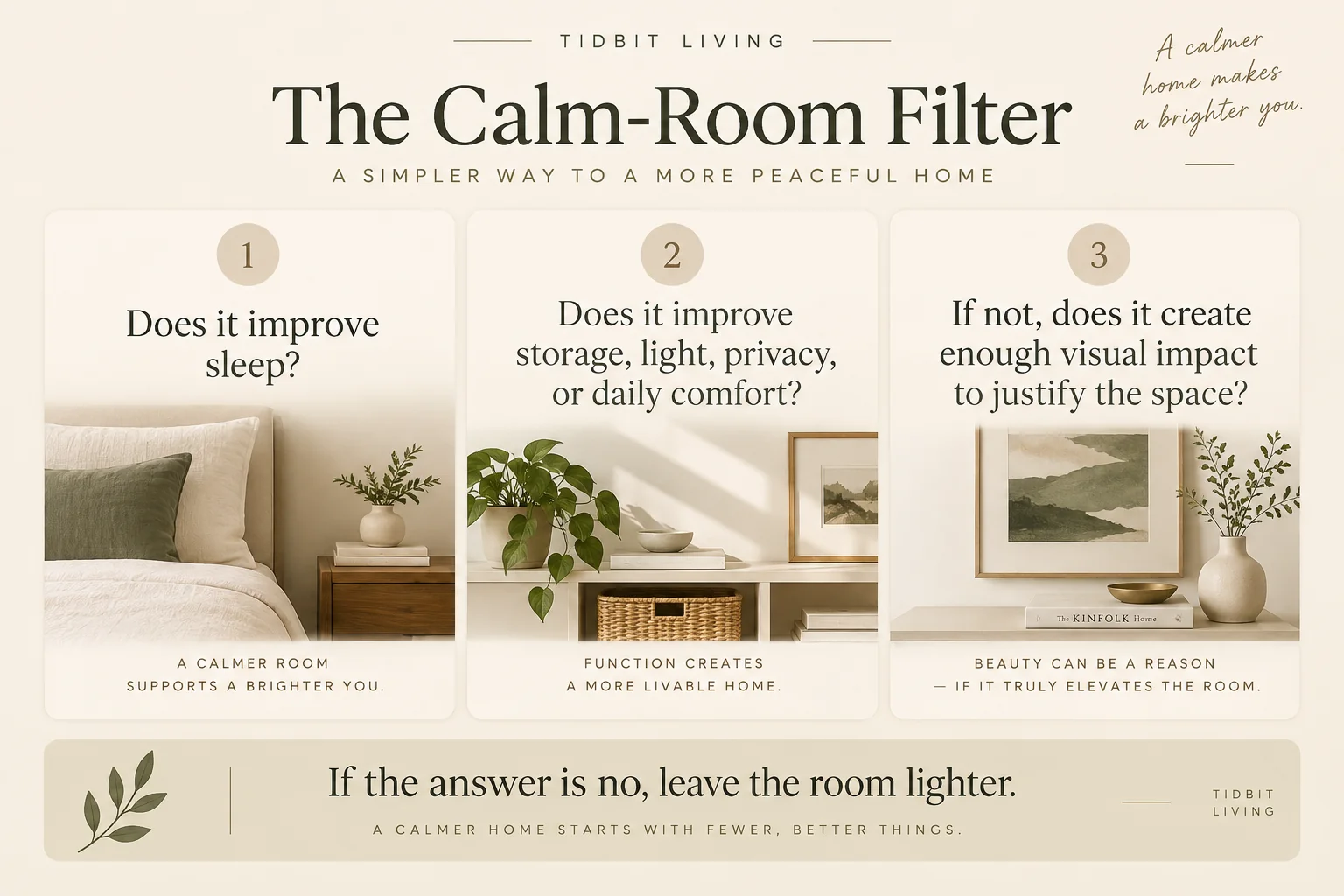
Does it improve sleep, storage, light, privacy, or daily comfort?
If not, does it create enough visual impact to justify the space?
If the answer to both is no, leave the room lighter.
Small Master Bedroom Ideas for Couples
When two people share a small primary bedroom, fairness does not always mean identical furniture. It means both people can use the room comfortably. One person may need more hanging space, the other more drawers. One side of the bed may accommodate a nightstand while the other only fits a shelf. Different solutions can still look cohesive when the lighting, materials, or colors repeat.
- Give each person a defined bedside zone. Even a narrow shelf counts.
- Divide storage by category. Do not assume each person needs exactly half of every drawer and rail.
- Use separate reading lights. Shared bedrooms work better when one person can stay up without lighting the whole room.
- Agree on the visible-clutter limit. Decide what can live on nightstands and dresser tops.
- Keep the main walking route neutral territory. Neither person’s storage should permanently spill into it.
Three Small Master Bedroom Scenarios
A small primary bedroom with a queen bed and one shared closet
Make the bed wall the focal point, use two compact bedside landing zones, and improve the closet before adding another dresser. If a dresser is still necessary, choose one main piece rather than two smaller units. Wall lights keep the nightstands useful, while under-bed storage can handle shared bedding and seasonal items.
Prioritize: closet efficiency, bedside function, bedding, lighting. Skip first: bench, decorative chair, second dresser.
A narrow master bedroom with doors on multiple walls
Keep the path between the entry, closet, and bathroom completely clear. Let the bed wall carry most of the design impact so the other walls can remain visually quiet. Use shallow storage and avoid adding pieces simply because a short wall looks empty.
Prioritize: movement, shallow storage, one strong focal wall. Skip first: deep dresser, bench in a doorway route, floor lamp in a narrow corner.
A small master bedroom that needs to feel more grown-up
Instead of adding more furniture, upgrade the visual consistency. Use coordinated bedside lighting, a properly scaled rug, full-length curtains, and bedding with a restrained palette. Clear the dresser top and reduce miscellaneous storage containers in view.
Prioritize: repeated finishes, textile quality, lighting, visual editing. Skip first: many small decor objects and furniture bought only to fill corners.
A One-Weekend Small Master Bedroom Reset
- Remove everything from the nightstands and dresser top.
- Walk the route from the bedroom door to the bed, closet, and bathroom; move anything that interrupts it.
- Decide what each person genuinely needs beside the bed.
- Move one category of bulky storage under the bed or into the closet.
- Remove one chair, bench, table, or basket that does not earn its footprint.
- Choose the bed wall as the main focal point and simplify the competing walls.
- Standardize the main palette to a few repeated colors and finishes.
- Improve the bedside lighting so the nightstands can stay clearer.
- Edit decorative pillows and accessories down to what you actually reset each morning.
- Leave one corner or wall intentionally open.
If you need to change the furniture itself after this reset, use our small-bedroom furniture guide to decide what to buy and what to skip. If the room still feels physically awkward, revisit the small bedroom layout guide before adding anything else.
Common Small Master Bedroom Mistakes
Trying to recreate a full-size master suite
A compact primary bedroom does not need a bed, two large nightstands, dresser, chest, bench, armchair, vanity, and television console simply because those pieces appear in larger bedrooms. Start with the functions your room actually needs.
Using matching furniture as the definition of a finished room
Matching sets can make a small room feel heavier and may force dimensions that do not fit. Coordination through color, material, hardware, or lighting usually gives you more flexibility.
Turning every empty wall into storage
Vertical storage is useful, but a room surrounded by shelves, cabinets, and hooks can feel enclosed. Leave some surfaces empty so the storage you do have reads clearly.
Buying decor before solving visible clutter
New pillows, art, and accessories cannot make a room feel calm if daily items still have nowhere to go. Solve the recurring clutter categories first; decorate the resulting room second.
Making the room symmetrical at the expense of function
A balanced room does not require identical bedside pieces or equal storage on both sides. Prioritize how the room is used, then create visual cohesion around those different solutions.
Frequently Asked Questions
How can I make a small master bedroom look bigger?
Protect clear walking paths, limit the number of furniture pieces, keep large surfaces visually calm, use full-height window treatments, reflect useful light with a well-placed mirror, and allow some wall or floor area to remain empty. The room usually feels larger when there are fewer visual interruptions.
What color is best for a small master bedroom?
There is no single required color. Light colors can reflect more available daylight, while darker colors can create a deliberate cocooning effect. What matters most is using the palette consistently so the room feels unified rather than chopped into many competing color zones.
Should a master bedroom have two nightstands?
Not necessarily. Two people should ideally have usable bedside landing zones, but those surfaces can be different sizes or types. A full nightstand on one side and a narrow shelf on the other can work better than forcing two matching pieces into a tight room.
How do you make a small master bedroom feel luxurious?
Focus on comfort and consistency: good bedding, layered lighting, controlled clutter, full-length curtains, coordinated finishes, and one strong focal point. A few well-chosen details usually create more impact than adding more furniture or accessories.
Should I put a bench at the end of the bed?
Only if the room has enough clearance and the bench performs a useful function. If it stores bedding, helps with dressing, or is used regularly, it may earn the space. If it mainly collects clothes or narrows the path around the bed, leave the floor open.
How do couples share storage in a small bedroom?
Divide storage by actual clothing categories rather than trying to split every furniture piece in half. One person may need more hanging space and the other more drawer space. A shared plan based on what each person owns can reduce the total number of storage pieces the room needs.
Bottom Line
The best small master bedroom ideas do not try to disguise the room as a larger suite. They make the compact space feel deliberate. Give the bed a strong visual role, protect movement, solve shared storage carefully, keep bedside needs simple, and invest your decorating energy in lighting, textiles, and a few high-impact details.
A primary bedroom feels restful when both people can use it easily and the room is not asking every square foot to perform at once. In a small space, leaving something out is often as important as choosing what to put in.